Ep 88: Reminiscences of a Day Trader with David S. Hale
Riding the Trading Rollercoaster: Real Talk from David Hale
So, you’ve probably heard all the success stories of traders living the high life. But let’s get real – trading isn’t just about cashing in on big wins. In a recent chat, David S. Hale talks about the not-so-glamorous side of a 23-year career in the industry.
We all go through it – those moments of shame, disappointment, and frustration. David digs deep into the struggles, calling out the stigma around shame that keeps traders from being real about their journey. He’s all about embracing vulnerability, believing it’s the key to letting others know they’re not alone in their struggle.
The conversation gets into the nitty-gritty of why traders find it tough to share their struggles with friends and family. Turns out, losses hit differently in the trading world. It’s not like your regular 9-to-5 where a bad day doesn’t mean your whole life is falling apart.
David doesn’t hold back on the personal stuff, sharing tales of relationship drama and financial hits. He talks about how trading can get toxic and advises traders to build a support system. Lesson learned – don’t go it alone.
One big takeaway? Always have a Plan B. David wishes he had a safety net during the rough times. So, if you’re thinking of diving into trading, stash some savings or have a side hustle ready. It’s like having a financial cushion when the market throws a curveball.
The interview takes on the full-time versus part-time trading debate. David gets it – to be a trading pro requires serious dedication, but he’s not blind to the fact that bills need paying!
Listen in to get David’s perspective on the emotional and practical sides of trading! It’s not just about charts and graphs; it’s about bouncing back from losses, keeping it real, and having a solid plan for when the going gets tough.
Follow David:
X – @CREAMtrader
More Good Stuff:
Want to become the hero of your own journey? Check out traderherojourney.com for support, guidance and a community of like-minded traders.
Disclaimer: All information provided is for educational purposes only and does not constitute investment, legal, or tax advice, or an offer to buy or sell any security. For full disclosures: www.thewallstreetcoach.com
Ep 87: No Worries – How to Live a Stress-Free Financial Life with Jared Dillian
Jared Dillian, the author of the insightful new book, "No Worries: How to Live a Stress-Free Financial Life" joins me on this episode of The Wall Street Coach Podcast.What makes "No Worries" a distinct read is its accessibility--Jared has managed to strip away the jargon, presenting financial insights in a way that feels like chatting with a friend at a bar. It's a candid and straightforward conversation about money – a breath of fresh air in the often complex world of finance!He navigates the emotional landscape of money and offers practical advice on how to lead a stress-free financial life. His approach, born out of years of work on personal finance, resonates with traders and individuals seeking clarity in an often turbulent industry. Jared emphasizes the role of mindset and behavior, challenging extreme financial solutions and advocating for a balanced approach.
Cutting expenses isn't the solution. Making more money is a better alternative. Jared stresses the need for cash, capital, courage, and conviction in financial decisions, envisioning a state of financial security where individuals can confidently say "f*** you" and seize opportunities!
Follow Jared:
Twitter – @dailydirtnap
More Good Stuff:
Want to become the hero of your own journey? Check out traderherojourney.com for support, guidance and a community of like-minded traders.
Disclaimer: All information provided is for educational purposes only and does not constitute investment, legal, or tax advice, or an offer to buy or sell any security. For full disclosures: www.thewallstreetcoach.com
Kyle Williams on the “Boring” Process Behind Seven-Figure Trading
Kyle Williams on Turning a “Boring” Process Into Seven-Figure Trading
Kyle Williams discovered trading while he was still in college and quickly realized it matched the kind of work he wanted to do for the long term. In this conversation, he explains why lasting trading success is usually less exciting than people expect: the real edge comes from repeating a process, managing risk, and staying emotionally steady when results get uncomfortable.
Kim and Kyle also dig into the internal side of performance. He talks openly about the pressure of losing streaks, the emotional impact of a major loss, and the mindset shift that helps him step back from panic and return to logic when the stakes feel personal.
The Trader Positioning Index (TPI) is a 15-minute clinical-grade assessment that measures 70+ indicators of your decision-making under pressure – and delivers a 35+ page personalised report with a custom action roadmap. Learn more about the TPI ->
Kyle Williams found trading while trying to figure out his path in college, and he says it immediately checked every box he had been looking for in a career. More than seven years into the journey, he has built a process-driven style shaped by preparation, risk management, and the willingness to keep showing up through setbacks. In this episode, he shares what changed between his rocky start and the disciplined approach that allowed him to keep progressing.
Key insights from this episode
Trading does not become an autopilot business just because you have experience. Kyle argues that even years in, the work still demands preparation, focus, and a real love of the game.
What many traders call “boring” is often what actually works. Instead of chasing adrenaline, he focuses on repeating setups where the odds are in his favor over and over again.
Losing streaks affect psychology long before they destroy an account. Kyle explains that a string of small losses can weigh on confidence just as much as one large hit if you do not recognize what it is doing to your decision-making.
A major short squeeze taught him that confidence is not the same thing as risk control. Early in his career, strict position sizing kept him alive; later, loosening that discipline created a painful reminder that every trader needs a real max-loss framework.
When a big loss lands like a punch to the stomach, his recovery process is to zoom out, look at the broader arc of his progress, and move from emotional shock back to logic as quickly as possible.
Episode chapters
00:00 – Who is Kyle Williams
01:18 – 7 Years of Trading (most surprising thing)
05:34 – Multiple Losses vs BIG Losses
11:07 – Having a better mindset
12:55 – Making 92K while in college
16:10 – Did college even matter?
18:20 – Most overlooked components to finding consistency as a beginner
20:32 – How long until profitability?
22:01 – Did get help from other traders?
23:23 – Advice to experienced traders on maintaining consistency
4:23 Gratitude in the face of struggle. 7:24 Continuous self-destructive behaviors. 18:06 FOMO and trading strategies. 28:37 Systematizing for success. 54:43 Ignoring P&L for better trading. 58:09 Building confidence after losses. 1:16:02 Gratitude is the attitude.
Gratitude’s Game-Changing Role in Trading and Life
Ricky Analog, a seasoned trader with more than a decade of trading under his belt, drops some real knowledge about how gratitude can be a game-changer, not just in trading but in your everyday life. Gratitude isn’t just a warm fuzzy feeling; it’s a practical tool that can boost your trading skills and make your whole life better.
Traders often get caught up in the nitty-gritty of it all, forgetting how incredible it is that they get to trade for a living. Ricky, who’s also a dad of three, is all about reminding us that trading is a pretty unique lifestyle. Outsiders might think traders are just clicking buttons, but it’s so much more than that!
Ricky believes that on your darkest days, gratitude can be your beacon of light. When life gets you down, just a few minutes counting your blessings can totally lift the weight off your shoulders and make your problems seem less daunting.
So, how do you add gratitude into your trading life? So many ways! Listen in to hear Ricky share his thoughts on incorporating gratitude into trading and life.
Gratitude is a total game-changer. By taking a moment each day to remember all the awesome stuff you’ve got, you’re not just leveling up your trading skills; you’re bringing more happiness into your life.
Follow Ricky:
Twitter – @rickyanalog
More Good Stuff:
Want to become the hero of your own journey? Check out traderherojourney.com for support, guidance and a community of like-minded traders.
Disclaimer: All information provided is for educational purposes only and does not constitute investment, legal, or tax advice, or an offer to buy or sell any security. For full disclosures: www.thewallstreetcoach.com
Ep 81: Trading Solutions with Mondeum Capital’s Mike Milani
Insights from an Industry Expert
In this episode of The Wall Street Coach Podcast, Mike Milani, a seasoned professional with 25 years of experience in active trading and financial technology, discusses what it takes to be a successful trader.
As the CEO of Mondeum Capital, he understands that adaptability in the ever-changing market is a key trait for traders. According to Mike, traders must stay well-informed, be flexible in their strategies, and maintain open communication with other traders to share insights and collaborate effectively. Maintaining a calm and patient mindset is essential, allowing for rational decisions and avoiding impulsive actions.
For valuable insights, guidance and solutions to help navigate the fast-paced world of trading, this episode with Mike Milani has you covered!
Disclaimer: All information provided is for educational purposes only and does not constitute investment, legal, or tax advice, or an offer to buy or sell any security. For full disclosures: www.thewallstreetcoach.com
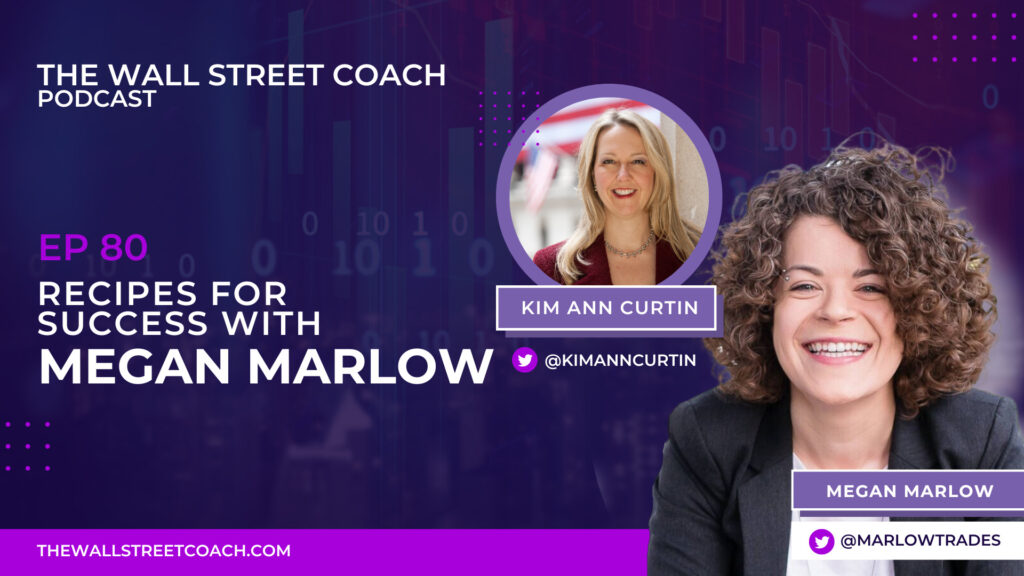
0:39 – TraderHeroJourney.com is the only Discord room for Traders that specifically works on the mindset of a trader 1:08 – Meet Megan Marlow 3:15 – Pivoting from cooking to trading 10:44 – Belief in herself 17:33 – Biohacking 24:56 – Handling ego 36:34 – On motivation 54:52 – Preparing to trade
From Chef to Trader: The Power of Mindset and Attitude
Megan Marlow, a senior Trader at Peak Capital trading and a devoted moderator for Bear Bull Traders, shares her journey from being a professional chef to becoming a successful Trader is both inspiring and enlightening.
A diverse skill set, cultivated during her career as a chef, has allowed her to maneuver through high-stress trading environments with ease. She attributes her success to her unwavering creativity and her ability to handle high-pressure situations. As Megan puts it, “If you can’t handle the heat in the kitchen, you are done pretty quickly.”
The pivot from the culinary world to trading might seem like a drastic change, but for Megan, it was a natural progression. As a chef, she constantly sought out cerebral challenges and desired a career that would keep her on her toes.
Trading offered her the perfect outlet for her passion for intellectual stimulation and provided a dynamic and ever-changing environment.
One of the key elements that Megan emphasizes is the importance of attitude in trading. She believes that a positive and enthusiastic mindset is crucial for success in the market. Her infectious half-glass-filled attitude is evident in everything she does, from sharing a laugh in an Uber to tackling unexpected market situations.
She firmly believes that maintaining a good attitude, even during tough times, is vital for navigating the ups and downs of trading.
Megan’s journey as a self-taught chef has instilled in her the belief that anything can be learned with the right mindset and determination. Her willingness to take on new challenges and her unwavering belief in herself have been the driving forces behind her success in both the culinary and trading worlds. She credits her ability to embrace new opportunities to her mindset of “if they can do it, why can’t I?”
Megan Marlow’s story is a testament to the power of mindset and attitude in achieving success. Whether you’re a chef, a trader, or pursuing any other career, adopting a positive attitude and believing in yourself can make all the difference!
Disclaimer: All information provided is for educational purposes only and does not constitute investment, legal, or tax advice, or an offer to buy or sell any security. For full disclosures: www.thewallstreetcoach.com
Mari Hincapie on Career Over College, Non-Attachment, and Why Losses Don’t Define You
Mari Hincapie on Career Over College, Non-Attachment, and Why Losses Don’t Define You
Mariana Hincapie took an unconventional path into trading and built a career by committing to that choice early. In this episode, she talks with Kim about why she chose markets over the traditional college route, how she learned through years of direct experience, and what it actually took to stay focused long enough for that decision to work.
The conversation is useful because Mari does not romanticize the process. She talks about adapting, handling losses, stress management, and the role non-attachment plays when trading becomes deeply personal. She also speaks directly to women in trading and to younger traders trying to build conviction without pretending the path is easier than it is.
The Trader Positioning Index (TPI) is a 15-minute clinical-grade assessment that measures 70+ indicators of your decision-making under pressure – and delivers a 35+ page personalised report with a custom action roadmap. Learn more about the TPI ->
Mari Hincapie chose to pursue trading as a career path immediately after high school and built her edge through direct study, repetition, and experience. The current post notes that she became the first female student of Tim Sykes to surpass one million dollars in trading profits. In this conversation, she reflects on the discipline and emotional steadiness that choice required.
Key insights from this episode
Choosing an unconventional path only works if you are willing to fully commit to learning it. Mari’s story is not about skipping effort; it is about redirecting effort into something that fit her better.
As a woman in trading, visibility and representation matter. Mari talks about what it means to support other women trying to build their place in the markets.
Stress management and non-attachment are practical skills, not just nice ideas. They help traders adapt instead of over-identifying with individual wins and losses.
Adapting to the market matters more than proving yourself right. A strong trader is willing to evolve with conditions instead of clinging to old habits.
Losses do not define a career unless you let them. Mari’s perspective emphasizes process, emotional recovery, and long-term commitment over single-day pain.
Work on this with Kim:Book a free intro call – explore whether 1-on-1 coaching is right for you.
Not ready for a call? Take the Trader Positioning Index – a 15-minute clinical assessment that benchmarks your decision-making under pressure.
Ep 76: The Contrarian Trading Style of “Unknown Market Wizard” Jason Shapiro
Ep 76: The Contrarian Trading Style of “Unknown Market Wizard” Jason Shapiro
Jason Shapiro has had zero losing years over the past two decades using a contrarian style with zero correlation to any other trading strategy. Featured in Jack Schwager’s Unknown Market Wizards, Jason joins Kim to discuss what drives genuine conviction, how a stint in a Burmese monastery shaped his relationship with uncertainty, and the psychological edge behind trading against the crowd.
The Trader Positioning Index (TPI) is a 15-minute clinical-grade assessment that measures 70+ indicators of your decision-making under pressure — and delivers a 35+ page personalised report with a custom action roadmap. Learn more about the TPI →
1:00 – Intro to Jason Shapiro 2:10 – Jason talks about his time in a Burmese Monastery 11:05 – On having a contrarian personality 28:37 – Over to the Twitter Space 32:32 – His community of traders 44:04 – On unbiased trading 51:30 – Remembering how reading Market Wizards affected him 1:10:02 – Jason’s take on the SVB collapse 1:11:58 – Jason’s meditation practice
About Jason Shapiro
With 30 years of trading experience, Jason Shapiro runs Crowded Market Report, a successful Commodity Trading Advisor (CTA) business built on a contrarian approach that has produced zero losing years over the past two decades. He was featured as “The Contrarian” in Chapter Two of Jack Schwager’s Unknown Market Wizards.
Disclaimer: All information provided is for educational purposes only and does not constitute investment, legal, or tax advice, or an offer to buy or sell any security. For full disclosures: www.thewallstreetcoach.com
Work on this with Kim:Book a free intro call — explore whether 1-on-1 coaching is right for you.
Not ready for a call? Take the Trader Positioning Index — a 15-minute clinical assessment that benchmarks your decision-making under pressure.
Grant Williams on Bear Markets, Humility, and Why Caution is a Competitive Advantage
Grant Williams on Bear Markets, Humility, and Why Caution is a Competitive Advantage
Grant Williams joins Kim for a two-part conversation about markets, mindset, and the importance of intellectual flexibility when conditions change. With decades of experience across global markets, Grant brings a perspective that is especially valuable during difficult cycles: surviving well matters more than looking smart, and avoiding major damage is often the first duty of any serious investor or trader.
This episode stands out because Grant is unusually direct about caution. He talks through the emotional traps of waiting to get back to even, the importance of humility, and why each market year has to be approached on its own terms. For anyone trying to stay clear-headed during a real bear market instead of repeating the habits of easy-money periods, this is one of the stronger archive conversations.
The Trader Positioning Index (TPI) is a 15-minute clinical-grade assessment that measures 70+ indicators of your decision-making under pressure – and delivers a 35+ page personalised report with a custom action roadmap. Learn more about the TPI ->
Grant Williams has spent decades in global finance and is known for his interviews, newsletters, and market commentary. Across those different roles, one constant stands out: curiosity paired with caution. In this episode, he brings both to a conversation about what traders and investors need to do when the market environment becomes genuinely difficult again.
Key insights from this episode
The first duty is not to suffer catastrophic losses. Grant emphasizes that survival is not defensive weakness; it is the foundation of future opportunity.
Bear markets challenge even experienced participants. Easy-money instincts often do not transfer well into harder regimes.
Humility matters more than certainty. Grant argues that trying to be less wrong is often more useful than trying to prove you were right.
Each year has to be earned again. Experience matters, but every cycle asks different questions and punishes stale assumptions.
Caution is not the absence of opportunity. It is often what preserves the ability to act when the real setup finally appears.
Work on this with Kim:Book a free intro call – explore whether 1-on-1 coaching is right for you.
Not ready for a call? Take the Trader Positioning Index – a 15-minute clinical assessment that benchmarks your decision-making under pressure.
Tom Canfield on Mindset, Recovery, and the Village of Idiots in Every Trader’s Head
Tom Canfield on Mindset, Recovery, and the “Village of Idiots” in Every Trader’s Head
Tom Canfield joins Kim for one of the clearest conversations on what actually makes trading hard. He is direct about the fact that learning charts and setups is only part of the work. The deeper challenge is what trading exposes: ego, fear, the need to be right, emotional baggage carried in from life outside the market, and the quiet ways traders ask P&L to make them feel better about themselves.
What makes this episode so useful is Tom’s honesty. He does not describe trading as a clean progression toward mastery. He describes it as an ongoing practice of self-awareness, recovery, and managing the emotional patterns that never fully disappear. If you want a realistic conversation about mindset instead of trading mythology, this is one of the strongest episodes in the archive.
The Trader Positioning Index (TPI) is a 15-minute clinical-grade assessment that measures 70+ indicators of your decision-making under pressure – and delivers a 35+ page personalised report with a custom action roadmap. Learn more about the TPI ->
Tom Canfield, also known as Canny, has a background in mathematics, an MBA from Vanderbilt, early Wall Street experience, and decades of trading behind him. He later expanded into trading education through BeDumbFollowPrice.com. What stands out most in this conversation, though, is not biography – it is the rare depth of self-awareness he brings to the emotional side of trading.
Key insights from this episode
Trading acts like a mirror. Tom argues that it reveals dysfunction, ego needs, and emotional triggers traders often do not even realize they carry.
Most people are not failing because they cannot read a chart. They are failing because they cannot manage the emotional pressure that comes with being wrong, losing money, and needing recovery.
The “village of idiots” in a trader’s head never fully disappears. Progress comes from identifying those voices faster and letting them affect decisions less.
Recovery is a real skill. Tom treats losses not just as financial setbacks but as moments that require emotional reset, perspective, and self-forgiveness.
Honesty is a form of encouragement. Traders need realistic expectations, not fantasy timelines about becoming consistently profitable in six months.