Ep 68: Andrew Aziz of Bear Bull Traders: His Mindset for Day Trading Success
https://youtu.be/hr85Rzv2Ies


0:30 – Fan of the pod? Please leave a review! Plus,
how to access Kim’s FREE e-book, “Discipline & Finding Your Edge”

1:02 – Introduction to Andrew Aziz

4:10 – Lessons from breathing at 20,000 feet

5:50 – What do traders need to be most resilient about?

8:26 – Andrew’s tips for increasing resilience

11:30 – So few traders honestly speak about losses. Why is Andrew so open to talking about it?

15:16 – The powerful force that is the market

18:22 – Why Andrew’s books resonate with traders

22:46 – The ‘air traffic control’ mindset + trading

26:07 – Over to Twitter Spaces + reintroduce Andrew

29:14 – How + why did Andrew start Bear Bull Traders?

31:20 – The role of resilience in community

34:30 – The impact of Andrew’s trading community on his personal trading

37:49 – Navigating the tough 2022 market

39:42 – Nature and its healing effects on the soul (and trading)

43:06 – How Andrew maintains balance in his life

47:43 – Trading success as a double-edged sword

50:30 – How to find a great trading teacher

54:02 – Tips for traders in the current market

56:24 – Andrew’s lessons from FTX

59:50 – Emotional intelligence in trading

1:04:00 – Blame in trading and life, lessons learned, and final words

1:07:00 – Upcoming Bear Bull Traders life trading event

Ep 68: Andrew Aziz of Bear Bull Traders: His Mindset for Day Trading Success

Andrew Aziz, the founder of Bear Bull Traders, isn’t afraid to go deep. As he openly shares with host Kim Ann Curtin in this episode of The Wall Street Coach Podcast, “nine months ago, I was worth $3 million more on paper.”

Of course, just about everything’s down in the stock market in 2022. But Andrew’s not letting it ruin his life. He’s not even letting it ruin his day.

Why? Because he’s a seasoned trader. He understands that these cycles are temporary. This is the way the stock market works. Pity the trader who refuses to yield to the market. Andrew puts it, “With the financial market, You are dealing with a very powerful force that doesn’t care about you.”

Many listeners already know of Andrew’s chops as a trader and educator. But he’s also an example of trading EQ (emotional intelligence) that traders at all levels can learn from. 

How does he keep his cool when the market’s stormy? In this two-part episode featuring an interview and a live Twitter Space recording, you’ll learn exactly what motivates him in trading and in life. Learn all about the trading rules that have helped him, why he’s “a big advocate of part-time trading,” and why not all trading ‘gurus’ are created equal.

Prepare to learn, be inspired, and take away some fantastic lessons that will inform you as a trader and a human being. 

About Andrew Aziz

Andrew Aziz is an accomplished trader and founder of Bear Bull Traders, an educational community designed to help traders connect, learn, share, and grow. 

After moving to Vancouver, British Columbia, Canada to earn his PhD in chemical engineering, Andrew spent several years working in various research scientist positions in the cleantech industry.

Upon being let go from one particular position, he decided to focus his energy on the financial industry and trading markets. With drive and determination, Andrew started studying the stock market. Everyone, including himself, was doubtful, but Andrew persevered.

Then, in 2015, he published his first book, “How to Day Trade for a Living,” a simple, concise, and practical guide to day trading, written for everyone, regardless of their financial market knowledge. Later, in 2016, he started what would become the Bear Bull Traders community as a forum for serious traders to share their knowledge and expertise with other traders around the world.

Whenever he is not trading or in front of his computer, Andrew is outdoors hiking, trekking, skiing, or high-altitude climbing.  

Follow Andrew Aziz + Links Mentioned

www.bearbulltraders.com

Andrew Aziz on Twitter

Andrew Aziz on Instagram

Andrew Aziz on LinkedIn

Andrew’s books on Amazon

A cause both Andrew and Kim are involved in: 

Traders For a Cause

Get the FREE e-book mentioned in this episode at traderdiscipline.com

 Disclaimer: All information provided is for educational purposes only and does not constitute investment, legal, or tax advice, or an offer to buy or sell any security. For full disclosures: www.thewallstreetcoach.com
Andrew Aziz

Multimillionaire Trader Mindset: 8 Lessons From Jack Kellogg

Want a peek into Jack Kellogg’s multimillionaire trader mindset? Keep reading.

In case you’re not familiar with this stock market phenom, Jack is a $10+ million trader at the tender age of 24. But despite his young age, his road to millions wasn’t easy. It was the result of his incredible drive and a staggering amount of hard work.

In fact, his desire to succeed was so immense that he neglected his life outside of trading while working to achieve his goals. Eventually, he suffered the consequences…

As he recently shared on The Wall Street Coach Podcast, many of the most powerful lessons he’s learned on his trading journey have nothing to do with choosing the right stocks. It’s all about mindset and emotional intelligence.

I urge you to check out the full episode here — and keep reading for some of the top multimillionaire mindset lessons that traders of all levels can learn from Jack.

Just in! A new episode of my #podcast with valet-turned-multimillionaire, Jack Kellogg @Jackaroo_Trades! Discover a side of Jack that few people know & hear how coaching helped him as a #trader on his way to the top. https://t.co/5mZxkcq6x6#thewallstreetcoach #traders #EQ pic.twitter.com/u9vXAgQhxi

— Kim Ann Curtin (@kimanncurtin) December 6, 2022

1. It’s Not Just About Trading Milestones

After setting a New Year’s resolution to start trading in 2017, Jack worked his butt off to learn the ropes and become a great trader. Fast forward a few years. He was reaching a lot of his trading goals — but he wasn’t happy.

Jack says, “I had created a lot of unhealthy habits that I was ignoring. They built and built and it got to the point where I was very unhappy every day. I was in this drought of depression. I was sick and wasn’t looking forward to the day when I woke up.”

These feelings were seemingly at odds with his achievements as a trader. He was crushing milestones that many traders only dream about. Jack realized that he had to take a look at what was going on outside of his trading career.

Jack realized he needed help, so he started working with me as a coach.

Jack recounts, “The first time we spoke I was lying in my room and it was dark and gloomy. Kim helped me through meetings over months to slowly put the light back into my face. Learning my emotions and gaining an understanding of why I feel certain things — these are some of the biggest impacts that coaching has had on me.”

2. Look at the ‘Why’

As I note in my e-book “Ego and Inner Gremlins: How Emotions Impact Your Trading,” the first thing you should do to identify behaviors that are holding you back is take a step into a place of neutrality and curiosity.

For Jack, improving his mindset and his trading both started with a single, non-judgmental question…

Why?

Instead of simply looking at his losses and feeling bad or blaming himself, he began to get curious.

In the podcast, he talks about how true progress as a trader isn’t about whether or not you win or lose — but being able to understand why.

He says, “You’re losing a trade or winning a trade, but why? When you can figure that out, that’s when you’ll start to understand and progress faster.”

3. You Must Be Willing to Commit

While Jack is a big believer in balance and taking time off (more on that later), he’s also a big believer that when you put your mind to something, you should be completely present and willing to work hard.

He says, “Are you putting in 110% effort? Or are you putting 70-80% effort? I Think that nuance in effort is the difference-maker.”

For Jack, a willingness to put in the work is vital to success not just in trading but in life. He continues, “If you put in the work you’ll be rewarded and you’ll enjoy your life more at the end of the day because you have something that brings fulfillment to you.”

4. Take the Time to Learn From + Mourn Your Losses

For Jack, taking the time to process losses is a crucial part of the recovery process.

He says, “If I have a bad day trading, I make sure to analyze my trades and see what I did. I’m upset for an hour or two and then I move on.”

Jack observes, “A lot of people hide from their losses.” The problem is that when they hide from the pain of a loss, they never take the time to analyze or really learn from those losses. So hiding can actually be a lot more painful in the long run — if you never learn from your mistakes, then you’re far more likely to keep repeating them. Over time, it gets harder and harder to hide from that pain (and to deal with the monetary losses!).

Jack says, “The best traders really do dissect their losses as quickly as possible and realize their mistakes.”

5. Want An Edge in the Market? Do This.

One of the most common questions Jack is asked is this…

How did you find your edge in the market?

According to Jack, it’s not about just finding one edge and sticking to it forever. He constantly needs to adapt to and with the market.

He says, “It’s not like I just see a new setup and I’m like ‘oh I know exactly what to do let me make money.’ I have to see people make money a few times in a setup and I need to watch and see what they’re thinking and doing. From there, I can formulate a thesis about why things are working and why they aren’t working and develop a process and edge of my own.”

6. It’s Not Just About Your Trading Strategy.

There are thousands of trading strategies out there. According to Jack, it’s less about what style you follow and more about your mindset.

He says, “It doesn’t really matter what the strategy is, if you don’t have the emotions and discipline to back up your trading you could really trade any edge and not execute well.”

But there’s good news. Jack continues, “Every single day you can work on your emotional intelligence and get better in that field.”

7. Trading Isn’t the Only Thing in Life

Jack says, “If your only happiness is trading then there’s almost a 99% chance that the last year has been really tough for you.”

To his credit, the past year or so has been pretty brutal on traders — from newbies to more seasoned pros.

The old Jack would have been struggling in this market. Trading used to be his life — there was little else that mattered.

But he was willing to take steps to change that. Jack says of his coaching experience, “Kim helped me open my eyes to being more multidimensional and having different areas I care about in life.”

He’s also a lot better at taking breaks now, and says “I find my best trading is actually after I take a break because I have a fresh mindset.”

#wednesdaywisdom from @jackaroo_trades — Check out my newest #podcast interview with Jack here – https://t.co/5mZxkc8vFy#trading #Trader #Mindset pic.twitter.com/ZWwcSxZjSn

— Kim Ann Curtin (@kimanncurtin) December 7, 2022

8. Have a Long-Term Perspective

These days, Jack looks at trading as just one of the pieces that make up his life.

Since he has a long-term perspective, he’s able to keep a level head about the current market.

He says, “As long as you keep working hard and showing up, eventually the market and whatever you might struggle with outside of trading will get better. My maturity as a trader isn’t about one single outcome on a trade, it’s more about me learning.”

Ready to Work On Your Mindset?

I believe that everyone who listens to the podcast episode with Jack is going to grow and stretch and see their EQ raised — he’s truly unstoppable!

If you’re interested in becoming more self-aware, consider seeking out a coach.

If you’re like many traders, you’re too busy beating yourself up for mistakes and perceived shortcomings to really get into a space of neutrality from which you can grow.

That’s not the gateway to real change.

As a coach, one of the methods I use is to help people become more self-aware by turning down the shame factor and helping them develop more self-empathy.

Ready to get started on the journy to developing your EQ?

If you’re interested in becoming more self-aware and developing your emotional toolkit, please reach out today.

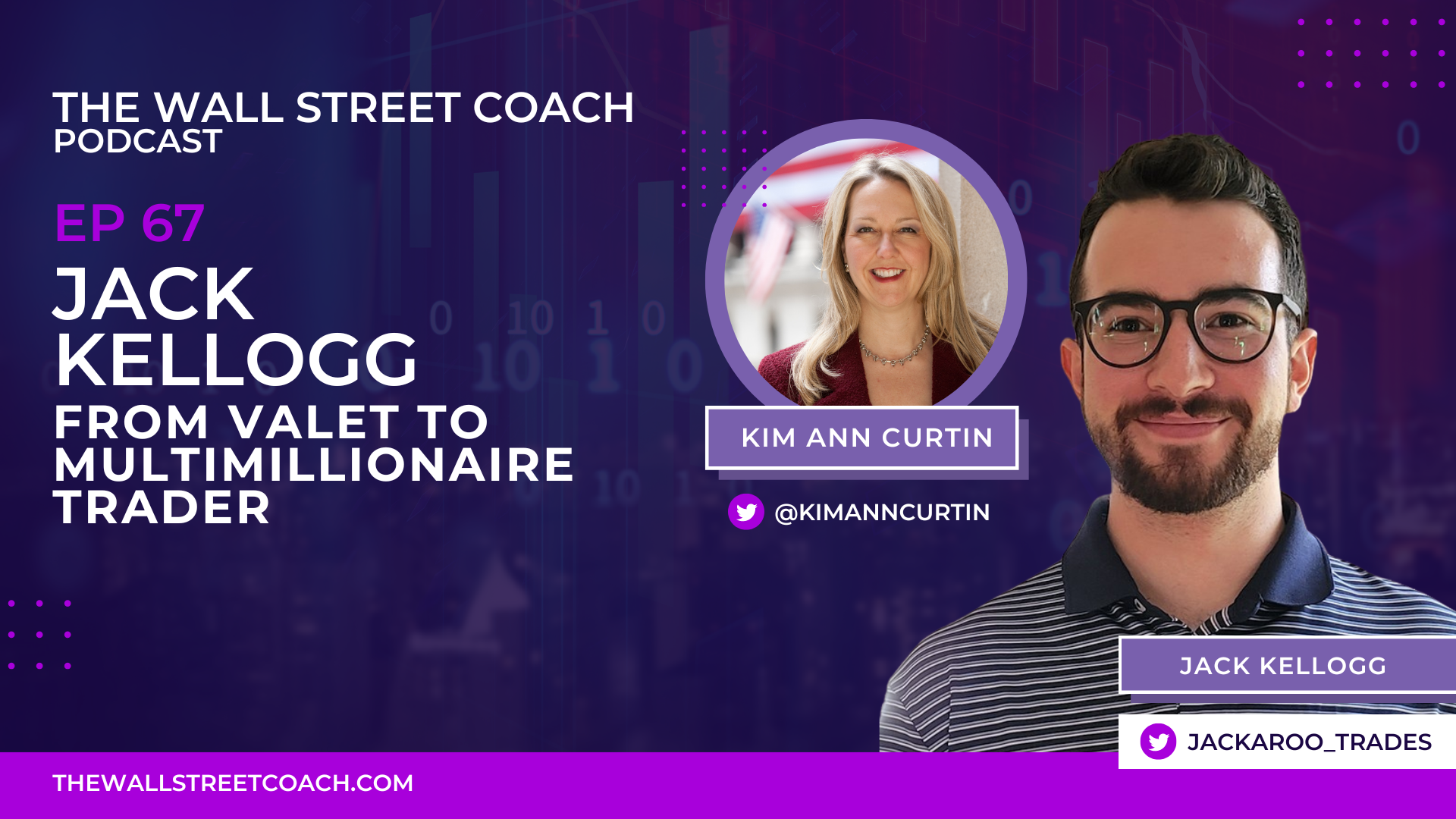
Ep 67: Jack Kellogg: From Valet to Multimillionaire Trader

https://youtu.be/zQqbiTPe3iY


0:30 – How to access Kim’s FREE e-book, “Discipline & Finding Your Edge”

0:50 – Introduction to Jack Kellogg (as if you need one)

3:15 – Jack shares his trading trajectory

5:50 – What’s behind Jack’s work ethic + mindset?

7:40 – What are the biggest misunderstandings Jack sees among traders (and feels himself)?

11:17 – Dissecting losses + comfort with discomfort

12:24 – Trading isn’t about money for Jack anymore. So what is it about?

14:41 – Balance + how Jack operates now

19:00 – What Jack does in his free time

21:15 – How would Jack advise a beginner?

22:48 – How did Jack get his enviable big-picture mentality?

24:15 – Over to the Twitter Space + reintroduce Jack

25:30 – Why Jack doesn’t just want to be just a trader

27:24 – How Jack maintains balance in his life outside of trading?

31:05 – The secret to Jack’s internal grit and how he looks at losses

33:20 – Jack’s take on healthy living

37:15 – Listener question: where should traders turn for stock information?

39:45 – Listener question: how to avoid FOMO and forcing trades

42:51 – Listener question: what was a major turning point in your career?

44:24 – Listener question: Jack’s trades on SQQQ and TQQQ

46:30 – Jack’s exponential growth — how did he uplevel?

50:12 – Listener question: what is Jack’s edge?

52:57 – Jack’s Personal goals

54:20 – Listener question: how did Jack diversify and expand his trading strategy?

57:53 – How Jack gets support from loved ones + the trading community

59:30 – What mindset would Jack like to see shift in the day trading community?
br> 1:01:30 – What gratitude means to Jack


Ep 67: Jack Kellogg: From Valet to Multimillionaire Trader

If you’re a day trader, you’re probably familiar with Jack Kellogg. If you haven’t heard of him yet … well, he’s kind of a big deal. He’s traded OTCs, he’s traded meme stocks. He’s gone long, he’s gone short … and at just 24, he’s surpassed $10 million in trading profits.

You’re kind of tempted to hate him, right?

But here’s the thing: Jack’s a genuinely great guy.

As The Wall Street Coach Podcast host Kim Ann Curtin puts it, “Not only is Jack a world-class trader, but a world-class human being.”  

In this interview, you’ll discover a side of Jack that few people have seen or heard before. In this combo episode featuring an interview coupled with a live Twitter Space recording, you’ll learn about the emotional side of Jack’s trading — including an honest discussion of his emotional struggles even in the face of success, and how he worked with Kim as a coach to develop more EQ and balance in his life. 

There’s no doubt that everyone who listens to this episode is going to grow and stretch and see their EQ raised! Jack is a living example of someone who is unstoppable — you don’t want to miss this!   


About Jack Kellogg

Jack Kellogg isn’t your typical millionaire trader. After he graduated high school, he didn’t want to go to college, but he understood that if he wanted to have the kind of life he wanted, he needed to make money.

In 2017, he made it his New Year’s resolution to learn how to trade and started with $10K he saved from his valet job. People think of him as an overnight success, but he spent years grinding and working on side hustles including an attempt to sell bamboo pillows.

His years of fine-tuning his skills paid off. When the crazy market volatility of 2020 hit, he was prepared. He passed $1 million in profits in late 2020, and his growth has been exponential ever since. He passed $10 million in profits this year and hasn’t stopped there. In addition to being a world-class trader, he’s also a trading mentor and active in the trading community, taking part in events like Traders For a Cause and more.


Follow Jack Kellogg + Links Mentioned

Jack Kellogg on Twitter

Jack Kellogg on Instagram

Traders For a Cause

Get the FREE e-book mentioned in this episode at traderdiscipline.com

 
Disclaimer: All information provided is for educational purposes only and does not constitute investment, legal, or tax advice, or an offer to buy or sell any security. For full disclosures: www.thewallstreetcoach.com

How to Develop a Professional Mindset

How do you develop a professional mindset?

You may think that some people are born with a professional mindset that puts them on a one-way road to success. They are confident and comfortable in their work, and they rack up accomplishments with ease.

The truth is that you must cultivate a professional mindset. It’s something that takes time and effort to develop — as well as plenty of ongoing maintenance throughout your life and career. Trust me, I’ve seen it time and time again. Often, a professional mindset goes hand in hand with what I call The Five Practices — a number of common characteristics that successful people share.

Yes, it takes work to develop a professional mindset. Don’t be scared off. The good news is that once you lay the groundwork, maintaining it becomes second nature. Need help getting started? Keep reading for some of my top tips for how to develop a professional mindset:

Note: Interested in learning more about individuals who embody The Five Practices? Check out my book, “Transforming Wall Street: A Conscious Path for a New Future.

Professional Mindset: Start Here

Mindset is a big topic with just about all of the traders and professionals I interact with. As trader and The Wall Street Coach Podcast guest Tom Canfield put it,

This is the REAL game of trading. Wise words from @canny4. Check it out + many more mindset gems in my recent #podcast interview with him: https://t.co/98rFVR0uJX #mindset #trading #traders pic.twitter.com/dVf9NrRKtx

— Kim Ann Curtin (@kimanncurtin) July 1, 2022

Before you can really wrap your mind around the concept of a professional mindset, you’ve got to have a basic understanding of mindset itself.

If you look at the dictionary, mindset is defined as “an established set of attitudes held by someone.” It’s these attitudes that shape the lens through which you see the world and interact with others — that’s a pretty big deal.

A professional mindset means more than just how you conduct yourself in a professional setting. It’s part of what guides you through your career and in life. You need a professional mindset to make savvy decisions, carry yourself in professional settings, and work effectively with others. As you can imagine, it can have a huge impact not only on your career but your life.

6 Principles for Developing a Professional Mindset

If you want to develop a professional mindset, consider these six things:

Fixed Vs. Growth Mindset

First off, you’ve got to limber up your mind. If you’re stuck in your ways mentally, it will carry over to your work. This means shifting from a fixed mindset to a growth mindset.

What does that mean?

Well, a fixed mindset happens when you’re attached to a perspective — so much so that your identity is entangled with that perspective.

A growth mindset is not tethered to a specific perspective. With a growth mindset, you’re comfortable with not knowing. You’re able to come from a place of childlike wonder and curiosity when you approach business and life.

This is very hard to move past. The corporate world and academia really tend to promote a fixed mindset, and many high-achieving people have come from or are in these worlds.

Start by getting curious and trying on “I don’t know” for size. It may be uncomfortable at first — but to embrace the growth mindset, you have to be comfortable with being uncomfortable.

Know What You Can Control

Do you feel like things are out of control in the current economy — and world?

It is true that there’s a lot you can’t control. It’s easy to get overwhelmed and feel lost at sea. It can be debilitating.

Don’t try to control what’s going on in the world. You can’t. Instead, focus on what you can do — and keep your eyes trained on those things.

Maybe those things have nothing to do with the economy, your corporate structure, or your job.

For instance, you can control things like what you’re eating and drinking, whether you’re exercising or allowing ample time for sleep. You can make more time for the quality people in your life who matter to you and who see the best in you.

You also have control over how much you consume in terms of news and headlines. We still have great volatility in life and in the economy because of the pandemic, and human beings only have so much ability to cope. This isn’t to say that you should put your head in the sand, but you can put a cap on how much of it you consume on a daily basis.

Focusing on yourself and what you can control can buoy you and help you stay strong as the tide of what you can’t control rages around you.

Learn From Failure

Failures and mistakes can be some of our biggest teachers. But it requires the right approach.

The idea that you should learn from your mistakes can actually be quite damaging if you’re coming from a place of making yourself “wrong.” Focusing on what didn’t work in your life is a lot harder to do if you’re coming from this place. If you’re self-flagellating you’re really not able to take a strategic look at what happened.

The first step is to look at the situation as neutrally as possible and without shame.

When you stop shaming yourself for being wrong, it’s possible to look at the situation a lot more clearly and see what went wrong. For instance, maybe you didn’t reach out to enough people before an event. Maybe you didn’t respond quickly enough to a prospect. Maybe you didn’t get into a trade fast enough.

These things don’t make you a bad person or “wrong.” Ideally, they inform you how to do better next time.

Be Around Other Successful People

Surrounding yourself with successful people can inspire you to reach higher in your life and career.

But that doesn’t necessarily mean seeking out the people with the most followers or the fanciest cars or the biggest house.

Many people think that if they hang out with a bunch of rich entrepreneurs, some of their wealth and success will rub off on them. But consider this…

Rich doesn’t necessarily mean happy. Sure, they may have the outward markings of success, but that might be all they have. They might have broken marriages. Their kids might hate them. They might have chronic insomnia. They might be deeply unhappy. You see where I’m going here.

So what kind of successful people should you seek out?

It’s about finding…

    • People whose values are aligned with yours

    • People who have an internal experience of success

    • People who feel healthy and confident in themselves,

    • People who don’t measure themselves with the world’s ruler, but their own ruler.

Think about who you are around and emulating. Are they actually living what you have defined as true success beyond the trappings of what looks good on the surface?

Focus on Incremental Improvement

Many people dream of overnight success. Few actually achieve it.

Social media and the news are rife with stories of “overnight success.” They love to make it look like people have found great wealth, investors, or success, in the blink of an eye.

What few outlets actually cover is the grind that came before that sudden success. Nobody looks at the fact that they were doing it for years with little reward before their hard work paid off.

When you’re caught in this grind, it can be hard to see that you are in fact advancing every day. That’s why it can be a good practice to focus on your small steps of improvement and progress.

It’s not always easy. It’s something that just about everyone struggles with — even me! But when I look back and see the team I have assembled, the blog, my clients — I see all that I have created, bit by bit, piece by piece. It helps me from falling into a tailspin when all I can see is my miles-long to-do list.

We’re predisposed to look at what is wrong or what we have not achieved. I want you to be different.

    • Focus on what has worked.

    • Focus on what you’re doing better today than you were yesterday, or last week, or last year.

    • Focus on what you’ve been through (and survived).

This is related to a method of strengths-based leadership development called “appreciative inquiry.” When you focus on what’s working and what is helping you advance, you will see that you’ve actually experienced exponential growth.

Hire a Coach

A coach can help you cultivate a professional mindset.

In my personal work as a coach, I believe that I do this by helping people become more self-aware.

Becoming more self-aware is the key to transformation. It’s the key to up-leveling yourself.

But many people avoid being self-aware because they’re too busy beating themselves up internally.

If they’re in an endless loop of behaviors or thoughts that they’re frustrated with, they’re not going to get very far by continuing to make themselves “wrong.”

Self-criticism rarely drives us to head in the right direction.

That’s why work with a client often starts by helping them hoist themselves “off the meat hook” so they can look at themselves from a place of TLC.

I help them become more self-aware by dialing down the inner shame factor of they’re not where they want to be in this moment. I help them turn up self-empathy to help them move in a direction more suited to what they really truly desire — but with less baggage for that journey.

Conclusion

A professional mindset isn’t something that just happens. It’s the result of a lot of hard work and challenging self-inquiry. However, I believe that the dividends on this work make it well worth the effort.

Are you interested in up-leveling by becoming more self-aware? Consider reaching out today.

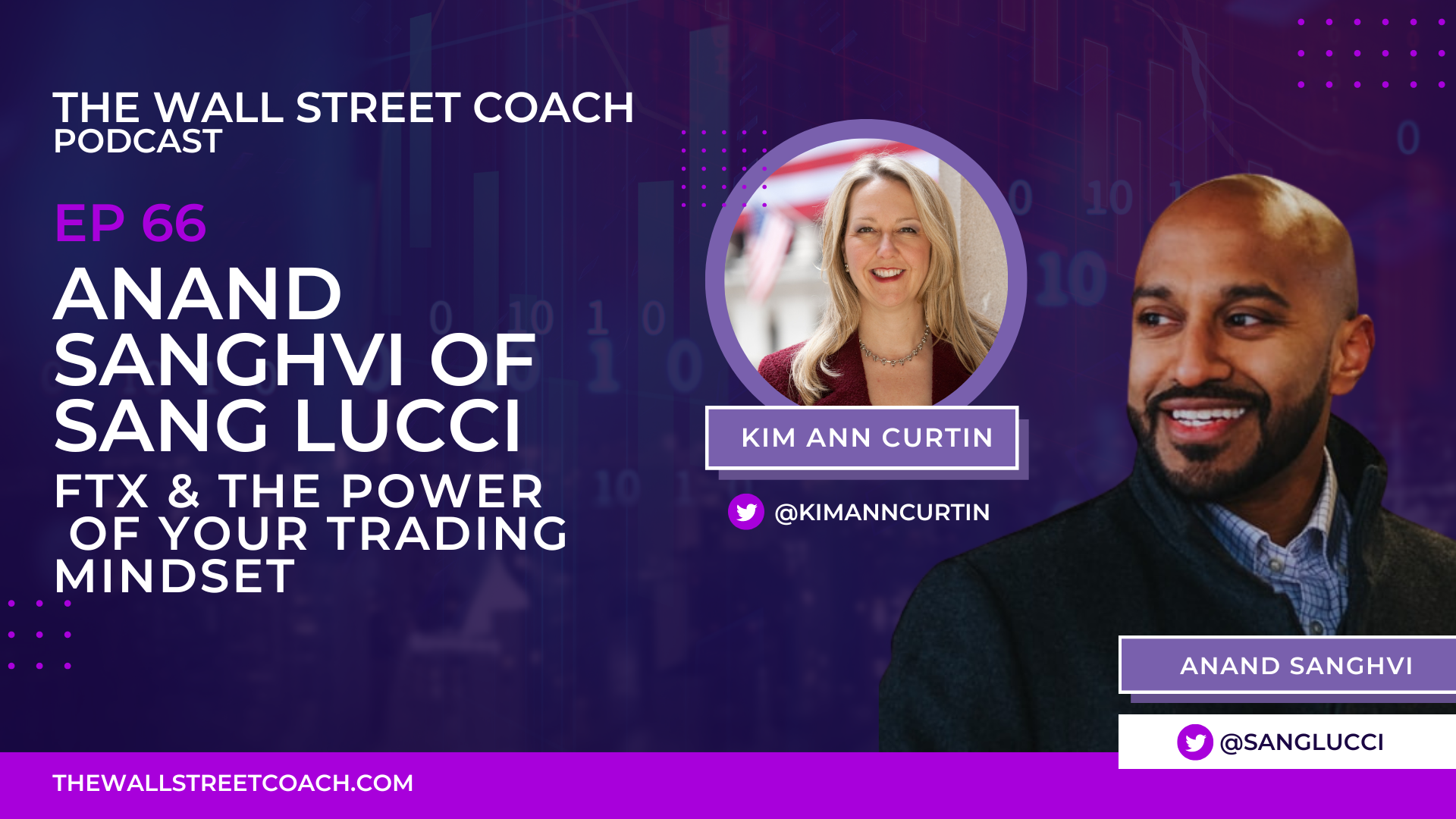
Ep 66: Anand Sanghvi of Sang Lucci: FTX & The Power of Your Trading Mindset

https://youtu.be/si6KOETsXe8


0:30 – How to access Kim’s FREE e-book, “Discipline & Finding Your Edge”


0:50 – Introduction to Andand Sanghvi and Sang Lucci

4:00 – FTX: what happened? Anand breaks it down.

8:50 – Key lessons for traders from the FTX debacle

13:45 – Traders’ memories, trends, and more

17:59 – Advice to seasoned traders for navigating crypto in the future + the “scam economy”

23:50 – Anand’s two books, “The Red Pill,” and “Options Made Simple”

24:15 – Anand’s take on how to cope with losses

31:55 – Over to Twitter Space

33:05 – FTX and Anand’s loss

37:50 – Acceptance and lessons from a big loss

41:00 – Anand speaks about mindset and the wisdom he has gained in 16 years of trading

47:00 – How to take losses in stride

49:50 – How Anand’s self-awareness developed

56:25 – Discipline vs. numbing

58:16 – Into the questions and commentary section

1:04:00 – Don’t spread yourself too thin!

1:06:39 – Commentary from Nate of Investors Underground

1:11:03 – The importance of a community

1:15:00 – The importance of generosity and giving back

1:17:50 – Why traders must respect the market

1:21:00 – Where does trading end and real life start?

Ep 66: Anand Sanghvi of Sang Lucci: FTX & The Power of Your Trading Mindset

As Anand Sanghvi of Sang Lucci puts it, “You can be a great trader and still have your demons.” The question is, how are these demons holding you back? 

In this no-holds-barred and often hilarious interview, The Wall Street Podcast host Kim Ann Curtin and Sanghvi cover a variety of topics relevant to traders right now. Tune in to get Sanghvi’s take on the FTX debacle, a frank discussion about overcoming losses, and why mindset and community are so crucial for traders at every level. 

About Anand Sanghvi & Sang Lucci

Anand Sanghvi, AKA “Lucci,” is a professional large cap options and futures trader and the founder and lead trading educator at Sang Lucci. He has successfully traded equities and options since 2006, and he launched his first hedge fund, Sang Lucci Capital Partners, LP, in 2012.

He uses his story — evolving from a Boston hustler to a company founder and hedge fund partner — to inspire students around the world and help them understand themselves as traders. He teaches them the methodology that’s taken him to where he is today.

As an educator, Sanghvi’s goal is to teach the world how the options markets actually work and what it really means to be a trader. On a daily basis, he educates hundreds of traders via Sanglucci.com, many of whom have poured thousands into “gurus” that claimed to have a magic bullet for their success. His job is to explain why there is no shortcut to profitability, and begin the process of helping them really learn how to maximize their chances of making money.

At Sanglucci.com, Sanghvi and his team’s approach has approach has paid off substantially, both for the team and the trading community and students. To learn more, check out the free e-book “The Red Pill” on SangLucci.com.

Follow Anand Sanghvi + Links Mentioned

SangLucci.com

Sang Lucci on Twitter

Sang Lucci on Instagram

Anand Sanghvi on LinkedIn

Check out Anand’s books: “The Red Pill” and “Options Made Simple

The event where Kim met Anand in person: Traders For a Cause

Get the FREE e-book mentioned in this episode at traderdiscipline.com

 Disclaimer: All information provided is for educational purposes only and does not constitute investment, legal, or tax advice, or an offer to buy or sell any security. For full disclosures: www.thewallstreetcoach.com

Ep 65: Thomas Vozzo of Homeboy Industries: A Radical Approach to Leadership & Life

https://youtu.be/QXwbAWCtRpY


0:30 – How to access Kim’s FREE e-book, “Discipline & Finding Your Edge”


0:50 – Introduction to Thomas Vozzo, Homeboy Industries, and the book “The Homeboy Way: A Radical Approach to Leadership and Life.”

3:26 – Thomas’s transition from the for-profit sector to non-profit

7:50 – How Homeboy Industries got started and Tom’s role in helping the company grow

11:05 – What’s behind Tom’s mindset?

17:10 – How kinship affects the bottom line

23:00 – What’s necessary to grow as a person?

27:28 – Over to Twitter Spaces

30:20 – What is ‘radical kinship’?

32:00 – How judging affects entrepreneurship and leadership

34:50 – A Homeboy Industries volunteer speaks

41:40 – What entrepreneurs should take away from Homeboy Industries

48:30 – The “two Americas” and how to make a profit and still make a difference

50:30 – How to donate or get involved with Homeboy Industries

53:50 – Questions, comments, and final words

Thomas Vozzo of Homeboy Industries: A Radical Approach to Leadership & Life

Thomas Vozzo is an author, social enterprise builder and thought leader. He’s also the CEO of Homeboy Industries, an organization that The Wall Street Coach Podcast host Kim Ann Curtin has supported for years. In this conversation, he and Kim talk about his radical approach to leadership — and life!

About Thomas Vozzo

Thomas Vozzo was a successful corporate leader with a reputation for results. But decades into his career, he began to feel like something was missing – a thought that would eventually lead him to become the Chief Executive Officer at Homeboy Industries, the largest gang rehabilitation and re-entry program in the world. For more than 34 years, Homeboy Industries has been a beacon of hope in Los Angeles, providing training and support to formerly gang-involved and previously incarcerated individuals, helping them to heal and redirect their lives.

A decade into his executive leadership role at Homeboy Industries – Vozzo is also the author of “The Homeboy Way: A Radical Approach to Leadership and Life.” Written with heartfelt authenticity and purpose, Vozzo invites corporate America and leaders everywhere to create a new bottom line, challenge the corporate status quo – and combat injustice, economic and racial inequity.

In his free time, Thomas enjoys hiking, ocean swimming, travelling, and spending time with his family.

Follow Thomas Vozzo & Homeboy Industries

www.homeboyindustries.org

Twitter: @homeboyind

Instagram: @homeboyindustries

Other resources mentioned:
The Homeboy Way: A Radical Approach to Leadership and Life
Tattoos on the Heart: The Power of Boundless Compassion
Ep 60: Nathan Michaud’s Day Trading Mindset and Community 
Traders For a Cause

 Disclaimer: All information provided is for educational purposes only and does not constitute investment, legal, or tax advice, or an offer to buy or sell any security. For full disclosures: www.thewallstreetcoach.com

5 Methods for How to Deal with Trading Losses

There are hundreds of articles on how to become a profitable trader … Not quite as many about how to deal with trading losses.

On the one hand, I can see why — who wants to think about losing?

But the hard truth is that losses are part of the game with trading — much more so than with most other professions. So if you’re not prepared, losses can feel personal. They can erode your self-confidence. They can devastate you emotionally.

Accepting trading losses isn’t as simple as “just get over it.” It takes hard work — but it’s worth it. In this article, I’ll share five methods for how to deal with trading losses that you can begin implementing today.

But first…

What Traders MUST Know About Trading Losses

One of the most difficult things for new traders to fully recognize is that losing is an inevitable part of the game.

Once you’re able to set your ego aside and make peace with the small losses, you’ll allow yourself greater opportunities for wins in the future.

— Kim Ann Curtin (@kimanncurtin) October 29, 2020

Like with trading FOMO (a topic I discuss in this post), if you want to learn how to deal with trading losses, you need to get comfortable with discomfort.

That means facing the discomfort of the idea that your current reality may not be meeting all of your needs.

The thing is, few people actually have the self-awareness to see this connection.

On a certain level, most people are aware of discomfort around certain triggers. But to truly learn to deal with losses in trading, it’s crucial to be with that discomfort and to be open to recognizing how it impacts how you deal with loss.

So how do you get comfortable with discomfort?

It starts with some emotional endurance training. It’s vital to strengthen yourself emotionally. Like any type of strength training, it can take time.

In my experience, very few cultures advocate or encourage this type of development. So it’s no wonder that for many people, it can feel like being a 90-pound weakling trying to bench press for the first time.

I want to emphasize that it may not be quick or easy work, but consistent effort can and will pay off.

Ready to get started? Here are five methods to try:

(P.S. In my book, “Navigating FOMO and Comfort With Loss,” I explore a number of different exercises to build up emotional ability to deal with losses. Check it out now!)

Accept the Loss

Gratitude turns what we have into enough & more. It turns denial into acceptance chaos into order confusion into clarity. #gratitude #mondaymotivation

— Kim Ann Curtin (@kimanncurtin) September 5, 2022

One of the most difficult things for new traders to fully recognize is that losing is an inevitable part of the game.

Once you’re able to set your ego aside and make peace with the small losses, you’ll allow yourself greater opportunities for wins in the future.

— Kim Ann Curtin (@kimanncurtin) October 29, 2020

As I said earlier, trading losses aren’t something that you just get over.

You need to sit and “be with” the hard-to-be-with feelings all the way through to the other side. Stop resisting the loss.

This process will be unique to every trader. But as a starting point, I have a few resources to suggest.

The first is an article by my mentor, Raphael Cushnir: “Two Questions That Could Change Your Life.”

Everyone has experienced setbacks. But if we are closed off emotionally, we can become so scarred over time that it’s hard to keep moving forward. In this article, Cushnir reveals the excruciating pain from a personal setback and how it led him to a higher path.

By examining what we are feeling right now and evaluating our relationship with it, we can in essence lean into that pain and hasten our journey through it.

Keep reading for the next resource…

Learn From Each Loss

Have you heard the term “market tuition”? The idea is that losses can turn into some of our most powerful teachers if we learn from them.

Of course, this isn’t always easy.

For anyone dealing with staggering losses, I urge you to check out my 2-part podcast episode with Charles Harris, featuring guest co-host Shane Dorian. (Check them out here and here.)

In the interviews, Charles shares the story of a devastating loss that decimated his account — and what he learned from it and how it ultimately turned into an experience where he bounced back and regained most of his account in a surprisingly short period of time.

These results are not common, true. But they wouldn’t have been possible at all if Charles hadn’t been able to accept the loss, learn from it, and move on with the knowledge he gained from the experience.

For more viewing on the topic, I urge you to check out my podcast interview with Nate of Investors Underground. In it, he has a unique point of view about learning from your losses — and your wins. Check it out here.

Take Smaller Positions

I know — it almost sounds too simple. But this is such a common issue with traders that it bears mention.

If you’ve been experiencing a series of trading losses, it may be time to size down.

Sure, the potential gains are smaller. But so are the losses.

When you inevitably do take a loss, a $5,000 loss will feel a lot different than a $50,000 loss.

Sometimes trading smaller is appropriate or instead it’s time to focus on following your own set of rules and sticking to your stops versus focusing on the potential home run.

This is the real foundation of trading. From there, you can scale back up.

Set a Daily Limit

For many traders, it can be helpful to create daily limits on trading losses.

For example, your rule might be “If I lose 2% of my account, I walk away for the day and don’t make another trade.”

This can be a helpful approach if you notice that you chase or revenge trade after a loss. It can give you a much-needed separation from your monitor that can help you put things back in perspective. Overall, what it does is help you manage the emotions of greed and fear of more losses.

Talk to an Expert

If you find that you keep struggling with discipline in your trades, even when you’ve come into the day with a sound plan… It may be time to consider having a coach walk beside you on that journey. (Need tips on how to hire a coach? Check out this post.)

Sometimes getting some outside perspective and having someone to hold you accountable to your plan can make a world of difference.

My team of elite coaches have helped plenty of traders overcome the mindset traps and bad habits that don’t serve them, and like lifting an anchor, watched them finally get unstuck.

If you’re interested in having an experienced coach help you reach your trading goals, please reach out today.

Conclusion

No trader loves losing. However, it’s part of the game, so it’s well worth taking the time to develop some skills to help you learn how to emotionally deal with losses. Armed with the knowledge from this post, you’ve got several actionable steps to take so that you can be better prepared if and when facing your own trading losses.

What’s your favorite method for dealing with trading losses? Do you have another method to share? Leave a comment, I love to hear from you!

What is FOMO in Trading: What It Is & How to Manage It

Do you struggle with FOMO in trading?

Be honest. How often do you trade because you’re scared of missing out? Or, how often have you stayed in a trade too long because you’re scared of losing? 

If you haven’t struggled with trading FOMO, consider yourself lucky — and in the minority. In a recent Twitter poll, I found that the vast majority of traders experience FOMO either sometimes or all the time:

How often do you experience FOMO in trading? #traders #trading #tradingpoll #tradingFOMO

— Kim Ann Curtin (@kimanncurtin) October 6, 2022

FOMO in trading is directly behind many of the biggest issues for traders — regardless of their level of experience. FOMO and fear of loss remain a constant struggle even for seasoned, longtime traders. It makes you wonder…

Why is trading FOMO so hard to deal with, and why does it plague traders throughout their careers? 

Because there’s a deeper root to these emotional struggles. And it usually has nothing to do with trading. But before we dig in, a few basics…

(P.S. In my book, “Navigating FOMO and Comfort With Loss,” I explore the gritty underside of FOMO and what causes it. The book also includes some powerful exercises to begin facing the demons that cause FOMO in your life. Check it out now!)

What is Trading FOMO?

FOMO, or fear of missing out, is a common occurrence not only in trading, but in life.

It’s that feeling that there’s something better on the other side of today or this moment.

Most people want to know how to avoid FOMO in trading, but first, it’s important to understand something…

Believe it or not, the thinking behind the FOMO mindset isn’t all bad. 

It’s a human survival technique from thousands of years ago. On the positive side, it can help us continue to strive and to take action to make sure we are as safe as can be and can have as many of our needs met as possible. 

However, it’s easy to get caught up in the FOMO trap and fall into a cycle of feeling like you’re constantly waiting for your best life to begin. 

If you’re living constantly in the future or “what ifs” you’re not present to what you currently have or are experiencing right now. 

Some people might argue that what they have right now isn’t so fantastic. Why not focus on the future instead? 

I won’t dismiss that. I’m all about intention and creating your future. But it’s also important to find peace where you are. 

If you’re not able to find peace with the here and now, chances are you’ll develop an unhealthy habit of always looking forward and never appreciating what you have now. 

That’s why it’s so important to gain self-awareness about what causes FOMO in your life…

Because if you struggle with FOMO in life, chances are you’ll struggle with it in trading. 

FOMO in Trading 

Now that you have a better understanding of what’s behind FOMO … How can FOMO affect your trading? There are many ways, but here are some of the most common issues it can lead to:  

Of course, not only can these things lead to staggering losses, but they can also take a huge emotional toll. So how can you avoid FOMO in trading? Start here…

How to Avoid FOMO in Trading

Now that you understand the FOMO’s meaning in trading, here are some actionable tips to develop awareness around it and begin to avoid FOMO in trading: 

Understand That FOMO is Real

First off, it’s important to acknowledge and understand that FOMO is real, and it can have very real effects.

FOMO creates adrenaline spikes that can lead to risky behavior. This can be very dangerous for traders. For example, it can make it feel like you MUST get into a trade. You feel as if you don’t get in, you could be missing out on the big one! 

This misplaced urgency to get on the train can lead to poor decision-making — and potentially big losses. 

FOMO is real — but it’s not just a matter of self-control. If it were that easy, it wouldn’t be such a problem for traders. 

Ultimately, FOMO is driven by a discomfort with the present moment and how things are. To begin to unravel this complicated web, it’s necessary to lean into that discomfort. But where to start?

Get Comfortable With Trading Losses

Getting comfortable with trading losses is easier said than done — but it’s possible. Let me tell you about a trader named Tabitha*… (name changed for privacy)

Tabitha came to me with a desire to gain the tools to control her emotions around losing money. 

She had a cycle where she’d profit — but then she started chasing and lost just about everything. 

She knew that FOMO was the culprit, but she couldn’t help herself. Her big fear of missing a potential spike often led to bag-holding after an irrational chase. 

FOMO was definitely holding her back. But how could she get more comfortable with losses? 

Here’s where we started…

Know How to Deal With Those Emotions

For Tabitha, one of the first steps toward getting comfortable with losses was to get back in touch with her own rules. 

Stop Breaking the Rules 

The thing is, she KNEW what rules she should be following. 

She had pursued an education in trading. She knew what she should be doing and what kinds of trades she should look for. But her emotions would take over and override because of the siren call of missing out or making a quick buck or two. 

She knew the rules, but she was breaking them because her emotions were getting in the way. This made the self-punishment cycle even worse, because she knew what she should be doing. 

But before she could stop breaking the rules, she had to do this…

Recognize Your Trigger

When you know what the rules are and you’re still breaking them, it’s pretty clear that it’s not a matter of self-restraint. For Tabitha, it was important to dig deeper and to look at the specific chain of events or emotional triggers that made her not follow her own rules.

Along these lines of self-inquiry, Tabitha admitted that usually, rule-breaking started with the sensation that she wanted to “hop on the train before it leaves.” Hearing that, I dug a little deeper and determined that this was something she struggled with outside of trading, too.

She admitted that since she was young, she’s always been competitive — when she sees someone else do something, she feels like she wants to do it too and succeed. She wants to be good — no, great at it. She doesn’t want to be sitting there in the corner watching.

Who is that person who sits in the corner?

According to Tabitha, 

That person is antisocial. That person is going to miss out on the fun of the activity, of not being involved. They’re going to miss out on being rich. 

Hmm.  Do you think it’s possible this voice — telling her that being the person in the corner, missing out, is the worst place to be — is not accurate or wise but is actually some sort of a gremlin or inner dragon?

Focus on What Affects Your Performance

Following that session, I gave Tabitha a homework assignment.

For one week, I challenged her to be that person in the corner. To be the person who “misses out” in small ways. It didn’t have to be huge — it might be holding back on a trade she wasn’t sure about or skipping out on a party she was on the fence about attending.

I urged her to pretend she was a famous actress taking on the role of the girl who’s in the corner missing out. Could she observe what the story was, how triggered the gremlin becomes? 

Why go through this assignment? I wanted that story to play out and for her to see what it really might feel like to miss out. I wasn’t convinced the story her gremlin was telling her was actually true.

Take a cue from Tabitha’s homework. If part of her story resonated with you, challenge yourself to go to that “worst-case” scenario and face your gremlin – it doesn’t even have to be in your trading but expose yourself to the heat in someway to observe yourself.

Challenges like this are not fun. But they are necessary due diligence if you want to get to the bottom of what is holding you back as a trader.

If you have a farm or garden, you have to till the soil. Otherwise it will carry not have the nutrients as what was last planted sucked them all out and that will deter new growth. Tilling is time consuming and not a fun process. It’s yucky and tedious. Yet it’s necessary.

It’s the same with this inner work. It’s simple — but not easy. It can help to have a guide.

Seek Out a Trading Coach

Facing what plays into your personal FOMO and fear of loss is a highly personal process.

It also requires a willingness to do the hard work. 

As my mentor Raphael Cushnir says, “Resistance is like stepping on a hose with all our might and commanding the water to flow.”

Unfortunately, to actually let the water flow, we must face what is uncomfortable to be with. 

It can be helpful to have a guide such as a coach who has expertise in guiding you to be with uncomfortable feelings. 

It’s worth it. Once you do change your relationship with the gremlins to turn around and face them and recognize that they are not as powerful as originally thought will change more than just your trading. It could change your entire life. 

Interested in working with my team? Get in contact here.

Conclusion

By gaining a better understanding of what’s behind the FOMO in your life and trading, you’ll be able to contend with it better — it can improve your outlook, your decision-making, and your self-compassion. 

To further your education on the topic, please check out my e-book, “Navigating FOMO and Comfort With Loss.”

Interested in learning more about The Wall Street Coach? Reach out today.

How to Hire a Coach

“For my part, there is only traveling on paths that have heart, on any path that may have heart.” — Don Juan, Apprentice to a Yaqui Sorcerer

So, you want to hire a coach. How do you choose the right one? 

Coaching has become more and more common for high-achieving individuals in just about every sector. There’s a good reason why — it delivers. According to one study, the median ROI on coaching is 7x the investment

With metrics like that, it’s easy to see why so many people want to hire a coach. However, that doesn’t mean you should sign up with the first one you find. 

Like most things in life, coaching is not a “one size fits all” solution. While ultimately the choice is yours, here are some considerations that can help you find the right coach for you:

How to Hire a Coach — Tip 1: Listen to Your Heart

This might be the most important consideration of all when choosing a coach.

Do you ever just get a good feeling when you talk to someone? Or on the flip side, do you ever just get a bad feeling? Listen to it. Don’t dismiss what your heart tells you. Your intuition is more powerful than you realize. (Curious about how high-powered individuals use intuition? Check out my podcast episode with Jason Apollo Voss.) 

Yes, there are certain criteria that should be met before you sign up with a coach. But in the end, it will come down to an indescribable “simpatico” that your heart will feel. Trust yourself to make the right choice for you. 

How to Hire a Coach — Tip 2: Communication is Key

It’s the sad truth — most people don’t have good follow-up skills. 

But there’s good news, too — if you DO have good follow-up skills, that alone can elevate you above the majority of your peers. It’s a vital part of your networking toolkit — and one of the keys to success in any field. If you can show up and follow up, you’ve done most of the work already. 

If you want to hire a coach, make sure that they can show up for you. 

After you met, did they follow up with you? Did they remember your name and who you are? Don’t put in the time to make someone part of your life if they aren’t able to offer you this basic respect. 

How to Hire a Coach — Tip 3: Look For Credentials 

Is your potential coach certified? This is a question worth asking before you hire a coach.

The International Coaches Federation (ICF) is the governing body for coaching. If your prospective coach has been through a school/training program that has been certified by the ICF then you can bet your bottom dollar that the coach has had rigorous training and is well prepared to be a coach. The ICF also gives the credentials of Associate Certified Coach (ACC) which means that the coach has been properly trained, and has been approved of by Master Certified Coaches and has coached over 100 hours.  

That being said, I think that there IS something more important than credentials…

Has your potential coach faced their own dragons? 

Coaching has been transformative for me — I have personally been coached by some incredible individuals. Not all of them have been credentialed in the technical sense, but my most powerful and productive sessions have been with coaches who have been willing to sit in the discomfort of doing their own work.

Personally, I’d rather have a coach with experience than credentials! 

How to Hire a Coach — Tip 4: Consider Their Niche 

At the end of the day, you want to find a coach that’s compatible with your dreams and ambitions. If your goal is to be the best public speaker, then it doesn’t make sense to hire a coach who’s going to teach you how to fish. 

My time on Wall Street working with high-powered executives helped me establish my niche. I was receiving coaching at the time, and it was transformative to me. I saw that so many individuals in this world could benefit from this type of coaching, which inspired me to focus on these sectors. 

Because I focus mainly in these spheres, I have become intimately familiar with the struggles posed to these individuals. This focus helps me target my efforts so that every coaching session is as effective and beneficial as possible.

How to Hire a Coach — Tip 5: Testimonials

You probably wouldn’t go to a restaurant that had bad Yelp reviews. Take the time to see what people are saying about a coach before you hire them! 

What’s the word on the street? Is your prospective coach well respected in their community? Is there field-tested public approval? Track record means everything. And we’re not talking about the occasional out-of-character bad review — some people will not be successful, and try to blame it on their coach. But you want a proven track record of positive experiences. Reputation is everything, and to make sure you’re making the right choice for you. 

Want to Hire a Coach? Do Your Due Diligence! 

Hiring a coach is a powerful step that can improve your career and your life. It’s not something that should be taken lightly, so don’t just hire the first coach you come across on Google! 

Take the time to consider your needs — and if your potential coach seems in alignment. Remember, these tips and considerations are merely a starting point — ultimately, the decision will be personal and based on what serves you best.

Interested in taking the next step with coaching? At The Wall Street Coach, our experienced coaches work to help you push through the mental barriers that are holding you back so that you can achieve the freedom, wealth, and fulfillment you desire. I invite you to reach out today to connect with my team! 

What traits do you find most valuable in a coach?

How to Live From Abundance

There is a natural law of abundance which
Pervades the entire universe, but it will not flow
Through a doorway of belief in lack and limitation

– Paul Zaiter


I discovered the above quote about abundant living from Lynn Twist’s book, “The Soul of Money.” Given the spirit of scarcity in the air right now, it seemed like a good time to talk about how to get into the spirit of abundance!

Most people get sucked into the quicksand of scarcity at some point or another. As an entrepreneur, I’ve certainly felt it at points. It’s especially hard to avoid at times like these, when so many forums are focused on negative emotions. But it doesn’t have to be that way!

Ready to shift your mindset? Keep reading for tips to move your thinking from a place of scarcity into abundance.

Abundant Living Tip #1: Focus On What You Do Have

It’s easy to dwell on what you don’t have. But where does that get you? Not only is it unproductive, but it can actively hold you back in your life and career.

That’s why the first step to live from abundance is to focus — really focus — on what you do have.

Here’s an exercise that I like to do when my thinking starts to gravitate towards scarcity:

List 10 things that you receive or have each day.

Here are just a few examples:

Your home.

Loved ones.

A good conversation with a friend.

Freedom.

Food in your fridge.

The coffee shop nearby.

Ice cream!

A stable internet connection.

Can you list more than 10? Yes! Keep going as long as you’d like.

The more you put on your list the more you will become present to all you DO have. While writing down the things you’re grateful for when you’re feeling down is a great way to pull yourself out of the rut of scarcity, doing this exercise every day will pay off in the long run when you realize it’s been 3, 4, or 6 months since you’ve even felt the feeling of scarcity rearing its ugly head!

Abundant Living Tip #2: Make This Your Mantra: “I Have Enough.”

In her aforementioned book, Twist suggests that we often succumb to the mantra of “not enough.”

Before our feet hit the floor, our first thoughts are “I didn’t have enough sleep,” followed by, “I don’t have enough time.” She says that whether these thoughts are true or not, they occur to us automatically — before we can question or examine them.

The opposite can be true with a little bit of discipline.

Try to catch yourself in these moments. Start to fill your brain with the people, places, or things you experience “enough” of. For instance, when you feel full after a delicious meal, acknowledge it. Think about all of the people who do return your calls. Or when the train or bus arrives right when you step on the platform.

Pretty soon you’ll be automatically thinking about how easy it is to be grateful for all the positive things in your life.

Abundant Living Tip #3: Be Generous

Generosity isn’t just about money. It can be about giving your smile, compliments — even your time.

What you appreciate will appreciate you back, so look for ways to be generous. Thank everyone. The bus driver who deals with traffic all day. The waiter who steers you away from a particular dish. Hold the door open for someone. Try to “pay it forward” — give your barista an extra $10 and tell them to apply it to the next person’s order. Talk to the shy person in your office. Call a friend or family member to tell them how much you appreciate them.

Being generous isn’t expensive. Generosity requires little or no money — but it can make you feel like a million bucks.

You’re Only as Abundant as Your State of Mind

According to Twist, “We spend most of the hours and the days of our lives, hearing, explaining, complaining, or worrying about what we don’t have enough of. It has become a kind of default setting. It becomes the reason we can’t have what we want or be who we want to be.”

But it doesn’t need to be that way. These three tips can help you take yourself out of that default setting. When practiced regularly, your new default setting will shift. Before long, you’ll feel like the richest person in the world.

What makes you feel abundant? Leave a comment — I love hearing from you!