– Traderherojourney.com is the only Discord room for Traders that specifically works on the mindset of a trader.
– Intro to Steven Eisman
– How today’s banking crisis is different
– Steven’s philosophical approach: Traders need to shift into their new paradigm
– Steven’s courage and willingness to foresee what was happening
– Steven’s perspective on First Republic
– Paradigm shifts aren’t clear until they actually happen
– Rules of thumb – investing is not a religion
– The market at its current level will be changing
– The Eisman group takes a limited amount of investors
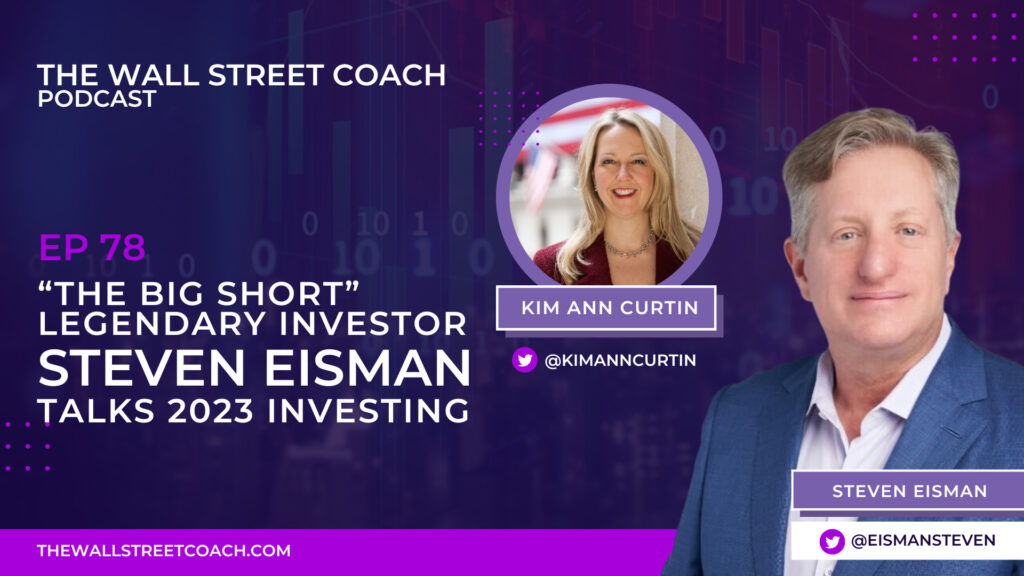
“The Big Short” Legendary Investor Steven Eisman
Talks 2023 Investing
In this podcast episode with guest co-host Grant Williams, we delve into the legendary Steven Eisman’s career, his notable contributions, mindset and his advice on navigating the complexities of today’s financial markets.
With a remarkable career spanning over two decades, Steven Eisman has emerged as a distinguished figure in the world of finance. Beginning his journey at Oppenheimer & Co., a prominent player on Wall Street, Eisman earned the prestigious title of All-Star Analyst, as recognized by esteemed publications such as Institutional Investor and The Wall Street Journal. However, it was during his tenure as Partner and Senior Portfolio Manager at FrontPoint Financial Services Fund that Eisman made his indelible mark. His remarkable foresight and predictions of the 2008 financial crisis were immortalized in Michael Lewis’s best-selling book, “The Big Short,” which was later adapted into an award-winning film featuring Steve Carell portraying Eisman.
Today, Steven Eisman is the Managing Director at Neuberger Berman, where he spearheads the Eisman Group within the firm’s esteemed Private Asset Management division. Leveraging his wealth of experience and expertise, Eisman continues to provide invaluable guidance and insights to investors.
Disclaimer: All information provided is for educational purposes only and does not constitute investment, legal, or tax advice, or an offer to buy or sell any security. For full disclosures: www.thewallstreetcoach.com
Grant Williams on Bear Markets, Humility, and Why Caution is a Competitive Advantage
Grant Williams on Bear Markets, Humility, and Why Caution is a Competitive Advantage
Grant Williams joins Kim for a two-part conversation about markets, mindset, and the importance of intellectual flexibility when conditions change. With decades of experience across global markets, Grant brings a perspective that is especially valuable during difficult cycles: surviving well matters more than looking smart, and avoiding major damage is often the first duty of any serious investor or trader.
This episode stands out because Grant is unusually direct about caution. He talks through the emotional traps of waiting to get back to even, the importance of humility, and why each market year has to be approached on its own terms. For anyone trying to stay clear-headed during a real bear market instead of repeating the habits of easy-money periods, this is one of the stronger archive conversations.
The Trader Positioning Index (TPI) is a 15-minute clinical-grade assessment that measures 70+ indicators of your decision-making under pressure – and delivers a 35+ page personalised report with a custom action roadmap. Learn more about the TPI ->
Grant Williams has spent decades in global finance and is known for his interviews, newsletters, and market commentary. Across those different roles, one constant stands out: curiosity paired with caution. In this episode, he brings both to a conversation about what traders and investors need to do when the market environment becomes genuinely difficult again.
Key insights from this episode
The first duty is not to suffer catastrophic losses. Grant emphasizes that survival is not defensive weakness; it is the foundation of future opportunity.
Bear markets challenge even experienced participants. Easy-money instincts often do not transfer well into harder regimes.
Humility matters more than certainty. Grant argues that trying to be less wrong is often more useful than trying to prove you were right.
Each year has to be earned again. Experience matters, but every cycle asks different questions and punishes stale assumptions.
Caution is not the absence of opportunity. It is often what preserves the ability to act when the real setup finally appears.