Trading Burnout: How to Recover Without Quitting the Markets
Trading Burnout: How to Recover Without Quitting the Markets
I’ve seen it hundreds of times. A trader who was disciplined, focused, and profitable six months ago now sits frozen in front of their screens, unable to pull the trigger on setups they know work. They’re not lazy. They’re not undisciplined. They’re burned out. And they’ve been trying to fix it by doing more of what broke them in the first place.
Trading burnout recovery doesn’t start with a new strategy or tighter risk management. It starts with understanding that burnout is your nervous system telling you the current approach is unsustainable — not that trading itself is wrong for you. The recovery is structured and predictable, but it requires more than taking a week off and promising yourself you’ll “do better” when you come back.
Quick-read summary:
Burnout ≠ quitting — most burned-out traders return stronger with the right recovery protocol
Three phases: acute burnout → recovery → re-entry
Common misdiagnosis: “I’m just not cut out for this” (almost always wrong)
Recovery timeline: typically 4–12 weeks depending on severity
The fix isn’t more discipline — it’s nervous system recovery and identity separation
What Trading Burnout Actually Feels Like
Let me describe what I hear from traders in burnout, because the symptoms are specific — and recognizing them is the first step toward recovery.
It’s not just tiredness. It’s dread before the market opens. It’s staring at a setup that checks every box on your plan and feeling… nothing. Or worse, feeling resistance so strong you can’t click the button. It’s emotional numbness to both wins and losses — a $2,000 green day feels as flat as a $2,000 red day. You’ve lost the emotional feedback loop that used to guide your decisions.
You’ll notice you can’t follow through on plans you genuinely believe in. It’s not that you’ve forgotten your rules or that you think they’re wrong. You just can’t execute them. Your body won’t cooperate. This isn’t a discipline problem — it’s a nervous system problem.
The difference between a losing streak and genuine burnout is this: in a losing streak, you still want to trade. You’re frustrated, maybe angry, but you’re engaged. In burnout, you don’t want to be anywhere near the markets. The thought of opening your platform makes your chest tight.
High performers are especially vulnerable because they’ve built their identity around pushing through resistance. They’re the ones who overtrade when they’re down, who add more screen time when strategies stop working, who treat rest as weakness. That’s the overtrader-to-burnout pipeline I see constantly — and if you’ve been overtrading for months, you’re already halfway there. (More on breaking that pattern: How to Stop Overtrading.)
What Causes Trading Burnout?
Chronic P&L-driven cortisol spikes
Trading under financial pressure — whether it’s because you’re down for the month, trading capital you can’t afford to lose, or trying to hit an arbitrary profit target — floods your body with cortisol. That’s the stress hormone designed to keep you alive when a predator is chasing you. It sharpens focus and speeds reaction time… for about 20 minutes.
When cortisol exposure becomes chronic — which happens when every trading session feels like survival — it degrades decision quality, motivation, and emotional regulation. Research published in Nature demonstrates that elevated cortisol levels in financial traders are reliably associated with increased risk-taking behavior and market instability. The study found that men with elevated cortisol traded more frequently — and often at prices that deviated significantly from fundamental value.
Your prefrontal cortex, the part of your brain responsible for impulse control and strategic thinking, essentially goes offline under sustained stress. Studies on sleep deprivation show that even a single night without proper rest reduces functional connectivity in the prefrontal regions critical for decision-making. You’re not getting worse at trading because you’re weak. You’re getting worse because your body is protecting you from what it perceives as a persistent threat.
Identity fusion — when “trader” becomes your whole self
I have worked with traders who can’t tell me three things they care about outside of markets. Their friends are traders. Their hobbies involve charts. Their self-worth is tied directly to daily P&L. When losing trades feel like losing yourself, every red day becomes an identity threat.
This is the setup for burnout. When your identity and your performance are fused, there’s no psychological space between a bad trade and being a bad person. You can’t separate “I had a losing day” from “I am a failure.” That level of existential pressure on every decision is unsustainable.
Here’s what I tell traders who are deep in identity fusion: you are not your P&L. You are the person learning to trade consistently and profitably. That distinction — between the process and the outcome — creates the psychological breathing room you need to recover.
Isolation
Trading is one of the loneliest professional pursuits. Outside a discord room you’ll rarely have colleagues to debrief with after a tough session. No manager to reassure you that the market was brutal for everyone today. No external validation when you follow your plan perfectly and still lose. The losses are entirely yours to carry, and the wins often feel hollow because there’s no one to share them with.
The isolation compounds the burnout because there’s no reality check. When you’re spiraling, there’s no one in the room to say, “You’re being too hard on yourself.” You just sit in it, alone, until the weight becomes unbearable. Research from the American Psychological Association links perceived loneliness and social isolation with depression, poor sleep quality, impaired executive function, and accelerated cognitive decline — all of which directly impact trading performance.
The “fix it by grinding harder” trap
The most common mistake I see: responding to burnout with more — more screen time, more analysis, more trades, more strategies. It feels productive. It feels like you’re taking control. But you’re not solving the problem. You’re deepening it.
Burnout is your body telling you the approach is broken, not that you need to do the broken thing harder. When you grind through burnout, you’re training yourself to ignore the signals your nervous system sends. That’s how traders end up in severe burnout — the kind where they can’t execute at all, where the thought of trading makes them physically ill.
If you want to understand why the mental side of trading matters this much, start here: What Is Trading Psychology?. The psychological dimension isn’t a “soft skill.” It’s the infrastructure that determines whether you can stay in the game long enough to win.
The Scope of the Problem
The data on burnout among traders and financial professionals is stark. A 2025 study published in Forbes found that 66% of employees across industries report experiencing burnout — an all-time high. Among financial professionals specifically, research published in PMC examined 702 professionals and found that younger, less experienced professionals face significantly higher stress levels due to career advancement pressures, deadline demands, and organizational conflicts.
More telling is research specific to day traders. A study analyzing 387 traders found that 43.2% experienced some level of anxiety beyond “normal,” with 12.7% reporting extremely severe anxiety. Additionally, 35.7% reported elevated stress levels, with 8.8% experiencing severe stress and 2.3% reporting extremely severe stress. The psychological toll isn’t theoretical — it’s measurable and widespread.
Even among institutional traders, the pressure is immense. Research published in the International Journal of Stress Management found that 32% of professional financial traders reported “very high” or “extremely high” stress levels, with “profit goal” ranked as the highest stressor, followed by “long working hours.”
Phase 1 — Diagnosing Your Burnout Severity
Be honest with yourself here. Most traders who read this will underreport their severity because admitting how bad it is feels like admitting defeat. It’s not. It’s the beginning of recovery.
Mild burnout:
Fatigue that doesn’t resolve with a weekend off
Reduced motivation — you still trade, but you’re dragging yourself to the screens
Occasional rule-breaking that’s out of character
Performance is flat or slightly declining despite consistent effort
Moderate burnout:
Emotional blunting — wins and losses feel the same
Consistent rule-breaking even when you consciously don’t want to
Performance declining noticeably; you’re giving back gains or deepening losses
Dreading the market open; relief when the session ends
Irritability spilling into relationships outside of trading
Severe burnout:
Unable to execute trades even when setups are clear
Emotional numbness extending beyond trading into other areas of life
Relationships, health, or daily functioning visibly affected
If you’re in severe burnout and you’re still forcing yourself to trade, you’re doing damage. Not just to your account — to your relationship with markets. That’s harder to rebuild than any drawdown.
“After working with Kim I just had my best January since I began trading 5 years ago… This has everything to do with trading in peace.” — Karim Abdelkader, Trader
Phase 2 — The Recovery Protocol
Step 1 — Full stop or radical reduction (not optional)
The hardest part of recovery is the first decision: stepping back. Traders resist this because it feels like giving up. It’s not. It’s the only way to interrupt the cycle that’s destroying your performance.
Here’s why “just trade smaller” often fails: you’re still in the environment that created the burnout. You’re still exposed to the P&L swings, still flooded with cortisol, still reinforcing the identity fusion. Reducing size helps with risk management, but it doesn’t address the nervous system damage.
How long to step back based on severity:
Mild: 1–2 weeks minimum, zero trading
Moderate: 3–4 weeks minimum, no charts, no P&L checking
Severe: 6–12 weeks minimum, complete separation from markets
I know what you’re thinking: “I can’t afford to take that much time off.” Here’s what I’ve seen over 20 years — you can’t afford not to. Traders who push through severe burnout either blow up their accounts or quit permanently. The ones who step back, recover properly, and return with a rebuilt foundation? They often have their best years after burnout.
The American Psychological Association notes that burnout recovery requires more than just taking time off — it requires creating an opportunity to rest, recover, and restore balance. Without addressing the underlying causes, time off merely delays the inevitable relapse.
Step 2 — Nervous system recovery (not just “relaxing”)
Nervous system regulation is active, not passive. It’s not about lying on the couch watching Netflix. It’s about re-teaching your body that you are safe, that every moment of your day is not a survival event.
What actually works:
Exercise: Not to “blow off steam” — to metabolize cortisol and restore healthy stress response. Aim for 30–60 minutes of moderate activity daily. Walking works. So does lifting, swimming, cycling. The key is consistency.
Quality sleep: This is non-negotiable. Burnout tanks sleep quality, and poor sleep deepens burnout. Create a sleep routine: same bedtime, no screens an hour before, cool dark room. If you’re still struggling after two weeks, talk to a doctor.
Social connection: Spend time with people who have nothing to do with trading. The goal is to remind your nervous system that your worth isn’t tied to your last trade. Connection is regulating. Isolation is dysregulating.
You’ll know this is working when your resting heart rate drops, when you stop waking up at 3am replaying trades, when you can think about markets without your chest tightening. (For more on the emotional regulation practices that support this: How to Control Your Emotions While Trading.)
Step 3 — Identity separation work
This is the step most traders skip — and it’s why they relapse. You can rest your nervous system, but if your identity is still fused with your P&L, the first red day after you return will send you right back into burnout.
Identity separation means rebuilding a sense of self that exists independent of trading performance. Here’s how:
Exercises:
Write down 10 things you care about outside of trading. If you struggle to name five, that’s diagnostic — your identity is too narrow.
Spend time on a hobby you used to love before trading consumed your life. Doesn’t matter what it is. The goal is to feel competent and engaged in something that has nothing to do with markets.
Reconnect with people you’ve been neglecting. Not to talk about trading — to remember who you are when you’re not performing.
Here’s where my Hero’s Journey framework becomes essential. In the hero’s journey, there’s always a phase where the hero descends into darkness, loses everything, questions whether they can continue. That’s burnout. It’s not the end of the story — it’s the threshold before transformation. The hero doesn’t emerge the same. They emerge wiser, more grounded, with a deeper understanding of what they’re capable of.
Research from the Joseph Campbell Foundation characterizes burnout as a “threshold guardian” in the Hero’s Journey — an obstacle that stops forward momentum but must be recognized and overcome to cross into transformation. Like a sorcerer that transfixes the hero with the illusion of endless tasks, burnout traps traders in a cycle where completing one task immediately leads to another, preventing actual progress. The key insight: once identified, the trance of burnout can be dispelled by strategy, wit, or strength — including wielding the power of the word “no.”
Burnout is your dark night. The question that reframes the entire experience is this: What is this phase teaching me? Not “Why is this happening to me?” but “What is this showing me about the way I’ve been approaching this?”
When you start asking that question, burnout stops feeling like failure. It starts feeling like information.
Step 4 — Audit, don’t punish
Use the break to audit what drove the burnout — without self-criticism. This isn’t about beating yourself up for overtrading or taking too much risk or ignoring your plan. It’s about understanding the pattern so you don’t repeat it.
Journal prompts:
What was I trying to prove with my trading?
What would I do differently knowing what I know now?
What belief about myself was I protecting by grinding through the exhaustion?
If a friend came to me with this exact situation, what would I tell them?
That last question is key. It activates empathy for self — one of my five core practices. Treat yourself the way you’d treat a colleague going through the same thing. You wouldn’t tell them they’re weak or lazy. You’d tell them they pushed too hard, that rest is strategic, that stepping back is the smart move. Extend that same compassion to yourself.
→ Before you trade another session, take 5 minutes. The free Trader Check-In is my pre-market emotional readiness tool — it tells you whether you’re in the right state to trade today. Essential during recovery re-entry.
Phase 3 — Re-Entry Criteria: How to Know You’re Ready
This isn’t time-based. It’s criteria-based. Don’t return to markets just because two weeks have passed or because you’re bored. Return when you meet these five criteria:
1. Thinking about markets without dread
You can look at charts, read market commentary, watch price action — and you feel neutral or curious, not anxious or resistant. If the thought of trading still makes your chest tight, you’re not ready.
2. Sleep is regular and restoring
You’re falling asleep within 20 minutes, staying asleep most of the night, waking up with energy. If you’re still battling insomnia or waking up exhausted, your nervous system hasn’t recovered.
3. Identity is grounded in something beyond P&L
You can name things you care about outside of trading. You’ve spent time on those things during your break. You feel like a complete person, not a performance metric.
4. You have a plan and it doesn’t feel desperate
You know what you’re going to trade, how you’re going to trade it, and what size you’ll use. The plan feels calm and intentional, not like you’re trying to make back losses or prove something.
5. You can sit with uncertainty without needing to act immediately
Uncertainty is the nature of markets. If you’re still in a state where you need instant clarity or resolution, you’ll overtrade the moment you return. Recovery means being able to sit in “I don’t know” without it triggering panic.
How to structure re-entry:
Simulator first. Trade your plan in a sim account for at least a week. You’re not testing the strategy — you’re testing your nervous system’s response to being back in the environment.
Micro-size. When you go live, start with the smallest position size you can take seriously. Half your normal size, or less. Stay there for two weeks.
Normal size. Only scale back to full size when you’ve had two consecutive weeks of following your plan without emotional hijacking.
The one thing most traders skip that causes relapse: returning before the identity work is done. They rest, they feel better, they jump back in — and the first losing streak sends them right back into burnout because nothing structurally changed. Don’t skip Step 3.
When Burnout Is Covering Something Deeper
Sometimes burnout is the symptom, not the cause. The real driver is elsewhere — financial fear, relationship stress, unresolved trauma from a major loss, pressure from family expectations. If the same burnout cycle has happened before, it won’t resolve with rest alone.
Here’s what I’ve seen: traders who burn out once, recover, change their approach, and stay healthy. Then there are traders who burn out, recover, return… and burn out again six months later. Same pattern, different trigger. That’s when the issue isn’t the trading — it’s what trading is activating.
Questions to ask yourself:
Have I burned out before? What happened after I recovered?
Am I trading with money I can’t afford to lose? (If yes, burnout is almost inevitable.)
Are there unresolved conflicts in my life that trading is distracting me from?
Do I feel pressure to succeed at trading to prove something to someone else?
If you answered yes to any of those, self-recovery might not be enough. This is when working with someone who understands both the trading and the psychological dimensions becomes essential. (More on when that makes sense: Is a Trading Psychology Coach Worth It?)
“My colleague and I had some mind-blowing sessions with Kim as well as some major breakthroughs.” — Tim Bohen, Trader
→ Want to understand what’s actually driving your burnout? The TPI Assessment identifies whether it stems from emotional overload, identity issues, or underlying psychological patterns — 15 minutes, 35-page report, 60-minute debrief with me. It’s the diagnostic that shows you exactly where to focus your recovery.
Frequently Asked Questions
How long does trading burnout last?
It depends on severity and whether you actually step back to recover. Mild burnout can resolve in 1–2 weeks with full rest. Moderate burnout typically takes 3–4 weeks. Severe burnout — the kind where you can’t execute at all — often requires 6–12 weeks minimum. The timeline shortens significantly if you do the identity separation work and nervous system recovery actively, rather than just waiting for time to pass.
Can I trade through burnout if I trade smaller?
In mild cases, sometimes. But it’s risky. Trading smaller reduces financial pressure, but it doesn’t address the nervous system dysregulation or the identity fusion that caused the burnout. Most traders who try to “trade through it” end up deepening the burnout because they’re still in the environment that broke them. If you’re in moderate or severe burnout, trading smaller won’t save you. You need to step away.
Is trading burnout the same as depression?
No, but they can overlap. Burnout is situational — it’s caused by chronic stress in a specific domain (trading). Depression is more pervasive and affects multiple areas of life, often without a clear situational trigger. That said, untreated burnout can contribute to depression, especially if you’re isolated and your identity is fused with your performance. If you’re experiencing persistent low mood, loss of interest in most activities, or thoughts of self-harm, talk to a mental health professional. That’s beyond burnout.
Will I lose my edge if I take time off?
This is the fear that keeps traders grinding when they should rest. Here’s what I’ve seen: you don’t lose your edge. You might lose some pattern recognition speed in the first few days back, but it returns quickly. What you gain from stepping back — a regulated nervous system, clarity, emotional discipline — is far more valuable than whatever minor sharpness you think you’ll lose. The traders who take proper breaks come back stronger. The ones who push through lose their edge permanently because they destroy their relationship with markets.
What if I can’t afford to stop trading for weeks?
This question usually reveals the core problem: you’re trading with capital you can’t afford to lose, which means every session carries existential pressure. That’s not sustainable. If stepping away for three weeks would create financial hardship, you’re undercapitalized for trading — and burnout is almost guaranteed. The honest answer: you can’t afford not to stop. Continuing to trade while burned out will cost you more in losses and bad decisions than taking time to recover properly. Consider taking on temporary work, reducing living expenses, or pausing trading until your financial foundation is stronger.
Breaking the Cycle for Good
If there’s one thing I want you to take from this, it’s that burnout is not a character flaw. It’s feedback. Your nervous system is telling you something needs to change — not that you need to quit, but that the way you’ve been doing this isn’t sustainable.
The traders I’ve worked with who recover from burnout and stay healthy long-term all have one thing in common: they stopped treating trading like a test of their worth. They built identities outside of P&L. They learned to recognize their own patterns early and adjust before they hit the wall. They practiced empathy for themselves when things went wrong, rather than punishing themselves into compliance.
Burnout, in the hero’s journey framework, is the call to transformation. It’s the moment where you either quit or you rebuild smarter. Most traders who go through this and recover properly tell me later that burnout was the best thing that happened to their trading — because it forced them to fix what was broken at the foundation.
You’re not broken. The approach was. And approaches can be rebuilt.
Recovery goes faster with support. I’ve helped traders at every level — from retail accounts to institutional desks — rebuild their relationship with markets after burnout. If you’re in moderate or severe burnout and you want structured, one-on-one support through recovery and re-entry, book a consultation.
About the Author
Kim Ann Curtin, known as The Wall Street Coach™, is a leading trading psychology and performance coach with over 20 years of experience working with institutional traders, hedge funds, and senior executives. Her work focuses on the intersection of decision-making and the nervous system — helping high-performers understand how stress, emotional reactivity, and physiological patterns impact execution, risk-taking, and consistency under pressure. Her clients include traders and executives affiliated with firms such as GIC, Morgan Stanley, Bank of America, King Street Capital, BC Partners, Blackstone, and CenterPoint Securities, as well as leading trading communities including Investors Underground, Bear Bull Traders, True Trader, and StocksToTrade. She is the author of Transforming Wall Street and host of The Wall Street Coach Podcast (110+ episodes). Book a consultation.
Kim Ann Curtin, known as The Wall Street Coach™, is a trading psychology and performance coach who works at the intersection of decision-making and the nervous system. For over 20 years, she has worked with institutional traders, hedge funds, and senior executives. Her clients include traders and executives affiliated with firms such as GIC, Morgan Stanley, Bank of America, King Street Capital, BC Partners, and Blackstone, along with leading trading communities including Investors Underground, Bear Bull Traders, True Trader, and StocksToTrade. She has also coached traders and leadership teams at CenterPoint Securities. She is the author of Transforming Wall Street and host of The Wall Street Coach Podcast (110+ episodes), focused on helping traders perform at a high level when it matters most.
Is a Trading Psychology Coach Worth It? An Honest Answer
Is a Trading Psychology Coach Worth It? An Honest Answer
A trading psychology coach is worth it if your losses are driven by behaviour you can identify but can’t change — not if you’re still looking for a better strategy. Most traders who benefit from coaching have a working system and are sabotaging it. If that’s you, coaching typically pays for itself within 1–3 months. If you’re still figuring out your edge, fix that first.
I’ve worked with institutional traders at Morgan Stanley, hedge fund managers at Blackstone, and independent day traders from communities like TrueTrader, StocksToTrade, Investors Underground, Bear Bull Traders and more for two decades now. And I’ll be honest: I’ve turned away more potential clients than I’ve taken on. Not because they weren’t smart or committed, but because coaching wasn’t what they needed yet.
Trading psychology isn’t about positive thinking or motivational speeches. It’s the study of how emotional and cognitive factors affect trading decisions and performance. Research from MIT and other leading institutions have demonstrated that even seasoned professional traders exhibit significant emotional responses during market volatility — responses that directly impact their execution and profitability.
Quick-read summary:
Coaching works for behavioural problems, not strategy problems
Average timeline to see P&L impact: 4–12 weeks
Cost range: $500–$1,000/session; group coaching and assessment packages are lower
Who should wait: new traders, strategy-seekers, those not ready to examine inner patterns
Research shows: 96% of traders believe psychology affects performance; those who regulate emotions effectively show measurably better outcomes
What a Trading Psychology Coach Actually Does
Let me clear up the biggest misconception first: I don’t give strategy advice. I won’t tell you where to enter, which indicators to use, or whether you should trade futures versus equities. If you need that, you need a trading mentor or educator, not a psychology coach.
What I do is work on the gap between what you know you should do and what you actually do when real money is on the line.
Research from MIT’s Laboratory for Financial Engineering, published in the American Economic Review, studied 80 day traders and found that emotional state directly correlates with trading performance. Traders who experienced more intense emotional reactions to gains and losses were consistently poorer performers. The study revealed that different personality types can function equally well as traders after proper instruction and practice — but only if they learn to regulate their emotional responses effectively.
A typical coaching engagement starts with an assessment — not of your charts, but of your psychological patterns. The Trader Positioning Index (TPI), for example, is a 15-minute evaluation that generates a 35-page report mapping your specific emotional triggers, self-sabotage tendencies, and stress responses. It translates directly into stronger decision-making and performance for traders.
From there, we identify the core pattern. Maybe you’re overtrading after losses, trying to “get even” before the session ends. Maybe you’re cutting winners too early because you can’t tolerate the anxiety of watching profit disappear. Maybe you freeze on your best setups because some part of you doesn’t believe you deserve the win.
These aren’t strategy problems. They’re nervous system problems, identity problems, unprocessed emotional patterns that get triggered by the unique stress of risking capital.
The Science Behind Trading Psychology Coaching
Research published in Management Science on emotional engagement and trading performance introduced new methodology to determine whether anticipatory emotional engagement is beneficial in trading. The findings are clear: anticipatory emotions — the body’s preparatory responses before making decisions — improve trading outcomes. Reactive emotions that occur after losses, however, consistently degrade performance.
This distinction is critical for understanding what coaching addresses. We’re not trying to eliminate emotion from trading; we’re teaching you to distinguish between emotions that carry useful information (like that “gut feeling” when something’s off about a trade) and emotions that hijack your execution (like revenge trading after a loss).
A study from the Open University Business School tracking professional traders over multiple trading days found that more experienced traders showed significantly better emotion regulation, measured through heart rate variability (HRV). The research demonstrated that moment-by-moment regulation of emotions during trading was greater for traders with more experience — suggesting that effective emotional regulation is a learnable skill that improves with proper training.
My coaching focuses on:
Self-sabotage cycles: the specific sequence of thoughts, feelings, and actions that lead to your worst trades
Identity work: who you believe you are when you’re losing, winning, or watching from the sidelines
Nervous system patterns: your body’s learned stress responses and how they show up in your execution
This isn’t fluffy. It’s measurable. Clients track behavioural metrics — how many revenge trades, how many times they followed their rules, how their emotional state correlated with P&L — and we watch those numbers change before the profit numbers do.
Signs You’re Ready for a Trading Psychology Coach
You Have a Working System But Can’t Execute It Consistently
This is the classic indicator. You’ve backtested your strategy. You know your edge. On paper, you should be profitable. But your actual results look nothing like your hypothetical performance because you keep overriding your rules.
You take trades that don’t meet your criteria. You hold losers past your stop. You exit winners early and let losers run. And the most frustrating part? You know you’re doing it while you’re doing it.
That’s not a knowledge gap. That’s a psychological pattern, and it’s exactly what coaching addresses.
According to a survey of traders conducted by Locke In Your Success, 96% of traders believe that psychology has value in trading, and 95% can see when their emotions are affecting their trading decisions in real time. Yet despite this awareness, many continue to make the same mistakes. This gap between awareness and action is precisely where coaching delivers value.
You Keep Making the Same Mistake Despite Knowing Better
If you’ve ever written in your journal “I will NOT revenge trade again” for the fifth week in a row, you know what I mean. Breaking your own trading rules repeatedly isn’t a discipline problem — it’s a signal that something deeper is driving the behaviour.
Maybe you’re medicating anxiety with action. Maybe you’re unconsciously proving to yourself that you can’t succeed. Maybe the behaviour serves a function you haven’t identified yet.
Van Tharp, a pioneer in trading psychology, taught that traders rarely fail due to a lack of knowledge, but because of ingrained mental and emotional patterns. His work emphasizes that by reshaping beliefs, self-talk, and how traders interpret wins and losses, performance can shift at a fundamental level.
Coaching helps you find the actual driver, not just slap another resolution on top of it.
Your Emotions Are Visibly Affecting Your P&L
When you pull up your trading data and can see the emotional signature in your results — big losses after personal stress, overtrading on high-conviction days, shutting down after a string of winners — that’s your sign.
I’ve had clients whose P&L charts looked like EKGs, spiking and crashing in perfect rhythm with their internal state. The strategy was fine. The execution was hijacked by unregulated emotion.
Research on behavioral finance demonstrates that emotional biases significantly impact trader performance. Common biases like loss aversion, overconfidence, and recency bias aren’t character flaws — they’re predictable cognitive patterns that can be identified and managed through structured coaching.
But if you’ve read them, understood them, nodded along, and still find yourself making the exact same mistakes six months later? Books can give you the map. Coaching walks you through the terrain.
The difference is accountability, real-time pattern interruption, and someone who can see the blind spots you can’t.
Not sure if coaching is right for you yet? Start with the free Trader Check-In — a 5-minute emotional readiness assessment I recommend before every trading session. It’s a good first indicator of whether psychological factors are affecting your performance.
Signs You Should Wait
Here’s where I tell you when not to hire me — or any trading psychology coach.
You Don’t Yet Have a Strategy with Positive Expectancy
Coaching optimises execution. It can’t fix a fundamentally unprofitable approach. If you’re not sure whether your strategy actually has an edge, if you haven’t done the work to define your setups, risk parameters, and exit rules, you’re not ready.
If you can’t articulate your system, it would be like hiring a sports psychologist before you’ve learned how to hold the racket. Strategy first, psychology second.
Traders don’t fail from psychology alone. As Van Tharp emphasized, without a system with positive expectancy, there’s nothing for discipline or mindset to actually execute on.
You’re Newer Than 12 Months In
Most issues newer traders face are skill gaps, not psychological ones. You’re supposed to be confused about position sizing. You’re supposed to struggle with chart reading. You haven’t developed enough pattern recognition yet to know what “your best trade” even looks like.
Give yourself time to build basic competence before worrying about the mental game. The exception: if you’re coming from another high-performance field and you recognise the same self-sabotage patterns showing up in trading that you’ve dealt with elsewhere.
You’re Not Willing to Examine Non-Trading Areas of Your Life
Trading doesn’t happen in a vacuum. The way you handle risk in your portfolio is often connected to how you handle uncertainty in your relationships, your career, your sense of self-worth.
I’ve had clients realise their overtrading was about avoiding emotional intimacy at home. Others discovered their inability to take profits was rooted in childhood scarcity beliefs. This work goes deeper than “just focus on the charts.”
A study on emotional regulation and trader expertise found that successful traders maintain emotional diversification — meaning they have rich lives outside of trading that buffer against the emotional volatility of the markets. If your entire sense of worth is tied to daily P&L, that’s the first thing we need to address.
If you’re not open to that level of self-examination, coaching won’t work. And that’s okay — but it means waiting until you are.
You’re Looking for Someone to Review Your Entries and Exits
That’s not what I do. If you want technical feedback on your trade setups, find a mentor or join a trading community with experienced traders who share your style. There’s nothing wrong with that — it’s just a different service.
A good coach turns away people who aren’t ready. I do this regularly. It’s not gatekeeping; it’s making sure the work actually lands.
Let’s talk numbers, because if you’re researching whether coaching is worth it, you want to know what you’re actually looking at.
One-on-one coaching with an experienced, ICF-certified coach typically runs $500–$1,000 per session. At the higher end, you’re working with someone who has decades of experience in both psychology and the markets, understands institutional and retail trading dynamics, and has a proven methodology.
The International Coaching Federation (ICF) sets rigorous standards for professional coaches. An ICF credential requires 60–200+ hours of coach-specific training, hundreds or thousands of hours of coaching experience, mentor coaching, and passing a competency-based performance evaluation. This isn’t a weekend certification — it’s a professional designation that signals serious training and ethical standards.
Group coaching or cohort formats are usually $300–$900 per month. You get less individual attention, but you benefit from the shared experience of other traders working through similar patterns. Some of my clients have found the group dynamic incredibly valuable — there’s something powerful about realising you’re not the only one who revenge trades after a loss.
Assessment packages offer a lower-commitment entry point. The Trader Positioning Index, for example, is $1,295 and includes a 35-page personalised psychological profile plus two debrief sessions with me. Many traders use this as a diagnostic tool before deciding whether ongoing coaching makes sense.
How to Think About ROI
Here’s the honest math: if coaching prevents you from blowing up one $10,000 account, and the coaching investment was $3,000, you’re ahead by $7,000. If it helps you add one additional profitable month to your year, and that month typically generates $5,000, the coaching pays for itself.
The ICF’s research on coaching ROI is instructive here. A case study of Microsoft’s coaching culture initiative showed ripple effects estimated to have saved more than $77 million USD in costs, yielding a 670.4% ROI.
While these are organizational examples, the principle scales: coaching removes friction that prevents you from performing at your capability level. For traders, that friction is usually psychological, not technical.
Research shows that fewer than 1% of day traders are consistently profitable after fees (Brad Barber, Terrance Odean). Most traders aren’t losing because they don’t know what to do — they’re losing because of how they execute in real time.
Most traders I work with don’t need a new strategy — they need to stop interfering with the one they already have.
What changes isn’t just “behavior over X weeks.” It’s that they start catching themselves in real time — before the impulse trade, before the rule break, before the spiral. That shift alone alters execution.
One client tracked his own data and realized a single pattern — revenge trading — was quietly costing him a meaningful portion of his P&L. Not because he didn’t know better, but because in the moment, he couldn’t access that knowledge. As we worked together, that pattern lost its grip. The difference wasn’t theoretical — it showed up directly in his results.
Across clients, the language is consistent: clearer decision-making, less second-guessing, more consistency in execution, and the ability to stay with their process under pressure. That’s the real edge.
If you can identify where your own behavior is distorting your execution — and you can quantify what that costs you — then removing that interference is not a soft benefit. It’s measurable, and it compounds.
If you know exactly what you’re doing wrong, if you can name the pattern and track when it shows up, you can often fix it yourself with disciplined self-coaching. Keep a detailed journal. (I recommend EdgeWonk.com.) Review your trades not just for technical quality but for emotional state. Notice the triggers. Build in pre-trade routines that force a pause.
The free Trader Check-In tool is designed for exactly this — it’s a structured way to assess your psychological readiness before you start trading, helping you catch “tilt” before it shows up in your P&L.
Research supports the value of mindfulness for traders. Academic work on attention regulation and executive function consistently links mindfulness practice with improved impulse control and reduced reactivity — two of the most relevant skills for trading execution. The practical application is straightforward: traders who develop a regular mindfulness practice show measurably better emotional regulation during high-stress sessions.
What self-coaching struggles with:
Unconscious blind spots you can’t see from inside your own head
Deep identity issues connected to self-worth, scarcity, or early life patterns
Accountability when you’re the only one watching
Distinguishing between what you think is the problem and what actually is
Here’s the honest take most traders underestimate: your trading psychology isn’t separate from your life psychology. If you have unresolved anxiety about financial security, it will show up when you’re holding a position. If you learned early on that you don’t deserve good things, you’ll find creative ways to sabotage your winners. If your nervous system learned to equate risk with danger during childhood, every trade will trigger that response.
You can’t journal your way out of patterns you don’t know you have.
This is where coaching becomes valuable — not because you’re incapable of self-reflection, but because someone trained to spot these patterns can see what you can’t. I’ve worked with brilliant traders who spent months trying to solve the wrong problem because their self-diagnosis missed the real driver.
For some traders, the issue isn’t a specific pattern but a broader state of emotional exhaustion and detachment, which requires a different approach than behavioural pattern work.
How to Evaluate a Trading Psychology Coach
Not all coaching is created equal. Here’s what to look for and what to run from.
Green Flags: What Good Coaching Looks Like
Real trading community immersion or background. The best trading psychology coaches have spent significant time embedded in trading firms and communities. They’ve done it for five years at a minimum. They understand the specific stress of live execution, position sizing anxiety, drawdown psychology, and the difference between paper trading confidence and real-money fear.
I’ve worked directly with traders from firms like Morgan Stanley, King Street Capital, Bank of America, Blackstone, and communities like TrueTrader, StocksToTrade, Investors Underground and Bear Bull Traders. That matters because I’m not applying general life coaching to trading — I understand the context.
ICF or equivalent credentials. The International Coach Federation sets rigorous training standards. An ICF-certified coach has done hundreds of hours of training and supervised practice. It’s not the only pathway to good coaching, but it’s a reliable signal that someone takes the profession seriously.
According to the ICF’s 2022 Global Consumer Awareness Study, 85% of coaching clients value coaches with credentials, and clients whose coaches held a credential were 28% more satisfied with their coaching experience. This isn’t just about letters after a name — credentials correlate with client outcomes.
A clear methodology. You should be able to understand what framework the coach uses. Is it rooted in cognitive behavioral work? Somatic experiencing? Narrative therapy? My approach integrates five core practices: self-responsibility, empathy for self and others, emotional non-resistance (somatic experiencing), the hero’s journey framework, and mindfulness. You don’t have to love my methodology, but you should understand what you’re signing up for.
Research in trading performance has long pointed to one thing: methodology matters — but not in the way most traders think.
Van Tharp’s work showed that results are not driven by strategy alone, but by the intersection of beliefs, position sizing, and the ability to execute consistently under pressure. In his framework, the same system can produce wildly different outcomes depending on the trader running it.
That’s the real leverage point.
It’s not just what you trade — it’s how you think in the moment, how you respond to uncertainty, and whether you can follow your own rules when it matters. Change that, and the system you already have starts to perform the way it was designed to.
An assessment process before taking you as a client. Reputable coaches don’t take everyone who applies. They want to make sure you’re actually ready and that they’re the right fit. If someone is willing to start coaching you immediately without understanding your situation, that’s a red flag.
Red Flags: What to Avoid
Guarantees of profit improvement. No one can promise this. Markets don’t work that way. A coach who guarantees you’ll “triple your profits in 90 days” is either lying or doesn’t understand trading.
Even the most rigorous coaching research emphasizes performance improvement, not profit guarantees. The MIT study on fear and greed in financial markets makes clear that emotional regulation improves decision-making quality — but market conditions, strategy quality, and countless external factors still determine outcomes.
No intake assessment. If there’s no discovery call, no evaluation of where you are and what you need, the coach is just selling sessions, not solving problems.
Claims of a “system” that works for everyone. Human psychology doesn’t have a one-size-fits-all solution. The pattern that’s destroying your P&L might be completely different from another trader’s issue. Good coaching is personalised.
Lack of boundaries around scope. Be wary of coaches who promise to fix your trading strategy, review your technical setups, and handle your psychology all at once. Those are different skill sets. A good psychology coach knows what they do and don’t do, and refers out when appropriate.
Questions to Ask in a First Call
“What’s your assessment process, and what does it measure?”
“What does a typical engagement look like — how many sessions, what’s the structure?”
“When do you turn people away, and why?”
“Can you give me an example of a client with a similar issue and what changed for them?”
“What’s your background in trading or working with traders?”
“What professional credentials do you hold, and what training did they require?”
If the answers are vague or overly salesy, keep looking.
What Kim’s Clients Typically Experience
Here’s the typical arc, based on two decades of working with traders from retail day traders to institutional portfolio managers:
Weeks 1–2: Assessment and pattern identification. We start with the TPI (the Trader Positioning Assessment) or a similar deep-dive into your psychological patterns. Most clients tell me this is the first time they’ve seen their trading issues mapped out in a way that makes sense. You’re not “undisciplined” or “emotional” — you have specific, identifiable patterns with root causes.
This mirrors findings from academic research. The MIT study tracking 80 day traders found that while there’s no single “trader personality type,” individual psychological patterns can be reliably measured and are predictive of performance. The researchers used standardized personality inventories and daily mood assessments to map which emotional states correlated with poor trading decisions.
Weeks 3–6: Core pattern work. This is where we identify the driver. Why do you overtrade after losses? What function does it serve? What are you avoiding by staying busy in the market? We work on emotional non-resistance — learning to feel the discomfort without medicating it with another trade. This phase is often uncomfortable. It’s supposed to be.
Research on emotional regulation shows this is where the real neuroplastic change happens. Decades of work on habit formation and behavioral change demonstrate that the brain can rewire habitual response patterns — but it requires deliberate practice and repeated exposure to the triggering situations paired with new responses, not just intellectual understanding of the problem.
Weeks 6–10: Practice period with accountability. You’re now aware of the pattern and practicing new responses. This is where the real change happens. You’ll slip sometimes. That’s normal. We review each instance not as failure but as data. What triggered the old pattern? What would a new response look like?
The Open University study on emotion regulation and trader expertise found that this practice phase is where less experienced traders develop the same physiological regulation patterns (measured by heart rate variability) as veteran traders. It’s not about years in the market — it’s about deliberate practice of emotional regulation skills.
Weeks 10+: Measurable shift. Most clients see behavioural changes show up in their metrics before they see it in their P&L. Fewer revenge trades. More trades within plan. Better emotional regulation. And then, usually within the next month or two, the P&L follows.
Results are individual. Coaching is not a profit guarantee. It can’t fix a bad strategy, and it can’t control market conditions. What it does is remove the psychological drag on a strategy that already has edge. If you’re sabotaging yourself, coaching stops the bleeding. What you do with that clean execution is up to your strategy and the market.
“In just 6 months of this year, I have been able to grow my account by over 135%.” — Tom Burnett, Trader
“My win rate improved from 40% to 60% as I began to trade less and make more.” — Andres Armienta, Independent Trader
“If you are trading as a professional, it is a MUST do.” — Barry Randall, CEO, LSC Investment Group
“Working with Kim led to my highest profit month ever, doubling previous records.” — Matthew Monaco, Trader
The Research Supporting Trading Psychology Coaching
While individual coaching outcomes vary, the body of academic and professional research supporting the efficacy of psychological intervention in trading continues to grow.
A comprehensive review published in the American Economic Review examined the role of fear and greed in financial markets through a clinical study of day traders. The researchers found that emotional state, measured both through self-report surveys and physiological measurements, directly predicted trading performance. More importantly, they found that emotional responses are not fixed personality traits but can be modified through training and awareness.
Research on behavioral finance has demonstrated that cognitive biases affect trader decisions across all experience levels. Loss aversion, overconfidence, confirmation bias, and recency effects are not character flaws — they’re predictable patterns in how human brains process risk and uncertainty. Understanding these patterns is the first step; coaching provides the accountability and external perspective needed to interrupt them in real-time.
Studies specific to heart rate variability and trading show that emotional regulation improves with experience and training. The research tracked professional traders over multiple days and found that more experienced traders showed significantly better moment-by-moment regulation during periods of market volatility. Critically, the study suggests this is a learned skill, not an innate talent — which is precisely what coaching develops.
As Mark Douglas emphasized in his work, consistent trading performance isn’t just about strategy — it’s about developing the mental framework to execute that strategy without internal interference.
He pointed to a few core shifts: separating self-worth from individual trade outcomes, thinking in probabilities rather than certainties, and building the discipline to follow a process regardless of short-term wins or losses.
When those pieces are in place, traders stop reacting emotionally to each outcome and start operating with consistency. That’s when performance stabilizes — not because the market changes, but because the trader does.
Frequently Asked Questions
How many sessions does it take to see results?
Most clients see measurable behavioral changes within 4–8 sessions. That might mean fewer revenge trades, better emotional regulation, or more consistent rule-following. P&L impact usually follows within 8–12 weeks, though it depends on your trading frequency and how deeply embedded the patterns are.
Some issues resolve quickly — a specific trigger you can learn to manage. Others, especially those tied to identity or deep nervous system patterns, take longer. I don’t sell packages with arbitrary session counts. We work until the pattern shifts.
The timeline aligns with research on habit formation and neuroplasticity. Studies suggest it takes approximately 66 days on average for a new behavior to become automatic, though this varies significantly based on the complexity of the behavior and individual differences.
Do I have to share my trading account with a coach?
No. I don’t need to see your brokerage statements or your P&L unless you choose to share them. What I need to see is your behavioral data: how often you’re following your rules, what emotional states correlate with your worst trades, what patterns keep repeating.
Some clients do share P&L because it helps them stay accountable or because they want me to spot patterns they’re missing. But it’s never required.
Research on trader performance emphasizes that behavior quality predicts long-term success better than any single period’s P&L. A trader can have a profitable month through luck while reinforcing terrible habits, or have a losing month while dramatically improving execution quality. Coaching focuses on the behaviors that compound over time.
Is trading psychology coaching the same as therapy?
There’s overlap, but they’re not the same.
Therapy is typically oriented toward healing and working through past experiences. My work is focused on performance — how you make decisions, manage pressure, and execute in real time.
That said, trading has a way of surfacing deeper patterns. The same dynamics that show up in life will show up in your trading — urgency, avoidance, overcontrol, fear of loss. We work with those patterns directly as they impact performance.
I stay in my lane: this is not clinical treatment. But you don’t need to be “in therapy” for this work to be effective. In many cases, performance-focused coaching is where clients begin to see — and shift — patterns that have been running for years.
The goal isn’t to process everything. It’s to change how you operate when it matters.
Can coaching help if I’m already profitable?
Absolutely. Some of my best clients are consistently profitable traders who want to go from good to excellent, or who are scaling up and noticing old patterns re-emerging at higher stakes.
Profitability doesn’t mean you’re executing optimally. If you’re leaving money on the table by cutting winners early, if you’re not trading your best setups because of psychological blocks, if you’re profitable but miserable because trading feels like constant internal warfare — coaching can help.
Research on expert performance across domains shows that those at the top of their fields continue to work with coaches precisely because they understand that small improvements at high levels of performance create outsized results. The difference between the #10 ranked tennis player and #1 is often measured in psychological factors, not physical skill.
How do I know if my issue is psychological or strategic?
This is one of the most common questions — and a useful one.
A simple way to assess it:
Can you clearly articulate your edge?
Do you have defined rules for entries, sizing, and exits?
Is your approach structured enough that, if followed consistently, it should produce results?
If the answer is yes, but your actual results don’t reflect that, you’re not dealing with a strategy problem.
If the answer is no — or uncertain — then the work starts there.
Another tell: do you follow your rules in some moments, but abandon them in others? That’s not about knowledge. That’s about state.
The real divide isn’t between knowing what to do and doing it — it’s who you are when money is on the line. The moment risk enters, your nervous system does too. And that’s what starts driving decisions.
So, Is It Worth It?
Here’s my honest answer: trading psychology coaching is worth it if you’ve already done the foundational work, you have a strategy that should be profitable, and your own behavior is the primary thing standing between you and consistent results.
It’s worth it if you’re willing to do uncomfortable self-examination, if you’re ready to take full responsibility for your patterns without blame or shame, and if you understand that this isn’t a quick fix but a process.
It’s not worth it — yet — if you’re still searching for a strategy, if you’re not willing to look at how your life outside trading affects your execution, or if you’re expecting someone else to solve your problems for you.
The research is clear: emotional regulation, psychological flexibility, and behavioral discipline are learnable skills that directly impact trading performance. Study after study from MIT, leading business schools, and clinical psychologists demonstrates that traders who develop these skills outperform those who don’t, regardless of their technical analysis abilities.
I’ve watched traders transform their results not because I gave them a magic technique, but because they finally understood why they kept sabotaging themselves and learned to respond differently. That shift is worth far more than the coaching fee. But only if you’re ready.
The question isn’t whether trading psychology matters — the evidence on that is overwhelming. The question is whether you’re at the point in your trading journey where addressing it will create meaningful change. If you’re unsure, start with the free Trader Check-In. Track your emotional state before trading for two weeks. See what patterns emerge. That data will tell you whether psychology is your limiting factor.
And if it is? The cost of not addressing it — in blown accounts, missed opportunities, and years of frustrated inconsistency — is far higher than any coaching investment.
Ready to find out if coaching is right for you? The fastest way is the Trader Positioning Index — a 15-minute assessment that maps your specific psychological patterns. You get a 35-page personalised report and a 60-minute session with me to discuss what it means for your trading. Many traders tell me it surfaces patterns they’d missed for years. Take the TPI →
Kim Ann Curtin, known as The Wall Street Coach™, is a trading psychology and performance coach who works at the intersection of decision-making and the nervous system. For over 20 years, she has worked with institutional traders, hedge funds, and senior executives. Her clients include traders and executives affiliated with firms such as GIC, Morgan Stanley, Bank of America, King Street Capital, BC Partners, and Blackstone, along with leading trading communities including Investors Underground, Bear Bull Traders, True Trader, and StocksToTrade. She has also coached traders and leadership teams at CenterPoint Securities. She is the author of Transforming Wall Street and host of The Wall Street Coach Podcast (110+ episodes), focused on helping traders perform at a high level when it matters most. Book a consultation.
What Makes an Elite Trader? (It’s Not Being Detached)
TL;DR: The popular image of the elite trader is a ruthless, emotionally detached operator running on pure discipline. Research says the opposite: a 2017 study of 101 hedge fund managers found that psychopathic tendencies correlate with 15% worse returns. Elite trading requires emotional intelligence, not the absence of emotion. This guide explains what the research shows — and what 20 years of live coaching confirms.
Let me start with the finding that surprises people most.
A 2017 study published in Personality and Social Psychology Bulletin analyzed the nonverbal behavior of 101 hedge fund managers across ten years of market volatility. The finding: managers with psychopathic tendencies — the “ruthless” traders that popular culture celebrates — earned 15% less than their average peers for every standard deviation above the mean on psychopathic traits.
The emotionally detached, domineering trader makes a compelling character on television. In actual markets, that psychological profile produces worse returns.
What produces better returns is more nuanced, and harder to build. After 20 years coaching traders and 110+ podcast conversations with professionals at every level, here’s what I’ve actually observed — and what the research confirms.
What Is the Elite Trader Mindset?
The elite trader mindset is the consistent application of self-awareness, process-focus, and psychological resilience to trading decisions under pressure. It is not a fixed personality type. It is a set of developed capacities that allow traders to execute correctly when markets are moving against them.
Those capacities are what trading psychology is actually built to develop — not to make you emotionless, but to make you less reactive and more deliberate under pressure.
Robert Quinn’s 2018 Master’s thesis at Harvard Extension School analyzed 71 professional mutual fund portfolio managers overseeing more than $157 billion in assets. His finding: a statistically significant relationship between emotional intelligence (EI) scores and fund performance quartile. Top-quartile performers had a mean EI score of 70.07. Bottom-quartile performers scored 60.69. The difference held across careers spanning years of market cycles.
This is not anecdotal coaching wisdom. It is a measurable, replicable finding across $157 billion in managed assets: emotional intelligence drives financial performance at the institutional level.
Why the Psychopathy Finding Matters
The hedge fund psychopathy study matters because it demolishes the most persistent myth in trading culture: that emotion is the enemy and its absence is the goal.
The psychopathic profile in markets produces: short-term decision-making prioritized over adaptability, inability to integrate complex non-linear feedback, and the collaborative deficits that make teams dysfunctional. Elite investors, it turns out, need the emotional empathy required to read other market participants and adapt to information they did not predict.
I’ve seen this directly in 20 years of coaching. The traders who move from good to elite are not the ones who feel less. They are the ones who developed a sophisticated relationship with what they feel. Not suppressing it. Not being driven by it. Working with it as information. And I want to say this plainly, because it runs counter to a lot of what trading culture celebrates: some of the most emotionally numb traders I’ve worked with were the most dangerous ones to themselves. When you can’t feel when something is wrong with your risk, when you can’t register the discomfort of a position you don’t actually believe in, you miss a signal. The goal in my coaching is never to turn a feeling trader into a non-feeling trader. The goal is to develop the capacity to work with what you feel intelligently.
Jack Schwager confirmed this across the Market Wizards series: every trader profiled had their own methodology, their own risk framework, their own personality. No single emotional profile. But every one of them had a significant relationship with their own psychology — an awareness of how they operated under pressure that most traders never develop.
The Deliberate Practice Distinction
Elite traders do not simply accumulate screentime. They practice deliberately.
That deliberate practice is the foundation of sustainable trading discipline — not rules enforced by willpower, but responses trained into the system through repetition and feedback.
Research by K. Anders Ericsson on expert performance in high-stakes domains established that expertise is not the product of time on task but of structured, purposeful repetition designed to build increasingly complex mental representations. Applied to trading: the difference between a trader who has been trading for five years and an elite trader is not the five years. It is what they did with those five years.
A 2006 study by Cokely, Andersson, and Ericsson published in the Cognitive Science Society Proceedings — “The Enigma of Financial Expertise” — found that financial experts demonstrate a “very small but reliable superiority” in stock selection through extended deliberate practice and specialization. The market is deeply competitive. The edge is narrow. But it is real, and it is built through specific practice — not just experience.
What deliberate practice looks like for traders, based on Ericsson’s framework applied to the market context:
Backtesting with psychological annotation: Not just outcome tracking, but tracking emotional state during specific types of setups
Specific measurement: Quantifying the effect of every practice change on performance, not just reviewing P&L
Concentration on limits: Repeatedly working the specific patterns where your performance degrades, not rehearsing what you already do well
Journal depth: Sonnentag and Kleine (2000) at the University of Giessen studied deliberately-practicing insurance agents and found that deliberate practice time was significantly correlated with performance ratings — not years of experience, but structured practice time
The traders I’ve coached who made the most durable improvements were the ones who treated their development as a deliberate practice, not an accumulation of market exposure.
The other thing I notice in traders who accelerate fastest: they ask better questions. Not “Why did I lose?” but “What made me enter that?” Not “Will this strategy ever work?” but “What do I need to understand about my execution that I don’t yet know?” The traders I’ve coached who plateaued longest were, almost without exception, the ones who stopped asking questions — who had decided they already knew roughly what the problem was. The traders who progressed fastest were genuinely curious. They asked, and then they actually listened to the answer, without defending what they thought they already knew.
How Do Elite Traders Relate to Being Wrong?
Elite traders treat being wrong as information. Most traders treat it as a verdict.
Carol Dweck’s research on growth vs. fixed mindset at Stanford provides the psychological framework. In her landmark studies, students with growth mindsets showed an upward performance trajectory over time while peers with fixed mindsets showed decline. After an eight-week intervention where students were taught that the brain changes with effort, they showed significantly greater improvement than control groups.
The trading translation is direct. A fixed-mindset trader views a losing trade as evidence about who they are: I’m undisciplined. I’m bad at this. I should have known better. A growth-mindset trader views the same trade as data: what does this loss tell me about this setup, this market condition, this emotional state I was in?
The first response contracts. The second opens the learning loop.
Research from Big Five personality studies on trader behavior published in PMC confirms this mechanically: Conscientiousness is strongly associated with disciplined journal maintenance and plan-following. Neuroticism negatively impacts financial composure — high reactivity to gains and losses is measurably correlated with worse performance. These aren’t soft observations. They are statistical findings from professional trader samples.
The Descent Is Not Optional
Every great trader’s story has a descent. Not a stumble. A real descent.
Jack Schwager confirmed this directly on The Wall Street Coach Podcast: without exception, each Market Wizard had a significant failure before their breakthrough. This pattern is not unique to trading.
Research by Medappa and Srivastava (2019), studying 307 California cardiothoracic surgeons across 15 years, found an inverted-U relationship between accumulated failure and learning. Surgeons initially improve through failure experience, but reach a tipping point where they stop learning from mistakes. Crucially, surgeons with higher perceived ability to learn — those with elite training, certified expertise, and active specialization — reached that tipping point significantly later.
Applied to trading: the capacity to keep learning from failure is not a given. It depends on the psychological infrastructure you have built. Traders who develop a framework for sense-making their failures — a journal practice, a coaching relationship, a community that reflects their patterns back to them — keep growing through the descent instead of hardening against it.
I teach this as the Hero’s Journey: a calling, a departure, a descent, and a return with wisdom. The descent is not a sign you don’t belong here. In the research, in the Market Wizards data, and in 20 years of live coaching, it appears to be the prerequisite.
What Elite Traders Do That Developing Traders Avoid
Based on 20 years of coaching and the research above, here is what I observe consistently across traders who reach sustained elite performance:
They journal with psychological depth. Not “bought at X, sold at Y.” They track the emotional state before the session, the specific moment a rule was broken, what they felt in the ten seconds before the break. Over months, this creates early-warning patterns that can be interrupted.
They have a daily reset before and or after sessions. Some meditate. Some exercise. Some write. Some walk. Some play golf. Some have a side hustle. The specific practice varies. The function is consistent: establishing a clear distinction between personal identity and session performance before the first trade is placed.
They engage with their losses instead of avoiding them. The impulse after a bad session is to close the journal, restart tomorrow, and not revisit what happened. Elite traders stay with the loss long enough to extract the data. Not to wallow. To learn.
They work on their psychology consistently, not only during crises. The traders I’ve coached who made durable progress treated psychological development as an ongoing practice. Not the emergency lever they pulled when the account was in danger.
They have accountability structures outside themselves. Lance Breitstein (Episode 56) and Mike Bellafiore (Episode 99) have both described — from different angles — how elite trading is almost always developed in community. The traders progressing fastest have someone to report to, someone who sees their process and can reflect their blind spots back to them.
The Mindfulness Nuance
I want to be direct about something recent research has surfaced—because it matters, and most coaching content ignores it.
A study presented at the European Financial Management Association 2025 conference — “Mindfulness and Trading Decisions” by Ding et al. — found that trained mindfulness can be a double-edged sword in trading. In low-uncertainty, high-information-flow conditions, mindful traders underperformed by 15.7%. Following negative news, the underperformance reached 35.4%. The researchers suggest that mindfulness dampens negative emotional responses—which creates a valuable pause for more deliberate decisions, but can also slow reactivity in fast-execution environments.
This matters because the blanket claim that “mindfulness makes you a better trader” is too simplistic. What mindfulness actually does—and what I teach through Rick Carson’s “simply notice” practice—is reduce impulsive, rule-breaking behavior and build the capacity to work with emotional states rather than be driven by them. For most traders, that’s the primary failure mode. But at the execution level, some degree of reactivity isn’t a flaw—it’s part of the skill set.
The goal is not to always be in observation mode. It is to develop range: the ability to slow down when discernment is required, and to act decisively when speed matters. That flexibility—rather than constant calm or constant intensity—is what defines high-level performance. It’s the state I see, consistently, in traders who sustain results over time.
How Do You Develop the Elite Trader Mindset?
The specific practices most consistently effective, based on the research and my coaching:
The Power vs. Force daily question. From Dr. David Hawkins’ framework: ending each session by asking, Did I come from power today, or from force? Two sentences written. Done consistently over months, this builds a personal data set of your patterns more accurate than any performance review.
The appreciative inquiry practice. Going through your journal and marking every trade where you executed fully in process — specifically mapping what you do well, in as much detail as you map what you do wrong. Most traders have no vocabulary for their strengths. That asymmetry is a performance problem.
The “simply notice” practice. Rick Carson’s Taming Your Gremlin technique: noticing the inner critic, the impulse to revenge trade, the urge to hold past your stop — with curiosity, not judgment. “I notice I want to hold this. Interesting.” The 2025 Psychoneuroendocrinology research confirms this has a measurable hormonal effect: decreased cortisol, increased testosterone, better financial performance.
Formal assessment. The Trader Check-In or full Trader Positioning Index (TPI) is the assessment I use with every client before we begin coaching. It maps your specific decision-making profile across 70+ indicators, creating a personalized roadmap — not a generic template.
Structured coaching. The Optimized Trader Protocol is the 12-week one-on-one program where these practices are applied to your actual trading, session by session, specific to your profile.
What makes an elite trader different from an average trader?
Research shows: emotional intelligence, measured through EI assessments, correlates statistically with fund performance quartile in a Harvard study of 71 portfolio managers managing $157 billion. Elite traders don’t feel less — they have a more sophisticated relationship with what they feel. They treat losses as information (growth mindset), practice deliberately rather than accumulating experience, and maintain accountability structures outside themselves.
Do you need to be emotionally detached to be a successful trader?
No — and the research confirms this emphatically. A 2017 study in Personality and Social Psychology Bulletin found that hedge fund managers with psychopathic tendencies earned 15% less than their average peers. Elite trading requires emotional empathy and collaborative thinking, not emotional detachment.
Is trading psychology more important than strategy?
Both are required, but they interact. Research on deliberate practice by Ericsson and colleagues shows that expertise is built through structured practice — which requires the psychological capacity to analyze failure honestly and adjust. A good strategy executed inconsistently will underperform a mediocre strategy executed consistently. For most traders with a genuine edge, the limiting factor is psychological.
Can the elite trader mindset be developed?
Carol Dweck’s research on growth mindset, the surgical research on failure-and-learning, and the Ericsson deliberate practice framework all confirm the same thing: the capacities involved are learnable. They are not fixed. The 2025 Psychoneuroendocrinology mindfulness study shows measurable hormonal changes through consistent practice. What differs between traders is not fixed potential but the quality of the development framework they apply.
What does a trader’s journal actually track at the elite level?
Not just P&L. Elite traders track: emotional state before the session, specific moments when rules were broken, what they were feeling in the ten seconds before a rule break, and trades where they executed fully in process (not just mistakes). Research by Sonnentag and Kleine (2000) shows that deliberate practice time — structured, specific, measurement-focused — is more predictive of performance than years of experience.
Kim Ann Curtin, known as The Wall Street Coach™, is a trading psychology and performance coach who works at the intersection of decision-making and the nervous system. For over 20 years, she has worked with institutional traders, hedge funds, and senior executives. Her clients include traders and executives affiliated with firms such as GIC, Morgan Stanley, Bank of America, King Street Capital, BC Partners, and Blackstone, along with leading trading communities including Investors Underground, Bear Bull Traders, True Trader, and StocksToTrade. She has also coached traders and leadership teams at CenterPoint Securities. She is the author of Transforming Wall Street and host of The Wall Street Coach Podcast (110+ episodes), focused on helping traders perform at a high level when it matters most.
Fear of Missing Out in Trading: What It Actually Is (And Why It’s Not About the Trade)
TL;DR: FOMO in trading is not about missing a move. Research by Przybylski at Oxford shows it is rooted in unmet psychological needs — specifically autonomy, competence, and social connection. The brain doesn’t distinguish between “the tribe is eating and I’m not” and “that Discord group is up 30% on a coin I didn’t buy.” Both register as a social survival threat. This guide explains the neuroscience, what it means for your trading, and why professional traders eventually develop the opposite of FOMO — a state researchers are now calling JOMO.
Every trader has made a FOMO trade. Maybe it was a stock you watched set up correctly, hesitated on, then chased after it broke out 4% in 20 minutes. Maybe it was a crypto you saw on someone’s feed at 11 PM, already up 40%, and you bought anyway because “this one feels different.”
The trade almost never works. And yet the impulse comes back, identically, the next time.
This is not a strategy problem. It is not a discipline problem in the conventional sense. It is a trading psychology problem — specifically, a social survival alarm going off in a brain that was never designed for financial markets.
After 20 years coaching institutional traders, I can tell you that the traders who finally overcome FOMO almost always start by understanding what it actually is — neurologically, psychologically, and in terms of what their real unmet needs are. Because until you address the actual source, every rule you write down is fighting the wrong thing.
What FOMO Actually Is: The Oxford Research
The psychological construct of FOMO was first formally operationalized by Andrew Przybylski and colleagues at Oxford in a 2013 study published in Computers in Human Behavior. They defined it as “a pervasive apprehension that others might be having rewarding experiences from which one is absent.”
The researchers developed a 10-item FOMO scale and found something that matters deeply for traders: FOMO correlates most strongly with the non-fulfillment of basic psychological needs — specifically autonomy (feeling in control of your own life), competence (feeling effective), and relatedness (feeling connected and valued by others).
In other words, FOMO is not primarily a reaction to a specific opportunity you’re missing. It is an expression of needs that are not being met elsewhere.
For traders, this is a critical insight. The urgency to enter that trade, the discomfort of watching charts you’re not in, the compulsive re-checking of Discord or X for what others are playing — these are all attempts to solve a non-financial problem through a financial medium. The trade becomes a proxy for competence, for belonging, for being someone who “got it right.” This urgency intensifies dramatically under evaluation conditions — the psychology of prop firm challenges is where FOMO under pressure does the most damage.
When I describe FOMO to traders in live sessions, I compare it to a rip current. It doesn’t feel dangerous at first—it feels like momentum, like something you should move with. But if you push straight into it, you exhaust yourself and get pulled further off course. The move is to pause. Breathe. Re-center. Reassess before acting on the impulse. Then, if the setup truly meets your criteria, take the trade. If it doesn’t, let it pass. The current will pass whether you act or not.
The trade cannot actually fulfill your needs. Which is why the feeling returns, immediately, after every FOMO entry — win or lose.
The Neuroscience: Why “Missing Out” Feels Like Danger
The brain’s response to FOMO is not metaphorical. It is a specific neurobiological event.
When a trader watches a position run without them, dopamine neurons in the ventral striatum generate what neuroscientists call a Reward Prediction Error (RPE) — specifically, a negative prediction error. The brain had modeled a reward as available. That reward was not received. The resulting signal is aversive — a genuine neurochemical discomfort that motivates corrective action.
The brain is not processing “I missed a trade.” It is processing “a predicted reward did not materialize.” The corrective action it signals is: get into the position. Now. Even at a worse entry.
The amygdala compounds this. fMRI research on herding behavior shows that individual differences in the tendency to follow the crowd correlate directly with amygdala activation patterns. The evolutionary basis is not subtle: for early humans, social exclusion — being left out while the group feasts, celebrates, or profits — was a genuine survival threat.
The amygdala does not know it is 2026. When a Discord group is posting screenshots of triple-digit gains on a position you’re not in, the amygdala registers a social threat. It doesn’t label it “FOMO.” It labels it “danger.” And it pressures you to act accordingly.
Professional traders don’t eliminate this signal. They develop a different relationship to it. And the neuroscience tells us exactly what that looks like.
The Neural Efficiency Gap: Why Expertise Changes the Brain
A landmark study published in Frontiers in Neuroscience (2017) examined professional traders operating in the Italian stock market using neuroimaging. The researchers found something they called “neural efficiency” — a state where expert traders process market information using less activation in emotional brain regions and more activation in strategic control regions.
Brain Region
Novice Trader
Expert Trader
Ventrolateral PFC (vlPFC)
High activation (effortful strategy)
Low activation (automatic processing)
Dorsolateral PFC (dlPFC)
Low activation (weak executive control)
High activation (strategic planning)
Nucleus Accumbens (NAcc)
High (emotional, anticipatory)
Lower (reduced emotional involvement)
The study found that as traders gained experience and expertise, their emotional involvement in the nucleus accumbens decreased — and their capacity for reflexive strategic planning in the dlPFC increased. The process of trading shifted from “effortful deliberation” to “well-established automatic execution.”
The researchers concluded that what separates expert traders is not suppression of emotion, but the development of “pre-established strategic options” that can execute automatically — without requiring the PFC to fight the amygdala in real time.
This is the neurological description of what I teach as Power-based trading. The experienced trader doesn’t experience less FOMO. They have built a process that responds to the signal without being driven by it.
You cannot shortcut this development. But you can understand what you are building toward — and practice deliberately in that direction, rather than through accumulated impulsive repetition.
When FOMO Becomes Its Own Contra-Indicator
Here is the most counterintuitive thing the data reveals about FOMO: when enough traders are experiencing it simultaneously, it often signals exhaustion in the move, not continuation.
November 9, 2021. The CNN Fear & Greed Index, which combines market momentum, stock price strength, put/call ratios, and junk bond demand, registered a reading of 84 out of 100 — deep in “extreme greed” territory. Sentiment across risk assets was elevated. The following day, Bitcoin peaked near $69,000 and began a drawdown that would eventually erase roughly 77% of its value.
American Association of Individual Investors (AAII) sentiment data reflects a similar pattern over time: periods of extreme bullishness have historically been followed by below-average forward returns for the S&P 500. When optimism becomes crowded, the opportunity set tends to compress.
This is not just a contrarian observation. It has a mechanism: FOMO-driven retail participation typically enters after a move is already extended. As buying becomes saturated, the pool of marginal buyers shrinks. In that environment, late entrants often provide liquidity for earlier participants who are beginning to reduce risk.
Research from JPMorgan Chase Institute (2024) reinforces this behavior: retail investors tend to allocate capital following periods of strong performance rather than ahead of them. In the post-pandemic period, the gap between inflows during high-return environments and lower-return environments has widened, suggesting an acceleration in return-chasing behavior—likely amplified by digital platforms and social media.
Within that data, younger investors—particularly men under 40—show a higher tendency toward reactive allocation, while older, higher-income investors tend to exhibit more stability, more often adding on pullbacks rather than chasing strength.
The Market Is a River, Not a Bus
One of the most practical frames I’ve given traders over the years comes from a simple observation: most traders relate to the market as if it’s a bus. If you miss the 9 AM bus, the next one isn’t for an hour. Missing it costs you something real and specific.
But the market is a river. Another wave comes. And then another. The river doesn’t stop.
The mantra I give traders who are working on FOMO is simple: “The market will always give me another opportunity.” Always. Not sometimes. Not probably. Always. There will be another setup tomorrow. There will be another setup next week. There has never been a point in the history of financial markets where opportunity disappeared permanently. Trading from that belief — not as a hope but as a genuine conviction — changes your relationship to missed trades entirely.
Research by Gabriele Bonaparte and Frank J. Fabozzi (2021), which examined a FOMO-style index of investor behavior, found that FOMO-driven entries tend to concentrate in assets that have already experienced significant price appreciation. The FOMO entry is, by definition, a late entry. It is not the beginning of an opportunity. It is chasing one that others have already had.
Related research on crypto markets has shown that strategies mimicking FOMO behavior—entering after sharp increases in both price and volume—tend to increase idiosyncratic risk and fail to outperform simple buy-and-hold approaches across market cycles. The urgency is real. The edge is not.
Meanwhile, research by Brad M. Barber and Terrance Odean finds that stocks attracting the heaviest retail buying attention tend to underperform in subsequent periods. The attention-grabbing qualities that trigger FOMO are not correlated with forward performance. They are often correlated with the later stages of a move.
When you feel FOMO, the most useful reframe is not “I need to get in.” It is: “What is this feeling telling me about where we are in this move?”
From FOMO to JOMO: The Actual Goal
JOMO — the Joy of Missing Out — sounds like a clever inversion. It is actually a precise description of the psychological state that characterizes expert trading.
JOMO is not indifference. It is not forcing yourself not to care. It is the genuine satisfaction of executing correctly — which includes the correct decision to not trade.
When a setup forms that does not meet your criteria and you choose not to enter, you have not “missed” anything. You have made a high-quality decision under uncertainty using your established framework. The fact that the trade subsequently ran 8% is a forward outcome that was not knowable at the moment of decision. You made the right call with the information available. That is the work.
The Przybylski research explains why this is so psychologically difficult early in a trader’s development: if your sense of competence is tied to being “in the move,” then not trading feels like incompetence. But if your sense of competence is tied to executing your process correctly, then not trading when the process says no is the competent action.
This transition — from outcome-referenced self-worth to process-referenced self-worth — is the central psychological work of developing as a trader. It is also the transition from Force to Power. Force trades out of fear of missing. Power operates from the quiet conviction of a tested process.
FOMO trading is entering a position driven by the fear that you are missing a profitable move — not because the setup meets your established criteria. Psychologically, it is rooted in what Oxford researcher Przybylski identified as unmet needs for autonomy, competence, and social belonging. Neurologically, it is driven by negative reward prediction error in the dopamine system and amygdala activation from social comparison. The trade is a proxy for solving non-financial needs through financial action.
Why does FOMO trading almost never work?
Because FOMO entries are structurally late entries. JPMorgan Institute research (2024) confirms that retail money concentrates into markets after sustained gains, not at their beginning. Barber and Odean’s research shows stocks at the center of heavy retail buying attention produce annualized returns of -14.8% subsequently. FOMO entries arrive near the conclusion of moves, not their origins, because it takes time for the “social proof” and momentum that trigger FOMO to accumulate.
Is FOMO a sign of a bad trader?
No. It is a sign of a human brain. The amygdala processes social exclusion as a genuine threat because, evolutionarily, it was one. fMRI research confirms that even experienced traders experience emotional responses during trading. The difference is that expert traders have developed neural efficiency — lower emotional involvement in the nucleus accumbens and stronger executive control in the dlPFC — through deliberate practice, not through trying to eliminate the feeling.
How do I stop feeling FOMO when I miss a trade?
The research suggests two approaches. First, address the unmet needs FOMO masks. If FOMO is consistently activated, ask what your trading is actually a proxy for — competence, belonging, validation? Second, build process-referenced identity rather than outcome-referenced identity. If your measure of “doing well” is executing correctly relative to your plan, then a correctly rejected trade is a success, regardless of what price does afterward. The transition from “the trade ran without me” to “I made the right call” is the shift from Force to Power.
Is FOMO a contra-indicator?
Often, yes. The CNN Fear & Greed Index reached its extreme high of 84 one day before Bitcoin’s all-time peak in November 2021. AAII sentiment surveys show that extreme bullishness historically precedes an average 52-week decline of 5.5% in the S&P 500. When you feel the most FOMO, you are often experiencing the feeling at the worst possible entry point. Noticing the emotion and pausing to ask “where are we in this move?” is more effective than either suppressing the feeling or acting on it.
Kim Ann Curtin, known as The Wall Street Coach™, is a trading psychology and performance coach who works at the intersection of decision-making and the nervous system. For over 20 years, she has worked with institutional traders, hedge funds, and senior executives. Her clients include traders and executives affiliated with firms such as GIC, Morgan Stanley, Bank of America, King Street Capital, BC Partners, and Blackstone, along with leading trading communities including Investors Underground, Bear Bull Traders, True Trader, and StocksToTrade. She has also coached traders and leadership teams at CenterPoint Securities. She is the author of Transforming Wall Street and host of The Wall Street Coach Podcast (110+ episodes), focused on helping traders perform at a high level when it matters most.
How to Stop Overtrading (And What’s Actually Driving It)
TL;DR: Research from Barber and Odean at UC Berkeley found that the most active traders underperformed the market by more than 6% annually after costs — while less active traders nearly matched it. But the harder question is why traders keep overtrading even when they know the math. The answer isn’t a lack of discipline. It’s dopamine anticipation, decision fatigue, and an evolutionary brain bias toward action. This guide explains the neuroscience and what actually fixes it.
Here’s the thing about overtrading that most coaching content misses: it doesn’t feel like overtrading when it’s happening.
It feels like opportunity. It feels like engagement. It feels like you’re doing something. You’re watching, scanning, reacting. Every new setup that forms looks plausible. Every moment you’re not in a trade feels like potential profit left on the table.
After 20 years coaching traders, I can tell you that this feeling is not a willpower problem. It is a biological state. And the most honest thing I can do is explain what’s creating it, because until you understand the mechanism, every “just be more disciplined” advice you get will fail the same way willpower does — right when you need it most.
What the Data Says About Overtrading
Before the neuroscience, the statistics.
Brad Barber and Terrance Odean’s landmark study “Trading Is Hazardous to Your Wealth”, published in The Journal of Finance (2000), analyzed 66,468 households at a large discount brokerage. Their finding: a direct inverse relationship between trading frequency and net annualized returns.
The least active traders nearly matched the market. The most active traders significantly underperformed — not because of bad stock selection, but because of transaction costs compounding against enormous turnover. The most active households turned over their entire portfolio multiple times per year, generating a performance penalty that wiped out their gross returns and then some.
The pattern held across global markets. Studies of Taiwanese traders found the same effect: individual investors as a group lost significant capital annually to overtrading. The highest-frequency traders could spot opportunities—but they couldn’t overcome the friction created by their own behavior. Here’s the counterintuitive part: the most active traders in the Barber and Odean sample often showed gross returns that slightly beat the market before transaction costs. Their stock picking wasn’t terrible. Their frequency was killing them.
If the data alone were sufficient to stop overtrading, every trader who has read Barber and Odean would have fixed this. They haven’t. Which means the data isn’t the problem. The mechanism driving the behavior is.
Why Your Brain Keeps Pressing the Button
The judicial parole system is not an obvious place to look for trading psychology research. But a 2011 study published in PNAS by Danziger, Levav, and Avnaim-Pesso provides what may be the clearest illustration of what happens to decision-making under sustained cognitive load.
The researchers analyzed 1,112 parole rulings by experienced judges across three daily sessions separated by food breaks. At the beginning of each session, favorable parole rulings occurred approximately 65% of the time. By the end of each session, the rate dropped to nearly zero. After each break, the rate reset to approximately 65%.
The judges weren’t changing their standards consciously. They were experiencing decision fatigue — and when the brain is depleted, it defaults to the simplest, lowest-effort response. In a parole context, that default is “no” (denying release). The brain conserves energy by selecting the status quo.
For a trader whose habituated default is “find a trade,” the depleted brain does exactly that. Not because the setup is there. Because “find a trade” is the path of least cognitive resistance after 90 minutes of active session management.
A follow-up study in the Journal of Law and Courts analyzing Arkansas traffic court outcomes confirmed this effect is not limited to high-stakes parole boards. It is a universal feature of expert decision-making under sustained cognitive workload.
Most overtrading doesn’t happen in the morning. It happens in the second half of the session, when the prefrontal cortex — which manages impulse control and long-term outcome evaluation — has been taxed by hours of decision-making and defaults toward its most familiar, automatically-reinforced behavior. When overtrading becomes a persistent pattern rather than an occasional lapse, it’s worth checking whether it’s crossed into overtrading as a sign of trading burnout — a different problem with different recovery requirements.
Willpower cannot fix this. The PFC that would exercise willpower is the same system that has been depleted.
This is the core insight behind building trading discipline that holds under pressure — and why emotional regulation has to work at the biological level, not through sheer intention.
Dopamine Is the Anticipation Chemical
Here is the neuroscience insight that most trading content gets wrong.
Dopamine is widely described as the “pleasure” neurotransmitter. But research on the VTA-NAc dopamine pathway shows that dopamine is actually the chemical of anticipation and motivation — not the reward itself. It spikes most intensely when a reward is possible but uncertain.
For traders, dopamine is released during:
Scanning for a setup (anticipating a potential opportunity)
Entering a trade (relief from the tension of waiting)
Watching a position where the outcome is uncertain (ongoing anticipation)
After exiting (dopamine drop — followed immediately by the urge to re-enter)
This creates a self-reinforcing loop. The act of searching for a trade is neurochemically rewarding independent of whether a good trade is found. The more uncertain the outcome, the more intense the dopamine spike. Near-misses — almost-valid setups that don’t quite trigger — produce some of the largest dopamine responses.
Research on novelty-seeking behavior tied to dopamine transporter (DAT) levels found that elevated dopamine drives a marked preference for novel stimuli over familiar ones. In a trading context, this manifests as:
Dropping to lower timeframes to find “more happening”
Opening new charts in unfamiliar instruments
Acting on setups outside your defined playbook
Feeling genuine boredom during valid but quiet setups
That boredom is not a personal failing. It is your prefrontal cortex successfully suppressing the dopamine drive for novelty. The feeling of boredom during a slow, legitimate market phase is the sign that you are correctly disciplined — not evidence that you need to find something to do.
One of my favorite observations from 20 years of coaching: traders who describe their sessions as “boring” are almost always the profitable ones. The traders who describe markets as “exciting” are almost always the ones overtrading.
The Action Bias: Why Doing Nothing Feels Wrong
Sitting “flat” — holding no position during market hours — creates a specific psychological discomfort that has been studied across multiple contexts.
Daniel Kahneman’s “System 1” thinking framework describes the brain’s preference for fast, intuitive responses over slow, analytical ones. In survival environments, action was often safer than deliberation. Research by Patt and Zeckhauser found that individuals feel compelled to “do something” in response to uncertainty or discomfort even when inaction is the measurably better option.
In trading, being flat during volatile market movement creates an almost physical pressure. The action bias turns it into a problem of control: by entering a trade, the brain experiences the illusion of agency. The trade may have no statistical edge. The relief is still real.
A 2025 study introducing the Behavioral Performance Attribution framework analyzed retail portfolios using OLS regression and found that Action Bias was among the most significant predictors of returns — specifically, it amplified losses for underperforming traders while having a different effect for a small group of high-frequency specialists with actual technical edge.
For most traders: the impulse to act is not neutral. It costs money.
When You Trade Matters as Much as How Often
A final, often ignored driver of overtrading: circadian biology.
Research published in Experimental Economics studied “circadian mismatch” — traders operating at suboptimally-timed periods of their biological day. Traders operating during their circadian low held riskier positions longer, were less likely to cut losses on trend reversals, and contributed significantly to asset mispricing.
A related study using sunset time as a proxy for sleep duration found a direct causal link: traders in time zones with later sunset times (who systematically slept less) earned meaningfully lower daily abnormal returns than those on the earlier-sunset side of timezone borders — a difference comparable in magnitude to the Barber-Odean overconfidence penalty.
Time of Day (ET)
Market Condition
Cognitive State
Strategy
9:30–10:30 AM
Peak volatility
High alertness
Execute high-conviction setups
11:30 AM–2:00 PM
Midday lull
Cognitive dip
Step away. High risk of boredom trading.
3:00–4:00 PM
Power hour
Second wind
Momentum follow-through; exit intraday
The midday period deserves specific attention. Firms like SMB Capital often encourage traders—particularly those trading momentum—to step away from the screen during the 11:30 AM–2:00 PM ET window, not as a motivational suggestion but as a structural safeguard. Volume typically contracts, price action becomes more rotational, and the absence of clear opportunity increases the likelihood of boredom-driven overtrading.
This is the same principle behind Celeste Headlee’s research (discussed on The Wall Street Coach Podcast, Episode 19): cognitive performance has a biological ceiling, and awareness of that ceiling is what enables elite performance within it, rather than degraded performance beyond it.
Before the tactics: one reframe that changes everything. I tell every serious trader I coach that they need to start seeing themselves as the athletes they actually are. You are competing in one of the most cognitively demanding environments on the planet — against institutional players with significantly more capital, data, and technology. The one controllable advantage you have is how you show up physically and mentally. That means sleep. That means stepping away from the screen when your biology says to, not when the market gives you permission. The midday break is not lost time. It is maintenance on the most important equipment in your performance stack: your brain. We built the free Trader Check-In specifically to help traders log that exact maintenance, perform daily resets, and keep their execution aligned with their process instead of their impulses.
1. Structural Friction (Remove the Permission, Not Just the Urge)
If the account allows another trade, a depleted brain will take it. The solution is not trying harder to resist — it is removing the permission structurally.
Practical implementations:
Hard loss limit that closes the platform automatically (with no manual override)
Platform set to require confirmation steps before entry (adds friction to impulsive clicks)
Session ends at a fixed time, not “when I feel done”
Written pre-market plan specifying exact conditions for entry — any setup not in the plan is automatically out
The core principle: the pre-session version of you (calm, clear-headed, PFC-dominant) sets the rules. The mid-session version of you (decision-fatigued, dopamine-driven) operates within those rules without being asked to re-decide them under pressure.
2. The Playbook Model (SMB Capital’s Operational Framework)
SMB Capital’s approach to overtrading is instructive because it treats the problem operationally rather than motivationally. Key elements:
Traders operate from a defined “Playbook” of setups and only take trades when market conditions align with a specific playbook entry
Newer traders are limited to tracking no more than 10 stocks per session; in high-volatility environments, that limit is reduced to 5
Success is measured not by P&L but by “One Good Trade” — adherence to process regardless of financial outcome
This process-over-outcome framing shifts the neurochemical reward. Instead of dopamine driven by the anticipation of profit—which fuels the overtrading loop—the reward becomes process compliance. That shift doesn’t happen overnight, but it marks the transition from Force to Power that I see in every trader who sustainably resolves overtrading.
3. What “Doing Nothing” Actually Is
The frame of “doing nothing” when not trading misidentifies what’s happening.
When a trader is watching the market, evaluating setups, and choosing not to trade because nothing meets their criteria — they are working. They are making repeated, high-quality decisions under uncertainty, which is cognitively demanding. The output is absence of entries, not absence of effort.
The practice I give traders: instead of trying not to trade, commit to writing one sentence about what you observe every 15 minutes you choose not to trade. “The market is choppy with no clear follow-through — not my setup.” That transforms “waiting” into active analysis, gives the action bias a legitimate outlet, and builds the psychological data set that will eventually reveal your own patterns.
Overtrading is any trading activity that exceeds what a trader’s edge and risk framework warrant — driven by psychological factors rather than valid signals. This includes revenge trading (attempting to recover losses), boredom trading (seeking stimulation during slow markets), FOMO trading (entering to avoid watching a move without you), and signal-chasing (adding exposure because available setups feel plausible rather than high-probability).
Why do I keep overtrading even when I know it’s hurting me?
Because the driving mechanisms are biological, not rational. Decision fatigue depletes the prefrontal cortex that would exercise restraint. The dopamine anticipation loop makes scanning for setups neurochemically rewarding independent of trade quality. The action bias creates genuine discomfort when “flat” during market movement. None of these respond to knowing the statistics about overtrading. They respond to structural change in the environment and the session.
What is the financial cost of overtrading?
Barber and Odean’s analysis of 66,468 brokerage accounts found that the most active traders significantly underperformed the market on a net basis after transaction costs, while less active traders nearly matched it. Even in zero-commission environments, indirect costs — slippage, bid-ask spread, forced exits from momentum positions — continue to compound the penalty.
What is the difference between overtrading and being a high-frequency trader?
High-frequency trading (HFT) is the systematic execution of a defined statistical edge at scale, governed by strict risk parameters. Overtrading is repetitive activity driven by psychological states—fatigue, fear, boredom, dopamine-seeking—rather than a reproducible edge. The frequency may look similar. The underlying mechanism is entirely different. Firms like SMB Capital make a clear distinction between “high motor” traders—those with strong work ethic and broad market awareness—and overtraders, whose activity is driven by internal states rather than validated opportunity.
What time of day is overtrading most likely?
The midday window — 11:30 AM to 2:00 PM ET — represents peak overtrading risk for day traders. Volume and institutional participation drop, creating choppy, mean-reverting conditions. Decision fatigue from the morning session has accumulated. Boredom from slower price action activates the dopamine-seeking novelty drive. Research on circadian rhythms confirms that cognitive performance reaches a natural dip in the early afternoon for most people. This is the window to step away, not look harder.
Kim Ann Curtin, known as The Wall Street Coach™, is a trading psychology and performance coach who works at the intersection of decision-making and the nervous system. For over 20 years, she has worked with institutional traders, hedge funds, and senior executives. Her clients include traders and executives affiliated with firms such as GIC, Morgan Stanley, Bank of America, King Street Capital, BC Partners, and Blackstone, along with leading trading communities including Investors Underground, Bear Bull Traders, True Trader, and StocksToTrade. She has also coached traders and leadership teams at CenterPoint Securities. She is the author of Transforming Wall Street and host of The Wall Street Coach Podcast (110+ episodes), focused on helping traders perform at a high level when it matters most.
Trading Discipline: The System-Based Framework That Actually Works
I’ve been coaching traders for 20 years. The most persistent misconception I hear, across every skill level and market: the belief that if a trader could just want it enough — if they could summon enough discipline — everything would fall into place.
That framing is wrong. And the research has confirmed it’s wrong in ways that matter practically for how you trade every day.
Here’s what I notice in real coaching sessions: when discipline fails, traders almost always interpret it as a personal failing. They go home thinking “I have no discipline” or “I’m not cut out for this.” But that reaction is itself part of the problem. You’re applying a moral framework to a biological event. When the prefrontal cortex loses a cost-benefit calculation against a depleted brain mid-session, it’s not because you lack character. It’s because you’re human.
Discipline isn’t a finite resource you run out of. It’s not a moral trait you either have or lack. Current research in cognitive science describes it as a motivated shift — a cost-benefit calculation the brain runs continuously throughout the trading session. When breaking a rule feels cheaper than following it, the rule gets broken. For a deeper look at the neurological mechanism behind this — and why it isn’t a willpower problem — see why traders keep breaking their rules even when they know better.
The question isn’t “how do I become more disciplined?” The real question is: how do I design a system where following the plan has lower cognitive cost than breaking it?
Key Takeaways
Financial scarcity drops fluid intelligence by 13–14 IQ points mid-drawdown — the equivalent of losing a full night’s sleep, while you’re still trading (Mullainathan & Shafir, Science, 2013)
Discipline failure isn’t a fuel problem — it’s a motivation architecture problem; the brain recalculates cost-benefit, not capacity (Baumeister ego depletion replication, 2016)
Traders with weekly accountability partners complete goals at 76% vs. 43% for those working alone (Matthews, Dominican University, 2007)
Why Willpower Is the Wrong Tool for Trading Discipline
The science of self-control has gone through a major revision — and for traders, the update matters more than most realize. The original “Strength Model” from Roy Baumeister compared willpower to a muscle that depletes with use. That model was compelling. It also didn’t replicate.
In Baumeister’s original 1998 study, participants who used willpower to resist eating fresh chocolate chip cookies quit eight times faster on a subsequent difficult task than those who were allowed to eat them. The data looked like depletion. But a 2016 pre-registered replication across 2,141 participants at 23 independent labs found no significant ego depletion effect. The muscular model collapsed under scrutiny.
What the current research supports instead: after a depleting task, the brain doesn’t run out of “willpower fuel.” It recalculates the cost-benefit of continuing to do “have-to” activities versus shifting toward “want-to” activities. Discipline failure isn’t a fuel problem. It’s a motivation architecture problem.
For traders, this is actually better news. If discipline were a limited resource, the only solution would be “try harder.” But if it’s a cost-benefit calculation, the solution is environment design — making the correct action feel less costly than the incorrect one. That’s a problem engineering can actually solve.
The 2016 registered replication of ego depletion — conducted across 2,141 participants at 23 independent laboratories — found no significant evidence that willpower depletes like a muscle (Hagger et al., Perspectives on Psychological Science, 2016). The dominant model of self-control has shifted: discipline failure reflects a cost-benefit recalculation, not resource exhaustion, which means the solution is system design, not harder effort.
The Drawdown Intelligence Drop: What Financial Stress Does to Your Brain
Here’s the finding from the research that surprises traders the most — and that changes how I advise every client going through a drawdown.
Research by Mullainathan and Shafir, published in Science (2013), studied the cognitive effects of financial scarcity. When people face the felt sense of “not having enough,” they experience what the researchers call “tunneling” — a cognitive state where mental resources get consumed by the immediate crisis. The measurable result: the mental load of financial scarcity corresponds to a 13–14 point drop in fluid intelligence, measured by Raven’s Matrices. That’s the equivalent of losing a full night’s sleep. Except it happens while the market is open and you’re still trading.
A trader in a drawdown is literally less cognitively capable than they were before the drawdown. Attentional narrowing makes it harder to see signals outside the immediate P&L. Present-bias tightens the time horizon. And the tunnel effect produces “attentional neglect” — the inability to see broader market context precisely when broader context matters most.
This is why I consistently advise traders: during a drawdown, reduce the cognitive load. Trade fewer instruments. Widen the timeframe. Automate the stops. Not because you’re giving up — because you’re managing the actual brain state you’re in.
The critical implication: a losing streak doesn’t just hurt your P&L. It chemically impairs the brain you’re using to recover from it. More strategy knowledge or more willpower can’t compensate for that impairment. A well-designed system can.
Financial scarcity — including the felt sense of drawdown — corresponds to a 13–14 point drop in fluid intelligence, equivalent to losing a full night’s sleep, according to research by Mullainathan and Shafir published in Science (Mullainathan & Shafir, 2013). This tunneling effect narrows attention to immediate P&L, making it harder to see broader market context exactly when context matters most.
The Shame Spiral: Why Being Hard on Yourself Makes It Worse
When a rule gets broken — and rules do get broken, for everyone — the emotional response that follows determines what happens next. This is where traders lose far more than they realize.
Research by June Price Tangney at George Mason University established a critical distinction between two emotional states that traders routinely confuse. Shame targets the self: “I am a failure. I am undisciplined. I don’t have what it takes.” It’s global, persistent, and feels uncontrollable. Shame drives a need to hide, escape, or compensate — often through impulsive, high-risk behavior. In trading, shame after breaking a rule is one of the fastest pathways to revenge trading. It doesn’t feel like revenge. It feels like urgency to repair your identity. But the impact on trading performance is the same.
Guilt targets the behavior: I did something inconsistent with my plan. That specific action was a mistake. Guilt is specific, temporary, and controllable. It opens the analytical response: What happened? What does this tell me about my system or my state? What do I correct? Longitudinal research shows guilt-prone individuals take more responsibility for their actions and produce better behavioral outcomes over time.
One of the most important coaching shifts I make with traders is the move from “why” to “what.” When a trade goes wrong, the instinct is to ask “Why did I do that?” That question almost always spirals into justification, defensiveness, or shame. It contracts the inquiry rather than opening it. Instead: “What made me enter that trade? What was I feeling in the 60 seconds before I clicked? What did I tell myself about the setup?” What-questions produce data. Why-questions produce judgment.
The practical application is depersonalizing rule violations. A broken rule is a data point about a decision, not a verdict about who you are. The trading journal entry after a rule break should read: “I entered without confirmation at 10:47. What was my state in those 90 seconds? What was the market telling me?” Not: “I have no discipline.”
That shift from shame to guilt is the difference between recovery and a spiral.
Force vs. Power: The Deeper Discipline Framework
I teach everything above through the lens of what David Hawkins calls Force vs. Power in Power vs. Force. This is the framework that ties everything else together for traders.
Force-based discipline sounds like: “I have to stick to my rules today.” “I must cut this now.” “I should not be in this trade.” It requires constant effort and depletes fast. When the cost-benefit calculation turns, force-based discipline collapses — because it was never self-sustaining.
Power-based discipline sounds different. It comes from genuine alignment with your process. “This is how I trade. This is what I built. This is who I am when I’m at my best.” It’s self-sustaining because it doesn’t require ongoing effort to maintain — it’s the natural expression of a committed identity.
The research validates this distinction from a completely different direction. The “motivated shift” model says discipline fails when the brain recalculates that following the rules is too costly. Power-based process alignment reduces that perceived cost directly. You’re not fighting an urge. You’re expressing a commitment. Those two experiences feel completely different from the inside — and they produce completely different outcomes over time.
The daily question I give every trader I coach: Did I trade from power today, or from force? Written in the journal after every session. No more than two sentences. Over months, the data reveals your actual patterns more accurately than any P&L analysis. Traders who do this consistently tell me it’s the single most clarifying practice they have. Not because it’s complicated — because it’s honest.
What Actually Works: A System-Based Discipline Framework
Sustainable trading discipline has four components. None of them is trying harder.
1. Implementation Intentions: Pre-Deciding Before the Stress Hits
Vague goal intentions (“I will be disciplined today”) fail under stress because they rely on real-time self-control — exactly when the prefrontal cortex is least effective. There’s a more reliable structure.
Research by Gollwitzer and Sheeran shows that implementation intentions — specific “if–then” plans — significantly improve goal execution compared to general intentions. The format: “If [specific situation] happens, then I will [pre-decided response].”
For trading:
“If I lose 2% of my account today, then I close the platform immediately.”
“If I feel the urge to add to a losing position, then I wait five minutes and write one sentence in my journal.”
“If I have three losing trades in a row, then I stop trading and shift to observation mode.”
These aren’t rules you rely on willpower to enforce in the moment. They’re rules you pre-program before the session, when your thinking is clear and regulated. The pre-session version of you protects the mid-session version.
2. The Outcome Bias Trap: Track Process, Not Results
Research by Baron and Hershey (1988) established “outcome bias” — the tendency to judge decision quality by eventual result rather than by decision quality at the time. In a probabilistic environment, this is fatal to discipline.
A bad process that produces a good outcome reinforces the bad process. A good process that produces a loss gets abandoned. Neither response is rational. Both are common in trading.
The solution is what Annie Duke calls “resulting” in Thinking in Bets — and what I teach as process accountability:
✅ Positive Outcome (Win)
❌ Negative Outcome (Loss)
Good Process (followed rules)
Good Win — reinforce the behavior
Good Loss — cost of doing business
Bad Process (broke rules)
Bad Win — dangerous, don’t reinforce
Bad Loss — correct the behavior
Track trading discipline separately from P&L. Over 50–100 trades, process consistency drives long-term performance far more reliably than short-term results. Traders who measure process adherence build the consistency that P&L-focused traders never find. For traders in funded evaluation environments, see prop firm challenge psychology — where discipline under measurement pressure is tested in its most acute form.
3. Accountability: The Structure That Doubles Completion Rates
Most traders try to hold themselves accountable in isolation. The biology makes this extremely difficult — internal cost-benefit calculations are easy to override when no one is watching.
A 2007 study by psychologist Dr. Gail Matthews at Dominican University tracked 267 participants across five accountability conditions. Participants who wrote goals down and sent weekly progress updates to an accountability partner completed those goals at a rate of 76%, compared to 43% for those who only thought about their goals (Matthews, Dominican Scholar, 2007). That’s a 77% improvement in achievement scores between the weakest and strongest accountability structures.
Social accountability changes the cost-benefit calculation directly — breaking the rule now carries an interpersonal cost, not just an internal one. This is why the traders who’ve made the most durable progress in my coaching almost universally had accountability structures outside themselves: a coach, a trading community, a partner reviewing their journal weekly.
Weekly accountability check-ins with a partner significantly outperform solo goal-tracking. A 2007 study by Dr. Gail Matthews at Dominican University found that participants with written goals and weekly accountability updates completed their goals at 76% — compared to 43% for those who only formulated goals internally (Matthews, Dominican Scholar, 2007). The social cost of breaking a commitment is a more reliable behavioral brake than internal willpower.
4. The 66-Day Expectation: Why You’re Quitting Too Soon
Research by Phillippa Lally at UCL, published in the European Journal of Social Psychology (2010), tracked 96 participants automating simple and complex behaviors. The median time for a behavior to become automatic — to transfer from the prefrontal cortex to the basal ganglia, where it executes without deliberate effort — was 66 days. Not 21. And it varied from 18 to 254 days depending on complexity.
Most traders quit a new trading rule when they still feel its pull on day 22. They interpret the continued urge as evidence they can’t change. The research says they were 44 days short of automaticity.
Lally’s research also found that missing one opportunity to practice did not meaningfully affect habit formation. But chronic inconsistency did. The implication: recover quickly from broken rules (guilt, not shame), stay in the sequence. The 66-day clock doesn’t reset from a single miss.
Habit automaticity — the point at which a trading rule executes without deliberate effort — takes a median of 66 days, ranging from 18 to 254 days depending on behavior complexity, according to UCL research by Phillippa Lally (Lally et al., European Journal of Social Psychology, 2010). Missing a single practice session doesn’t materially affect formation — chronic inconsistency does.
Trading discipline is the consistent execution of your trading plan across a large sample of trades, independent of short-term outcome. Research suggests it’s best understood not as a character trait but as an emergent property of system design — specifically, pre-committed rules (implementation intentions), accountability structures, and environments where the correct action has lower cognitive cost than the incorrect one.
Why Do I Lose My Discipline During a Losing Streak?
Because a losing streak creates a “scarcity mindset” — the felt sense of financial shortage — which triggers cognitive tunneling. Mullainathan and Shafir’s Science research found that financial stress corresponds to a 13–14 point drop in fluid intelligence (Mullainathan & Shafir, 2013). During a drawdown, the brain you’re using to recover from the drawdown is measurably less capable. Position size reduction and cognitive load management during drawdowns aren’t weakness — they’re neurologically correct responses.
How Do I Recover After Breaking a Trading Rule?
With guilt, not shame. Tangney’s research at George Mason shows that shame (“I am undisciplined”) leads to defensive avoidance and high-risk “fix the identity” behavior — revenge trading. Guilt (“I made an inconsistent decision on that trade”) leads to analytical reparation. After a rule break: identify the specific moment, the state you were in, and what the correct response would have been. Two sentences in your journal. Then move on.
How Long Does It Take to Build Trading Discipline?
UCL research (Lally et al., 2010) found a median of 66 days for a new behavior to become automatic, ranging from 18 to 254 days. The 21-day claim has no research support. Missing a single session didn’t materially affect formation, but sustained inconsistency did. Set a 3-month expectation for new rules to feel natural, recover quickly from single misses, and track process compliance rather than judging by feeling.
Is Trading Discipline the Same as Willpower?
No. Willpower implies a fixed resource that depletes. Discipline, as currently understood in cognitive science, is a cost-benefit calculation the brain runs continuously. The 2016 registered replication of ego depletion found no significant evidence for the muscular model of self-control (Hagger et al., 2016). The solution isn’t trying harder — it’s designing a system where the correct action is consistently the lower-cost choice.
Kim Ann Curtin, known as The Wall Street Coach™, is a trading psychology and performance coach who works at the intersection of decision-making and the nervous system. For over 20 years, she has worked with institutional traders, hedge funds, and senior executives. Her clients include traders and executives affiliated with firms such as GIC, Morgan Stanley, Bank of America, King Street Capital, BC Partners, and Blackstone, along with leading trading communities including Investors Underground, Bear Bull Traders, True Trader, and StocksToTrade. She has also coached traders and leadership teams at CenterPoint Securities. She is the author of Transforming Wall Street and host of The Wall Street Coach Podcast (110+ episodes), focused on helping traders perform at a high level when it matters most.
Best Trading Psychology Books: A Ranked List From 20 Years of Live Coaching
Every week someone asks me: what should I actually read?
After 20 years coaching traders, I’ve watched the same books come up again and again ‑ in community threads, in client sessions, in the turning points traders describe when something finally clicked. Trading in the Zone is the most cited trading psychology book in serious trading communities, including r/Daytrading, r/Trading, Elite Trader, and Trade2Win ‑ cited more frequently than all other trading psychology authors combined in new trader threads. Not including it in a list like this would be like writing about influential novels without mentioning Steinbeck.
So let me start there, with the books the broader community considers essential. Then I’ll move to the ones I personally draw from in live coaching sessions ‑ the books where I know the authors well enough to tell you what they left out.
Key Takeaways
Start with Mark Douglas.Trading in the Zone addresses the root cause of most trading problems: using technical analysis as prediction rather than probability management
David Hawkins’ Force vs. Power distinction is the most-referenced framework in my live coaching practice, across 20 years and hundreds of traders
The Canonical Books: Essential Reading
These books form the foundation I recommend to every trader who asks where to start. They address the psychological, biological, and intuitive dimensions of performance at the deepest level ‑ and traders return to them repeatedly, often years after first reading, because the frameworks hold up.
Mark Douglas is the unavoidable starting point. His central insight: traders fail not because of a bad strategy, but because they’re using technical analysis as a form of prediction rather than a form of probability management.
The human mind seeks certainty. Trading, by definition, offers none. Douglas calls this the “reality gap,” and the emotional fallout from it ‑ feeling betrayed when a “perfect” setup fails ‑ is the root of revenge trading, hesitation, and all the behaviors that follow.
His solution is what he calls the probabilistic mindset, captured in the Five Fundamental Truths:
Anything can happen ‑ one trader anywhere in the world can invalidate your setup
You don’t need to know what happens next ‑ you only need a statistical edge and the discipline to execute it
Wins and losses are randomly distributed ‑ a 5-loss streak is mathematics, not a signal you’ve lost your edge
An edge is only a higher probability ‑ not a guarantee
Every moment in the market is unique ‑ patterns may look similar, but the players and order flow are different every time
These truths are deceptively simple. Getting them into the nervous system ‑ past the intellectual understanding ‑ is where the actual work is.
The most common criticism of Douglas, voiced consistently across trading forums: he tells you what state to achieve but doesn’t give you specific exercises to get there. The goal of “carefree objectivity” is clearly defined. The path to it is not. This is an honest limitation, and it matters for how you read the book ‑ treat it as a diagnosis, not a prescription.
Read this first, regardless of where you are in your trading development. Then read everything else.
Written by a former Wall Street trader turned Cambridge neuroscientist, this book explains that financial risk-taking is a full-body event. When traders are winning, testosterone rises and amplifies confidence and risk appetite in a self-reinforcing loop. When markets turn, cortisol floods the system and produces paralysis and excessive risk aversion. This is the biology of boom and bust ‑ and it explains why discipline breaks down not from weakness of character, but from measurable, predictable physiology that every trader is subject to.
Read this if you’ve noticed your trading deteriorates in streaks ‑ both winning and losing ‑ in ways that feel chemical rather than psychological.
Levine’s foundational work on somatic healing argues that trauma lives not in the mind but in the body ‑ as stored activation that was mobilized for survival and never fully discharged. The animal in the wild shakes and trembles after a threat; the human suppresses that release and carries it forward. For traders, this framework explains why repeated exposure to significant losses can create freeze-and-contract patterns that no amount of intellectual reframing will resolve ‑ because the body isn’t responding to present-moment reality; it’s responding to a threat that already passed.
Read this if you find yourself shutting down or over-contracting in ways that don’t match the actual size of what’s happening on screen.
Voss ran a fund that outperformed the S&P 500 by nearly 50% over his tenure ‑ and then wrote a book arguing that pure analytics leaves money on the table. His case: intuition is a legitimate decision-making tool, distinct from emotion, that top performers learn to recognize and trust. The book offers a practical framework for distinguishing felt sense (signal) from reactive feeling (noise) ‑ and for developing the non-linear perception that shows up consistently in the research on elite financial performance.
Read this if your best trades often had a quality of “knowing” to them ‑ and you want to understand and develop that rather than dismiss it.
These are the books I draw from actively in sessions, some of them written by people I’ve interviewed on The Wall Street Coach Podcast. I can tell you not just what the book says, but what the author’s energy was like when they said it ‑ and that context matters.
The books below are ones I draw from in live sessions ‑ frameworks that translate directly to what a trader is experiencing in the room. What distinguishes them from the canonical list isn’t quality but applicability: these are the concepts I reach for when a trader is in a real pattern they can’t see from the inside.
Two words from this framework sit on a Post-It above the screen of every trader I coach: Power. Force.
The distinction Hawkins draws is simple and cuts deep. Force-based action requires constant effort to sustain. Force sounds like: “I have to follow my rules today.” “I must cut this position.” “I should not be in this trade.” Force depends on willpower ‑ and the research on willpower depletion makes it a poor foundation for trading consistency. Force collapses under stress, exactly when it needs to hold.
Power operates differently. Power is self-sustaining because it’s aligned with something real ‑ a genuine commitment to a process you’ve built and believe in. Power sounds like: “This is how I trade. This is who I am when I’m at my best.” There’s no internal conflict to manage. You’re not suppressing an urge. You’re expressing a choice.
What I find in live coaching is that traders living in force-based discipline are exhausted by midday. Their rules feel like a cage. Traders operating from power are energized by their process ‑ even on difficult days ‑ because they’re not fighting themselves.
The daily question I give every trader: Did I trade from power today, or from force? Written in the journal at session close. Two sentences maximum. Over months, the data this produces about your own patterns is more honest than any P&L analysis.
Note: Hawkins was a psychiatrist and the framework has spiritual dimensions that some readers accept and others set aside. You don’t need the metaphysical framing to use the distinction. The practical utility is completely standalone.
Read this if you’ve mastered the tactical side of trading but feel like you’re constantly fighting yourself to execute.
Rick Carson joined me on Episode 74. The “simply notice” practice from this book is the most practically useful technique I know for creating a gap between impulse and action. “I notice I want to revenge trade right now.” Stated with neutrality and curiosity. That’s it.
The 2025 mindfulness research published in Psychoneuroendocrinology confirms what Rick arrived at intuitively: mindfulness-based labeling of an emotional state in real time reduces cortisol while increasing testosterone, measurably improving decision quality (Psychoneuroendocrinology, 2025). The neuroscience caught up with Rick’s practice.
Read this if the harder you try to discipline yourself, the worse it gets.
Jack confirmed on my podcast what the research also shows: every trader profiled had a significant failure before their breakthrough. Not a stumble. A real descent.
The other consistent finding across all Market Wizards volumes: every elite trader found a methodology they genuinely owned, not borrowed. Every one had non-negotiable risk management they never overrode. No exceptions.
Read this if you’re in a difficult period and need the reminder that the struggle is the story, not evidence you don’t belong.
The micro-commitment framework. Instead of year-level discipline goals that collapse under real market pressure, ask one question: Can I take one good trade? Fully in process. Then another. Discipline as a sixty-second decision, repeated.
Read this if you’re a developing trader who needs to see what “following your rules” looks like on a granular, practical level.
The risk fingerprint: a characteristic way of relating to uncertainty shaped by upbringing, culture, and emotional history. Also the “gray rhino” ‑ the large, visible, charging risk you can clearly see but somehow don’t act on. Most loss-averse behavior in trading is a gray rhino.
Read this if you want to understand why different people relate to risk so differently, and how your own risk fingerprint was formed.
Plots human states on two axes: certainty and control. Where you fall on that map in any given moment determines your decision quality. After a significant loss, the brain gravitates toward “the nest” ‑ familiar, safe, simple. This is when traders miss their best recoveries.
Real-time calibration data for your decision-making capacity.
The four-hour cognitive peak research. Most overtrading and late-session disasters are, at a biological level, a session-length problem. Treat how long you trade as a performance variable, not a commitment test.
The money temperature concept. Every person has an internal thermostat for how much financial success they’re comfortable holding. When you exceed it, the nervous system self-corrects back down. I use this framework with traders who consistently reach new equity highs and then give them back within weeks.
The Five Practices framework: Self-Responsibility, Empathy for Self and Others, Emotional Non-Resistance, The Hero’s Journey, and Self-Awareness. The most direct map I can offer of the work I’ve built over 20 years.
Kim Ann Curtin
The Self-Aware Trader eBook Series
Four books that go where most trading books don’t ‑ into the psychological patterns that silently undermine discipline, consistency, and performance. Each stands alone; start with whatever is hitting your trading hardest right now.
The community data makes something clear: the #1 criticism of Trading in the Zone ‑ and to varying degrees, of every book on this list ‑ is that understanding the concept and getting it into the nervous system under live market conditions are two completely different things.
The consistent finding is that real behavioral change ‑ the kind that holds during a drawdown or a consecutive-loss streak ‑ requires more than reading. It requires consistent practice with feedback from someone who can see your blind spots.
Dr. Phillippa Lally’s research at UCL found that meaningful behavior change takes a median of 66 days to become automatic (Lally et al., European Journal of Social Psychology, 2010). Not a week of reading and good intentions.
Reading these books is the right starting point. Applying them to your actual trading ‑ with your specific patterns, your specific market, your specific losing streak ‑ is what produces results. The Trader Positioning Index is a 15-minute assessment that maps how you make decisions under pressure ‑ a useful starting point for knowing which of these frameworks is most relevant to you specifically.
What Is the Best Trading Psychology Book for Beginners?
Start with Trading in the Zone by Mark Douglas. It addresses the root cause of most trading problems: the mismatch between the certainty-seeking human brain and the probabilistic reality of markets. Read it before anything else, knowing that it’s a diagnosis more than a how-to guide.
What Are Mark Douglas’s Five Fundamental Truths?
The five truths from Trading in the Zone that form the foundation of a probabilistic mindset: (1) anything can happen, (2) you don’t need to know what happens next to profit, (3) wins and losses are randomly distributed within any edge, (4) an edge is only a higher probability ‑ not a certainty, (5) every moment in the market is unique. Internalizing these ‑ not just understanding them ‑ is the actual work.
What Books Do Professional Traders at Hedge Funds Read?
Dr. Ari Kiev’s Trading to Win is the most referenced in institutional hedge fund environments ‑ Kiev worked directly with Steve Cohen at SAC Capital. Jack Schwager’s Market Wizards series is universally referenced across professional trading environments.
What Trading Psychology Books Specifically Address Exit Psychology?
John Coates’ The Hour Between Dog and Wolf provides the biological explanation for why exits are so psychologically difficult ‑ the testosterone and cortisol feedback loops that make holding losers feel rational in the moment. David Hawkins’ Power vs. Force distinction is the framework I reach for most in live sessions when a trader knows they should cut a position but can’t bring themselves to do it. Force-based discipline collapses exactly when it’s needed most.
Is Atomic Habits Useful for Traders?
James Clear’s book is frequently recommended in trading communities for its habit-formation framework but requires significant translation into market terms. The core insight ‑ that behavior changes when identity changes (“I am a disciplined trader” precedes disciplined behavior, not follows it) ‑ is directly relevant and aligns with the identity work in both Michael Martin’s The Inner Voice of Trading and my own Five Practices framework. Read it alongside a trading-specific book, not instead of one.
Kim Ann Curtin, known as The Wall Street Coach™, is a trading psychology and performance coach who works at the intersection of decision-making and the nervous system. For over 20 years, she has worked with institutional traders, hedge funds, and senior executives. Her clients include traders and executives affiliated with firms such as GIC, Morgan Stanley, Bank of America, King Street Capital, BC Partners, and Blackstone, along with leading trading communities including Investors Underground, Bear Bull Traders, True Trader, and StocksToTrade. She has also coached traders and leadership teams at CenterPoint Securities. She is the author of Transforming Wall Street and host of The Wall Street Coach Podcast (110+ episodes), focused on helping traders perform at a high level when it matters most.
What Is Trading Psychology?
I’ve been saying this for years: the market is the best school of self-discovery you’ll ever find.
That probably sounds strange coming from a trading coach. But after 20 years coaching traders, from hedge funds such as King Street Capital to retail traders in live sessions on X, I’ve seen the same thing play out thousands of times.
Trading psychology is the invisible force inside every account. And the data confirms it matters far more than most traders want to admit.
According to neuroscience research on financial decision-making, trading psychology isn’t just about controlling emotions, it’s about understanding that emotion is part of the decision-making system itself (Coates & Herbert, Cambridge, 2008). Studies of professional traders found that hormones such as testosterone and cortisol fluctuate with profits, losses, and market volatility, shaping risk-taking and decision quality in real time.
Trading psychology is the study of the mental, emotional, and behavioral patterns that influence how you make decisions as a trader. It covers why you hold losing trades past your stop, why you take profits too early, and why you know the right move and still can’t make it.
Modern research in trading psychology and neuroscience shows that financial decision-making is deeply influenced by biology and emotion. Complementary brain-imaging research on investors shows that the brain’s reward system activates when gains are realized, helping explain why traders often sell winners too early and hold onto losers.
The consistent finding across this research is clear: emotion isn’t separate from trading performance, it’s part of the decision-making system itself, and managing emotional intensity is critical for consistent results.
That distinction is the foundation of everything I teach. The goal isn’t to eliminate emotion from your trading. You can’t, and shouldn’t try. The goal is to feel the emotion without being driven by it.
I teach what I call the Five Practices, a framework built over two decades of coaching traders and executives:
Self-Responsibility – Owning your results without blame or excuse
Empathy for Self and Others – Developing the compassion that creates clear seeing
Emotional Non-Resistance – Learning to feel emotions without being hijacked by them
The Hero’s Journey – Understanding that your trading path is a transformation, not just a transaction
Mindfulness and Self-Awareness – Becoming the neutral observer of your own reactions
These aren’t soft concepts. They’re the architecture of sustainable trading performance.
Why Do Traders Fail Even with a Good Strategy?
Peer-reviewed research analyzing 66,465 brokerage accounts found that the most active traders earned 11.4% annually while the market returned 17.9% (Barber & Odean, UC Berkeley, 2000). A follow-up study found that less than 1% of day traders earn positive abnormal returns net of fees. The failure rate of active traders is staggering, and it’s documented across multiple studies.
Nearly 75% of day-trading volume is generated by unprofitable traders who keep going despite consistent losses.
The reason isn’t the strategy. The reason is the person executing it.
A good strategy executed by a fearful or shame-driven trader will produce negative and inconsistent results. The trader’s nervous system, beliefs about money, and relationship with being imperfect all flow through every single decision.
Kahneman and Tversky’s Prospect Theory, published in Econometrica in 1979, established that humans feel losses roughly twice as intensely as equivalent gains (Kahneman & Tversky, 1979). That asymmetry shows up in every account that holds losers too long and cuts winners too short.
The strategy can be perfect. The trader can still blow it.
That gap between knowing what to do and actually doing it is what trading discipline is really about — and why adding more rules rarely fixes it.
The psychological pressure of trading decisions affects performance more than strategy alone. Image: Pixabay
What Is Force vs. Power in Trading?
In a 2025 study, traders operating from what psychologists call “controlled motivation” (force energy) showed elevated cortisol and reduced testosterone, the opposite of the hormonal profile linked to good performance (Psychoneuroendocrinology, 2025). Force vs. Power describes two fundamentally different modes of operating.
Force vs. Power is a framework from Dr. David Hawkins’ book Power vs. Force that describes these modes. Force is driven by “have to, must, should.” Power is self-sustaining and comes from genuine alignment with your process.
Force energy sounds like: “I have to make back what I lost today.” “I must be in the market right now.” “I should have seen that setup coming.” It feels like urgency and pressure. And it burns out.
Power is different. It’s grounded. It doesn’t need the market to validate it. It comes from trusting your actual edge and knowing that correct execution over time produces results.
I often ask the traders I coach to write two words on a Post-it above their screens: Power vs. Force. At the end of each trading session, as part of their trading psychology review, I have them ask: Did I trade from power or from force today?
That single question builds self-awareness and reveals the patterns driving a trader’s behavior, often becoming the turning point that improves trading discipline, decision-making, and ultimately, trading performance.
Force energy is also the engine behind overtrading — taking trades that aren’t there just to relieve the pressure of being flat.
Why Discipline Alone Won’t Fix Your Trading
Research on ego depletion shows that self-control is a finite resource that depletes under stress (Baumeister et al., Florida State, 1998). Under financial stress, a losing streak, a major drawdown, an account at risk, that resource depletes fast. When it’s gone, the rules go with it. Here’s what most trading coaches won’t tell you: willpower fails specifically when you need it most.
The biology goes even deeper. John Coates and Joe Herbert at the University of Cambridge studied traders on a London trading floor and found that morning cortisol levels, the stress hormone, predicted trading performance that day (Coates & Herbert, 2008). Chronic cortisol elevation, which builds up through losing streaks and sustained market stress, was linked to extreme risk aversion and what Coates calls “learned helplessness”: the physiological state in which traders stop responding to opportunities even when objective conditions have improved.
In other words, a bad week doesn’t just hurt your P&L. It literally alters your brain chemistry in ways that impair the next week’s decisions. Willpower alone can’t overcome that.
Old pinball machines had a “tilt” mechanism. If you shook the machine too hard, it shut down completely. Traders loaded with cortisol are the same. They’re running on tilt. More rules don’t fix tilt. Understanding what’s driving it does.
Morning cortisol levels predict same-day trading performance. Chronic elevation from losing streaks impairs decision-making even when market conditions improve.
One of the most common expressions of force energy is FOMO trading — the compulsion to chase a move because watching it happen without you feels like losing.
What Are the Biggest Psychological Traps for Traders?
The most expensive psychological patterns cluster around three consistent profiles, and research shows these patterns are universal across trader demographics (Barber & Odean, 2000). Most traders fall into at least one.
The trader who holds losers but can’t hold winners. To hold a winning trade, you need to be comfortable receiving. You need to tolerate not knowing whether it’ll keep going. If vulnerability triggers fear, you’ll exit every winner before the run is complete.
Here’s what I’ve found after 20 years: if you deflect compliments in daily life, if praise makes you uncomfortable, you’re likely doing the same thing with market gains. The receiver is the same person.
The trader who trades from force is the one who can’t be wrong and can’t sit still. They override their plan, take marginal setups, and feel compelled to act even when nothing is there. Flat markets become intolerable. Waiting feels like losing. Being wrong feels unacceptable.
So they trade to relieve pressure, not to follow their edge.
This is what force trading looks like in real time. It’s driven by urgency, ego, and the need to regain control. Instead of executing a strategy, the trader reacts, chasing entries, pressing after losses, and abandoning discipline. Over time, that pattern erodes both trading performance and consistency.
The trader who knows their rules but can’t follow them is dealing with a trading psychology issue, not a strategy problem. More often than not, their self-worth is tied to being right. A losing trade can’t just be taken in stride, it feels like a personal attack. Until that attachment shifts, no upgrade in system or setup will improve trading discipline or consistency.
In coaching sessions, I’ll often ask: Can you receive a compliment, or do you deflect it? This isn’t about social behavior, it’s about your capacity to receive. The trader who exits winners too early to protect gains is often the same person who struggles to fully take in success. It’s the same nervous system pattern. The market reflects these behaviors clearly. The question is whether you’re willing to see them, and change them.
Four psychological patterns that cost traders the most: Perfectionism (largest), Shame, Scarcity, and Overconfidence. Most traders exhibit at least one.
How Do You Actually Change Trading Psychology?
Research published in Psychoneuroendocrinology in 2025 found that traders who underwent a brief mindfulness intervention showed measurable hormone shifts: decreased cortisol and increased testosterone simultaneously (Psychoneuroendocrinology, 2025). That dual-hormone profile was directly linked to better financial performance. One of the most useful tools I know is what author Rick Carson calls “simply notice” in his book Taming Your Gremlin.
Instead of fighting or suppressing a destructive impulse, you start by observing it.
“I notice I want to take a revenge trade right now.”
That’s it. Stated with curiosity, not judgment. The noticing creates a gap between impulse and action. That gap is small at first. With practice it grows. And in that gap is where your best trading decisions live.
This isn’t just intuitive coaching wisdom. The mindfulness practice, noticing your mental state, changes your brain chemistry in real time.
Carson calls the inner critic the Gremlin. In my coaching, I see four variants that cost traders the most:
The Gremlin of Shame (“What does this loss say about me as a person?”)
The Gremlin of Perfectionism (can’t cut a loss because cutting it means admitting they were wrong)
The Gremlin of Scarcity (exits winners early because abundance feels unsafe)
The Gremlin of Overconfidence (the boom before the inevitable bust)
The answer to all four is the same: simply notice, don’t fight. Judgment feeds the Gremlin. Curiosity starves it.
This noticing practice is also what separates developing traders from elite traders — not a different strategy, but a different relationship with their own reactions.
What Does Good Trading Psychology Look Like in Practice?
The traders I’ve seen make consistent progress share one quality: they approach their own psychology the way a good detective approaches a case. With curiosity, not judgment.
In my favorite childhood TV show, Detective Columbo appeared to be a bumbling fool. He asked disarming questions. He seemed harmless and confused. And then, with pure curiosity and no ego invested in being right, he solved the case every single time.
That is the operating mode of effective psychological work. Not “I messed up again, what is wrong with me.” Instead: “Interesting. I stayed in that trade 20% past my stop. What was happening for me in that moment?”
Judgment closes the learning loop. Curiosity opens it.
One technique that supports this is what management consulting calls appreciative inquiry. The premise: when you focus on what’s working, what isn’t working begins to quietly dissolve. Most traders can recite their weaknesses without pause. Ask them what they do consistently well, and it goes quiet.
That asymmetry is itself a problem worth solving.
Developing the neutral observer: self-awareness is a trainable skill that changes brain chemistry. Image: Pixabay
Your Five Practices: A Framework for Trading Psychology
Based on 20 years of coaching, here’s how I recommend approaching trading psychology as an ongoing practice:
Practice 1: Self-Responsibility. The market isn’t happening to you. It’s happening for you. Every losing stretch is giving you data. The moment you stop being angry at yourself and start asking “what is this trade teaching me about myself?” something shifts.
Practice 2: Empathy for Self. Research by Dr. Kristin Neff at the University of Texas shows that self-compassion produces better performance outcomes and faster recovery from failure than self-criticism does (Neff, UT Austin). The traders who are hardest on themselves lose more money, not less.
Practice 3: Emotional Non-Resistance. The goal isn’t to eliminate emotion from trading. Modern research in trading psychology and neuroscience shows that emotional and physiological responses, such as shifts in cortisol and activation of the brain’s reward system, are part of how traders make decisions. The goal is to feel the FOMO, the fear, the frustration, without being driven by it. That capacity is what separates emotionally reactive traders from those with true emotional discipline and consistent trading performance.
Practice 4: The Hero’s Journey. Every great trader’s story has a descent. Jack Schwager, who has interviewed the world’s greatest traders for the Market Wizards series, confirmed this directly on The Wall Street Coach Podcast. In his interviews he has shown that many of the world’s top traders experienced significant setbacks early in their careers. Losses, mistakes, and periods of struggle aren’t signs of failure, they’re often the process through which traders develop discipline, risk management, and long-term trading performance. The descent isn’t disqualification. It’s part of the path.
Practice 5: Mindfulness and Self-Awareness. The 2025 research in Psychoneuroendocrinology provides direct measurable evidence: brief mindfulness practice changes the hormonal profile of traders in ways that improve financial performance. For traders, this means journaling with psychological depth, tracking emotional state before each session, and developing their own neutral observer within themselves.
For traders putting Practice 5 into action, a structured end-of-session review is where trading discipline compounds over time.
If you’re weighing whether professional support is right for your situation, is a trading psychology coach worth it? gives an honest framework. And if you’ve heard the claim that trading is 80% psychology and want to know whether that’s actually supported by research, is trading really 80% psychology? traces the claim to its origin and tests it against the data.
Frequently Asked Questions
What is trading psychology?
Trading psychology is the study of the mental, emotional, and behavioral patterns that influence trading decisions. It covers how traders respond to losses, manage risk, and work through unconscious patterns (like shame, perfectionism, or scarcity beliefs) that undermine their edge even when their strategy is sound.
Why do traders fail even with a good strategy?
Peer-reviewed research by Barber and Odean at UC Berkeley found that less than 1% of day traders earn positive abnormal returns net of fees (Barber & Odean, 2000). The cause isn’t strategy. It’s execution. A nervous system under financial stress releases cortisol that overrides rational thinking, behavioral asymmetry (losses hurt twice as much as gains feel good), and unconscious patterns that no amount of technical knowledge can address.
Can trading psychology actually be trained?
Yes. The 2025 research published in Psychoneuroendocrinology showed measurable hormonal changes (decreased cortisol, increased testosterone) in traders after brief mindfulness intervention, directly linked to better financial performance (Psychoneuroendocrinology, 2025). Neuroscience also confirms the brain’s capacity for change through consistent practice. This isn’t a fixed trait. It’s a trainable skill.
What is the Power vs. Force concept in trading?
From Dr. David Hawkins’ work: Force is driven by “have to, must, should” energy. It depletes and collapses under pressure. Power is self-sustaining and comes from alignment with your actual process and edge. The daily question: “Did I trade from power or force today?”
What are Kim Ann Curtin’s Five Practices?
Kim’s framework for sustainable trading psychology: (1) Self-Responsibility, (2) Empathy for Self and Others, (3) Emotional Non-Resistance, (4) The Hero’s Journey, and (5) Mindfulness and Self-Awareness. Developed over 20 years of coaching institutional and retail traders.
Kim Ann Curtin, known as The Wall Street Coach™, is a trading psychology and performance coach who works at the intersection of decision-making and the nervous system. For over 20 years, she has worked with institutional traders, hedge funds, and senior executives. Her clients include traders and executives affiliated with firms such as GIC, Morgan Stanley, Bank of America, King Street Capital, BC Partners, and Blackstone, along with leading trading communities including Investors Underground, Bear Bull Traders, True Trader, and StocksToTrade. She has also coached traders and leadership teams at CenterPoint Securities. She is the author of Transforming Wall Street and host of The Wall Street Coach Podcast (110+ episodes), focused on helping traders perform at a high level when it matters most. Book a consultation.







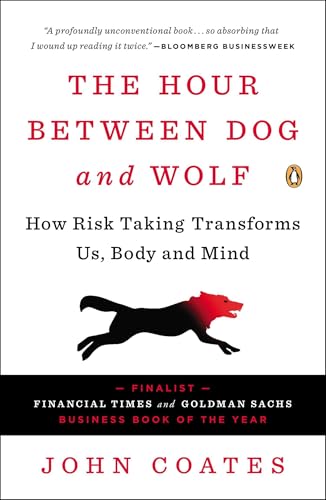

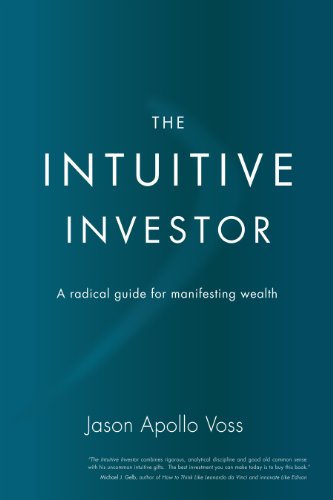

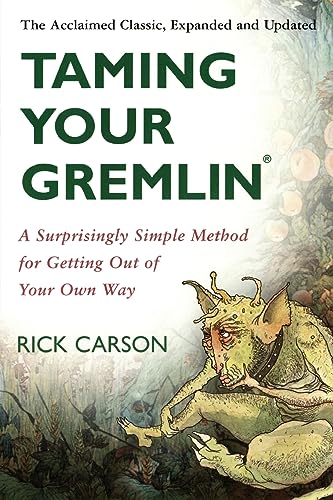

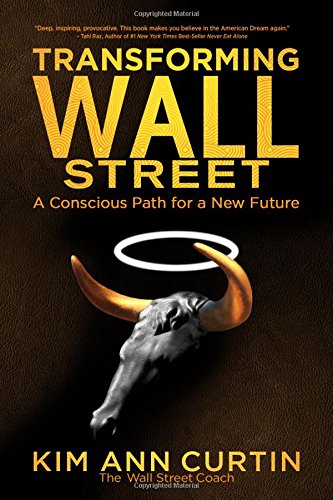
 The psychological pressure of trading decisions affects performance more than strategy alone. Image: Pixabay
 Developing the neutral observer: self-awareness is a trainable skill that changes brain chemistry. Image: Pixabay