Best Trading Psychology Books: A Ranked List From 20 Years of Live Coaching
Kim Ann Curtin
March 31, 2026
15 min read
Every week someone asks me: what should I actually read?
After 20 years coaching traders, I’ve watched the same books come up again and again, in community threads, in client sessions, in the turning points traders describe when something finally clicked. Trading in the Zone is the most cited trading psychology book in serious trading communities, including r/Daytrading, r/Trading, Elite Trader, and Trade2Win, cited more frequently than all other trading psychology authors combined in new trader threads. Not including it in a list like this would be like writing about influential novels without mentioning Steinbeck.
So let me start there, with the books the broader community considers essential. Then I’ll move to the ones I personally draw from in live coaching sessions, the books where I know the authors well enough to tell you what they left out.
Key Takeaways
Start with Mark Douglas.Trading in the Zone addresses the root cause of most trading problems: using technical analysis as prediction rather than probability management
David Hawkins’ Force vs. Power distinction is the most-referenced framework in my live coaching practice, across 20 years and hundreds of traders
The Canonical Books: Essential Reading
These books form the foundation I recommend to every trader who asks where to start. They address the psychological, biological, and intuitive dimensions of performance at the deepest level, and traders return to them repeatedly, often years after first reading, because the frameworks hold up.
Mark Douglas is the unavoidable starting point. His central insight: traders fail not because of a bad strategy, but because they’re using technical analysis as a form of prediction rather than a form of probability management.
The human mind seeks certainty. Trading, by definition, offers none. Douglas calls this the “reality gap,” and the emotional fallout from it, feeling betrayed when a “perfect” setup fails, is the root of revenge trading, hesitation, and all the behaviors that follow.
His solution is what he calls the probabilistic mindset, captured in the Five Fundamental Truths:
Anything can happen, one trader anywhere in the world can invalidate your setup
You don’t need to know what happens next, you only need a statistical edge and the discipline to execute it
Wins and losses are randomly distributed, a 5-loss streak is mathematics, not a signal you’ve lost your edge
An edge is only a higher probability, not a guarantee
Every moment in the market is unique, patterns may look similar, but the players and order flow are different every time
These truths are deceptively simple. Getting them into the nervous system, past the intellectual understanding, is where the actual work is.
The most common criticism of Douglas, voiced consistently across trading forums: he tells you what state to achieve but doesn’t give you specific exercises to get there. The goal of “carefree objectivity” is clearly defined. The path to it is not. This is an honest limitation, and it matters for how you read the book, treat it as a diagnosis, not a prescription.
Read this first, regardless of where you are in your trading development. Then read everything else.
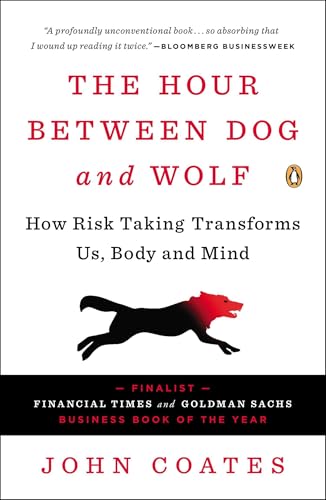
Written by a former Wall Street trader turned Cambridge neuroscientist, this book explains that financial risk-taking is a full-body event. When traders are winning, testosterone rises and amplifies confidence and risk appetite in a self-reinforcing loop. When markets turn, cortisol floods the system and produces paralysis and excessive risk aversion. This is the biology of boom and bust, and it explains why discipline breaks down not from weakness of character, but from measurable, predictable physiology that every trader is subject to.
Read this if you’ve noticed your trading deteriorates in streaks, both winning and losing, in ways that feel chemical rather than psychological.
Levine’s foundational work on somatic healing argues that trauma lives not in the mind but in the body, as stored activation that was mobilized for survival and never fully discharged. The animal in the wild shakes and trembles after a threat; the human suppresses that release and carries it forward. For traders, this framework explains why repeated exposure to significant losses can create freeze-and-contract patterns that no amount of intellectual reframing will resolve, because the body isn’t responding to present-moment reality; it’s responding to a threat that already passed.
Read this if you find yourself shutting down or over-contracting in ways that don’t match the actual size of what’s happening on screen.
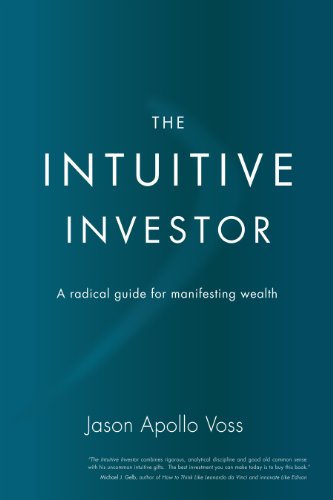
Voss, a former fund manager, wrote a book arguing that pure analytics leaves money on the table. His case: intuition is a legitimate decision-making tool, distinct from emotion, that top performers learn to recognize and trust. The book offers a practical framework for distinguishing felt sense (signal) from reactive feeling (noise), and for developing the kind of perception I see in the best traders I’ve worked with.
Read this if your best trades often had a quality of “knowing” to them, and you want to understand and develop that rather than dismiss it.
These are the books I draw from actively in sessions, some of them written by people I’ve interviewed on The Wall Street Coach Podcast. I can tell you not just what the book says, but what the author’s energy was like when they said it, and that context matters.
The books below are ones I draw from in live sessions, frameworks that translate directly to what a trader is experiencing in the room. What distinguishes them from the canonical list isn’t quality but applicability: these are the concepts I reach for when a trader is in a real pattern they can’t see from the inside.
Two words from this framework sit on a Post-It above the screen of every trader I coach: Power. Force.
The distinction Hawkins draws is simple and cuts deep. Force-based action requires constant effort to sustain. Force sounds like: “I have to follow my rules today.” “I must cut this position.” “I should not be in this trade.” Force depends on willpower, and willpower is a shaky foundation for trading consistency. Force collapses under stress, exactly when it needs to hold.
Power operates differently. Power is self-sustaining because it’s aligned with something real, a genuine commitment to a process you’ve built and believe in. Power sounds like: “This is how I trade. This is who I am when I’m at my best.” There’s no internal conflict to manage. You’re not suppressing an urge. You’re expressing a choice.
What I find in live coaching is that traders living in force-based discipline are exhausted by midday. Their rules feel like a cage. Traders operating from power are energized by their process, even on difficult days, because they’re not fighting themselves.
The daily question I give every trader: Did I trade from power today, or from force? Written in the journal at session close. Two sentences maximum. Over months, the data this produces about your own patterns is more honest than any P&L analysis.
Note: Hawkins was a psychiatrist and the framework has spiritual dimensions that some readers accept and others set aside. You don’t need the metaphysical framing to use the distinction. The practical utility is completely standalone.
Read this if you’ve mastered the tactical side of trading but feel like you’re constantly fighting yourself to execute.
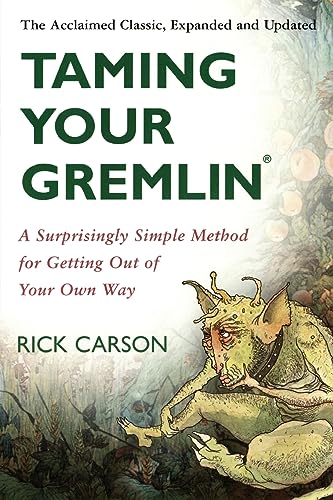
Rick Carson joined me on Episode 74. The “simply notice” practice from this book is the most practically useful technique I know for creating a gap between impulse and action. “I notice I want to revenge trade right now.” Stated with neutrality and curiosity. That’s it.
A small 2025 study points in a similar direction: after a brief mindfulness exercise, traders had lower stress hormones and higher testosterone, a combination that went with better results in a trading task. The authors call it early evidence. Rick got there through practice.
Read this if the harder you try to discipline yourself, the worse it gets.
Jack described on my podcast how so many of the traders he profiled had a significant failure before their breakthrough. Not a stumble. A real descent.
The other theme that runs through the Market Wizards volumes: the traders found a methodology they genuinely owned, not borrowed, and they took their own risk rules seriously.
Read this if you’re in a difficult period and need the reminder that the struggle is the story, not evidence you don’t belong.
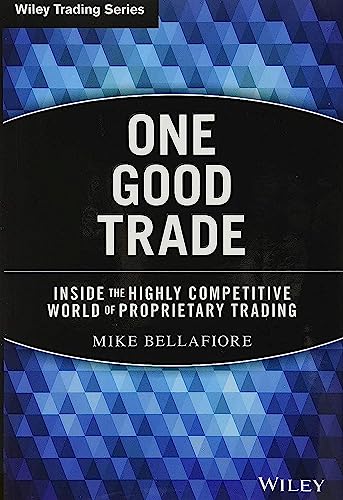
The micro-commitment framework. Instead of year-level discipline goals that collapse under real market pressure, ask one question: Can I take one good trade? Fully in process. Then another. Discipline as a sixty-second decision, repeated.
Read this if you’re a developing trader who needs to see what “following your rules” looks like on a granular, practical level.
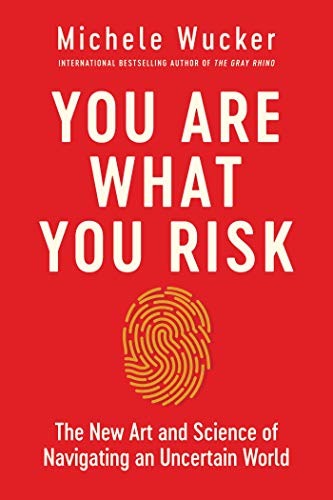
The risk fingerprint: a characteristic way of relating to uncertainty shaped by upbringing, culture, and emotional history. Also the “gray rhino”, the large, visible, charging risk you can clearly see but somehow don’t act on. Most loss-averse behavior in trading is a gray rhino.
Read this if you want to understand why different people relate to risk so differently, and how your own risk fingerprint was formed.
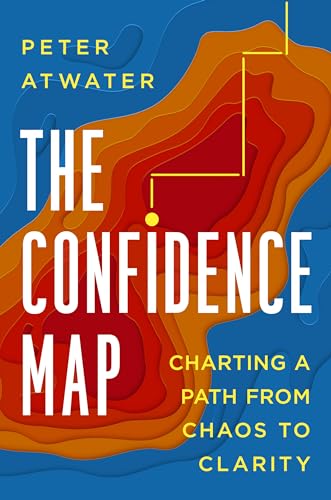
Plots human states on two axes: certainty and control. Where you fall on that map in any given moment determines your decision quality. After a significant loss, the brain gravitates toward “the nest”, familiar, safe, simple. This is when traders miss their best recoveries.
Real-time calibration data for your decision-making capacity.
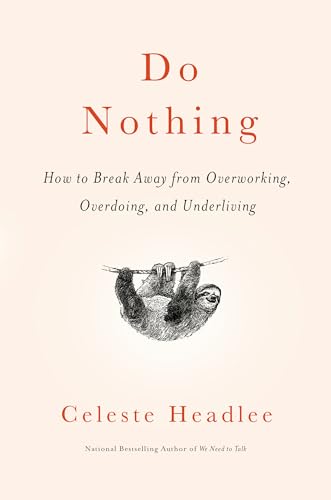
The idea that we only have about four hours of deep focus a day. In my experience, a lot of overtrading and late-session trouble is a session-length problem. Treat how long you trade as a performance variable, not a commitment test.
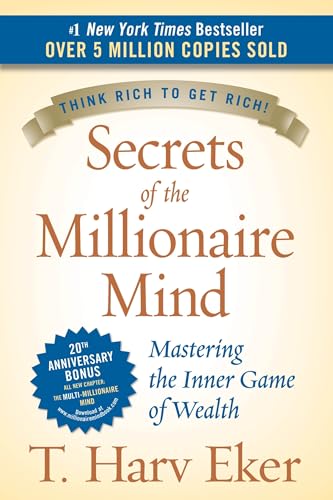
The money temperature concept. Every person has an internal thermostat for how much financial success they’re comfortable holding. When you exceed it, the nervous system self-corrects back down. I use this framework with traders who consistently reach new equity highs and then give them back within weeks.
The Five Practices framework: Self-Responsibility, Empathy for Self and Others, Emotional Non-Resistance, The Hero’s Journey, and Self-Awareness. The most direct map I can offer of the work I’ve built over 20 years.
Kim Ann Curtin
The Self-Aware Trader eBook Series
Four books that go where most trading books don’t, into the psychological patterns that silently undermine discipline, consistency, and performance. Each stands alone; start with whatever is hitting your trading hardest right now.
The community data makes something clear: the #1 criticism of Trading in the Zone, and to varying degrees, of every book on this list, is that understanding the concept and getting it into the nervous system under live market conditions are two completely different things.
The consistent finding is that real behavioral change, the kind that holds during a drawdown or a consecutive-loss streak, requires more than reading. It requires consistent practice with feedback from someone who can see your blind spots.
Dr. Phillippa Lally’s research at UCL found that meaningful behavior change takes a median of 66 days to become automatic (Lally et al., European Journal of Social Psychology2010). Not a week of reading and good intentions.
Reading these books is the right starting point. Applying them to your actual trading, with your specific patterns, your specific market, your specific losing streak, is what produces results. The Trader Positioning Index is a 15-minute assessment that maps how you make decisions under pressure, a useful starting point for knowing which of these frameworks is most relevant to you specifically.
What Is the Best Trading Psychology Book for Beginners?
Start with Trading in the Zone by Mark Douglas. It addresses the root cause of most trading problems: the mismatch between the certainty-seeking human brain and the probabilistic reality of markets. Read it before anything else, knowing that it’s a diagnosis more than a how-to guide.
What Are Mark Douglas’s Five Fundamental Truths?
The five truths from Trading in the Zone that form the foundation of a probabilistic mindset: (1) anything can happen, (2) you don’t need to know what happens next to profit, (3) wins and losses are randomly distributed within any edge, (4) an edge is only a higher probability, not a certainty, (5) every moment in the market is unique. Internalizing these, not just understanding them, is the actual work.
What Books Do Professional Traders at Hedge Funds Read?
Dr. Ari Kiev’s Trading to Win is the most referenced in institutional hedge fund environments, Kiev worked directly with Steve Cohen at SAC Capital. Jack Schwager’s Market Wizards series is universally referenced across professional trading environments.
What Trading Psychology Books Specifically Address Exit Psychology?
John Coates’ The Hour Between Dog and Wolf offers a biological explanation for why exits feel so hard: his idea that hormones moving with wins and losses can make bad decisions feel reasonable in the moment. David Hawkins’ Power vs. Force distinction is the framework I reach for most in live sessions when a trader knows they should cut a position but can’t bring themselves to do it. Force-based discipline collapses exactly when it’s needed most.
Is Atomic Habits Useful for Traders?
James Clear’s book is frequently recommended in trading communities for its habit-formation framework but requires significant translation into market terms. The core insight, that behavior changes when identity changes (“I am a disciplined trader” precedes disciplined behavior, not follows it), is directly relevant and aligns with the identity work in both Michael Martin’s The Inner Voice of Trading and my own Five Practices framework. Read it alongside a trading-specific book, not instead of one.
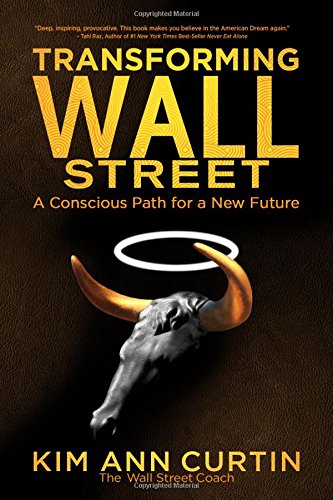
Kim Ann Curtin, known as The Wall Street Coach™, is a trading psychology and performance coach who works at the intersection of decision-making and the nervous system. For over 20 years, she has worked with institutional traders, hedge funds, and senior executives. Her clients include traders and executives affiliated with firms such as GIC, Morgan Stanley, Bank of America, King Street Capital, BC Partners, and Blackstone, along with leading trading communities including Investors Underground, Bear Bull Traders, True Trader, and StocksToTrade. She has also coached traders and leadership teams at CenterPoint Securities. She is the author of Transforming Wall Street and host of The Wall Street Coach Podcast (110+ episodes), focused on helping traders perform at a high level when it matters most.