The Mental Game of Trading: What Separates Consistent Traders

A single upright black chess king amid toppled pieces on a reflective board, a market chart glowing blue behind, a metaphor for composure in the mental game of trading.
TL;DR: The mental game of trading is not about suppressing fear or anger. It is about resolving the systemic cognitive flaws, such as the illusion of control or perfectionism, that produce those emotions. A study of traders at London investment banks found that the higher performers tended to use antecedent-focused regulation, changing the appraisal before the emotion escalates, rather than trying to suppress emotions after they occur. By identifying the underlying belief driving the behavior, traders can stop tilt at its source.

Most retail traders treat emotions like a volume dial they need to turn down. When they feel anxious during a drawdown or angry after getting stopped out, they try to force themselves to “stay disciplined.” This approach fails reliably because it treats the emotion as the problem. In reality, surface emotions in financial markets are symptoms. The actual problem is the cognitive framework generating them.

Elite performance in financial markets depends heavily on your ability to regulate emotions, avoid tilt, and access flow states under uncertainty. But studies of professional traders suggest they do not achieve this by suppressing their feelings. They achieve it by operating with a fundamentally different set of beliefs about probability, loss, and control.

Systemic Mental Flaws vs. Surface Emotions

In performance psychology, there is a critical distinction that changes how we view emotional dysfunction. It follows a specific cause-and-effect chain: a flawed belief leads to an emotional response, which leads to a behavioral consequence, ultimately resulting in performance degradation.

For example, if you believe that a specific high-probability setup “has to work,” you are operating under an illusion of control. When the market inevitably stops you out, that flawed expectation generates anger. That anger then drives an impulsive behavioral consequence, such as revenge trading or doubling your position size.

If you only address the anger, you are fighting a symptom. The anger is a perfectly logical output of your belief that the market owed you a winning trade. The somatic trading psychology work I do with traders focuses on using the emotion as a diagnostic signal. The goal is to trace the frustration back to the systemic mental flaw generating it. These flaws typically include entitlement, perfectionism, unrealistic expectations, or the inability to accept randomness.

Once you identify the flaw, you can begin to rewire the belief that is sabotaging your execution.

The Neuroscience of Antecedent-Focused Regulation

A study based on interviews with traders in four London investment banks found that higher-performing professionals tended to manage emotions differently from lower performers. The key differentiator is the type of emotion regulation they use.

Novice traders primarily rely on response-focused regulation. They wait until they are experiencing FOMO in trading or anger, and then try to suppress it. This incurs a severe performance penalty. Suppressing emotion requires significant prefrontal cortex energy, reducing the brain’s capacity to integrate analytical reasoning with market data. The trader becomes rigid and misses intuitive cues.

Professional traders rely on antecedent-focused regulation. They change their appraisal of the situation and direct their attention before the emotion escalates. When a loss occurs, they frame it immediately as a business expense or statistical probability. Because they process the event differently at the cognitive level, the physiological stress response is blunted.

A later study by the same group measured heart rate variability, a sign of how well the body is settling itself, in bank traders while they worked. More experienced traders showed signs of better regulation when markets were volatile. They didn’t seem to feel less. They seemed to handle it differently, which let them tolerate hard feelings and stay objective.

Tilt: When the Amygdala Overrides the System

When antecedent regulation fails, traders enter a state called “tilt.” Borrowed from poker, tilt describes a condition where emotional flooding hijacks rational decision-making. The trader abandons their trading discipline and begins reacting entirely to price action.

In a state of tilt, the amygdala, the brain’s threat detection center, effectively overrides the prefrontal cortex, which is responsible for planning and impulse control. The trader’s actions become pure emotional reactions. Common triggers include strings of losses, missing big moves, being stopped out right before a reversal, or external stressors like poor sleep (which actively degrades trading performance).

When I review traders’ journals with them, a large share of a month’s drawdown often comes from just one or two severe tilt days. Sometimes more than half of a month’s losses sit in a single emotionally flooded session.

Because the prefrontal cortex goes offline during tilt, willpower is useless once the cascade begins. This is why professional firms impose hard daily loss limits and maximum consecutive loss rules as circuit breakers. Even experienced professionals cannot reliably self-regulate once tilt is fully underway. Prevention requires early warning detection, such as noticing rapid breathing or clenched jaws, and automatic rules to force a break.

Accessing the Flow State in Trading

The opposite of tilt is flow. Flow is a state of deep absorption characterized by effortless concentration, a loss of self-consciousness, and altered time perception. In trading, flow represents the optimal integration of analytical processing and intuition.

Some brain-imaging studies of flow suggest the parts of the brain tied to self-focused thinking and worry get quieter. When that chatter quiets down, the trader stops worrying about their P&L, their identity, or their past mistakes, and simply executes the process.

Traders describe this as a state where reactive, fast systems and deliberative, slow systems are in harmony. The trader can make fast decisions and still stay inside their plan.

Conditions that reliably support flow include clear process goals, immediate feedback, a balance between challenge and skill, and freedom from interruptions.

DimensionConsistent Professional TradersTypical Retail Traders
Emotion regulation styleAntecedent-focused. Reframing, attentional control, acceptance of negative affect.Response-focused. Suppression after escalation, white-knuckling through anxiety.
Physiological regulationHigher HF HRV under volatility. Better parasympathetic control.Lower HF HRV. Greater stress reactivity and cortisol spikes under volatility.
Tilt incidence and impactUse hard loss limits and circuit breakers. Tilt days are constrained by structural systems.Few or no circuit breakers. A small number of tilt days account for majority of monthly losses.
Relationship to lossesView losses as data and the cost of doing business. Focus on process metrics.Personalize losses, seek to “win it back,” and let P&L dictate risk decisions.
Use of journals and reviewsSystematic journaling focused on decision quality and emotional patterns.Sporadic journaling. Focus mainly on entry and exit charts without psychological analysis.

Building an Elite Mental Game

To move toward professional-level performance, you must build a performance system that treats psychology as a structural component of your edge. You cannot rely on motivation to stop overtrading or manage risk.

First, treat your emotions as data. When you feel the urge to break a rule, pause. Identify the specific emotion. Then, identify the underlying belief driving it. Are you expecting perfection? Are you demanding certainty from a random market? Naming the flaw is the first step in dismantling it.

Second, implement structural friction. You need hard risk circuit breakers. Set a daily loss limit that automatically locks your platform. Enforce mandatory breaks after two consecutive losses. The goal is to cap the impact of emotional flooding before it damages your equity curve.

Finally, conduct post-session reviews that focus on decision quality rather than P&L. Mark Douglas, author of Trading in the Zone (2000)argued that consistent profitability requires internalizing a probabilistic mindset. By grading your execution rather than your daily profit, you slowly restructure your beliefs about uncertainty and control. You stop trying to predict the next trade and start executing your edge over a series of trades, which is the foundation of the elite trader mindset.

Mental Game Leak Detector

Rate how strongly you agree with these statements during a live session (1 = Disagree completely, 5 = Agree completely). This tool identifies the systemic cognitive flaws driving your emotional responses.

1
1
1
1
1

Ready to stop fighting your symptoms?

The Trader Positioning Index maps your specific judgment blind spots so coaching can address the root cause, not just the emotion. If you are tired of wondering why you keep breaking your trading rulesa discovery call with Kim is the first step toward building an elite mental game.

Frequently Asked Questions

What is the mental game of trading?

The mental game of trading refers to the psychological framework, cognitive beliefs, and emotional regulation skills required to execute a trading edge consistently under conditions of risk and uncertainty. It involves resolving systemic mental flaws rather than merely trying to suppress emotions.

What is emotional flooding?

Emotional flooding happens when an acute stressor (like a sudden loss) triggers the amygdala, shutting down the prefrontal cortex. This makes it neurologically difficult to follow your own trading rules, explaining why willpower fails under pressure.

What is trading tilt?

Tilt is a state of emotional flooding where the brain’s threat detection center overrides the prefrontal cortex, which handles logic and impulse control. In this state, a trader abandons their rules and makes impulsive, reactive decisions driven by frustration or desperation.

How do I achieve flow state in trading?

Flow is achieved by creating an environment where challenge matches skill, establishing clear process goals, receiving immediate feedback, and minimizing distractions. Neurologically, it involves quieting the default mode network while maintaining high analytical engagement.

Why does willpower fail in trading?

Willpower relies on the prefrontal cortex. Under acute stress, such as a meaningful financial loss, the prefrontal cortex becomes impaired as the body shifts resources to the amygdala for a fight-or-flight response. You cannot use the very brain system that stress has just taken offline.

Is trading psychology more important than strategy?

They are interdependent. Without a statistically valid strategy with a positive expected value, psychology cannot make you profitable. However, without elite trading psychology, you will eventually self-sabotage and fail to execute even the best strategy under pressure.

How long does it take to fix mental game leaks?

Implementing structural circuit breakers (like hard daily loss limits) takes one day. However, rewiring the underlying cognitive flaws, shifting from outcome-dependency to a process-driven probabilistic mindset, typically takes 8 to 12 weeks of deliberate practice and, frequently, professional coaching.


Trading Journal Psychology: Why Most Traders Journal Wrong

An open leather trading journal and fountain pen lit by the blue glow of a trading monitor, a candlestick chart out of focus behind.
TL;DR: Logging your wins, losses, and setups is not a trading journal. It is an accounting ledger. In a high variance environment, outcomes are a lagging and noisy indicator. Elite performance requires tracking the input rather than the output. Deliberate practice relies on monitoring somatic markers, cognitive load, and decision quality independent of P&L. Regulatory data shows 70 to 89 percent of retail traders lose money. The traders who survive and scale do not merely track their trades. They track their psychology.

Most retail traders believe they keep a trading journal. They record the ticker, the entry price, the exit price, the setup name, and the profit or loss. They take a screenshot of the chart. They review these spreadsheets at the end of the month, looking for a statistical edge they can exploit.

This is not a trading journal. It is a scorecard. And it is the reason most traders fail to improve, regardless of how much screen time they accumulate.

Trading is a stochastic environment. The outcome of any single trade is heavily influenced by variance. If you evaluate your performance entirely based on whether a trade made or lost money, you will eventually optimize for the wrong variables. You will abandon a mathematically sound strategy after a standard sequence of losses, or you will scale up a flawed strategy because variance temporarily rewarded your mistakes.

After two decades coaching institutional professionals and retail day traders, the dividing line between those who scale and those who churn is clear. The losing majority tracks outcomes. The elite minority tracks process, physiology, and emotional states.

The Neuroscience of Deliberate Practice

Anders Ericsson, the psychologist who pioneered the framework of deliberate practice, found that simply accumulating hours of experience does not lead to expertise. Experience without structured feedback only reinforces existing habits.

Ericsson defined deliberate practice as the systematic self-monitoring of cognitive and affective processes. The Cambridge Handbook of Expertise (2006) details how high performers do not just log results. They track their metacognition. They record what they were feeling, what they were thinking, and how their bodies felt during the performance phase. This self-regulatory loop allows them to detect subtle errors in execution and adjust their internal models.

In an environment where outcome feedback is delayed or obscured by noise, tracking your internal state provides the only immediate and reliable diagnostic information available. A P&L spreadsheet tells you what happened. A psychological journal tells you why it happened and whether your execution was compromised by stress, FOMOor exhaustion.

Somatic Markers: Your Body Knows the Edge

The neuroscientist Antonio Damasio developed the Somatic Marker Hypothesis to explain how humans make decisions under uncertainty. Damasio argued that decisions are not purely rational calculations. They rely on somatic markers. These are bodily sensations and emotional signals attached to specific options based on past outcomes.

These markers guide your attention before your conscious, logical reasoning has fully processed the scenario. A 2019 review of gambling-task studies found a modest link between the body’s signals before a choice and how well people did. The link was real but small.

When working memory load is high or stress is elevated, these somatic markers fail to develop properly. Decision quality collapses. The physical sensations you feel at the desk are not noise to be suppressed. They are necessary constraints for good decisions.

This is why I ask traders to log their physical state. A study in Management Science measured participants’ heart rates and skin responses while they traded in a lab market. When the heart rate rose ahead of an order, earnings tended to be higher. When the body only reacted after the position moved, earnings tended to be lower. It was a lab market, not a trading floor, but it suggests timing matters.

The Illusion of Results-Oriented Thinking

Poker players face the same variance as traders, and their approach to the “mental game” provides a perfect model. Professional poker literature emphasizes reference point independence. You must separate the quality of the decision from the result of the hand.

A study on emotional poker skill by Palomäki (2013) found that more experienced poker players reported better emotion regulation. High performers maintain decision quality even when facing severe emotional induction. In a large experiment, stirring up anger made people’s poker decisions less accurate, particularly when players felt observed.

If a poker player only logs their winnings, they cannot identify when anger distorted their risk calculation. The same applies to trading. If you take a poor setup out of frustration and the market bails you out for a profit, a traditional journal records a win. A psychological journal records a failure of execution.

MetricTraditional JournalPsychological Journal
FocusP&L, setups, indicators, entry/exit pricesEmotional state, tension, conviction, rule compliance
View of VarianceResults equal skill. Losses require strategy changes.Results are noisy. Process adherence equals skill.
Feedback LoopLagging. You realize the error only after the drawdown.Immediate. You spot the physiological tilt before entry.
Response to a LossTweak the parameters of the moving average.Assess sleep, stress load, and prefrontal cognitive function.
Data UtilityVulnerable to survivorship bias.Builds a database of somatic markers to detect edge.

The Real Cost of Ignoring Psychology

European regulatory bodies like ESMA routinely publish data on retail trading failure rates. ESMA analysis (2019) shows that across 12-month windows, 74 to 89 percent of retail CFD and forex accounts lose money. The average losses range in the thousands of euros. Broker mandated disclosures confirm this reality.

While the statistics do not categorize traders by their journaling habits, interviews with professional traders in London banks point the same way. High performing traders use antecedent-focused emotion regulation. They shape their state before the session begins. They treat their feelings as data. Low performers rely on response-focused suppression. They ignore their psychology until they are trapped in a revenge trading spiral, at which point they try to suppress the panic.

In my experience, most traders don’t track their psychology at all. Treating your nervous system with the same analytical rigor you apply to price action is one of the biggest changes you can make.

How to Track Your Trading Psychology

The goal is to turn your internal state into analyzable data. You must build a feedback loop that evaluates your execution independently of the market outcome.

1. Log Your Pre-Session State

Before the market opens, assess your biological readiness. Note your sleep quality, ambient stress levels, and baseline mood. Sport studies have found that athletes’ own ratings of mood, sleep and fatigue track their training load more closely than many blood tests. If your baseline is off, your body’s signals may be harder to read. Take that as a cue to slow down and settle yourself before you trade.

2. Identify the Need Behind the Trade

In the moment of execution, tag the emotion driving the click. Are you entering because the setup clearly meets your backtested criteria? Or are you entering out of boredom, fear of missing out, or a need to prove you were right about the trend? Naming the need pulls activity back to your prefrontal cortex, reducing impulsive behavior.

3. Grade the Decision, Not the Result

Create a scoring system for your process. Did you follow your plan? Did you wait for your setup? Did you notice what you were feeling before you clicked? Give the trade a grade from A to F based purely on execution. Over time, in my experience, you’ll see the A-quality decisions hold up and the C-quality ones cost you, whatever any single trade did.

Trading Journal Quality Grader

Evaluate your current journaling habits. Rate each statement honestly (1 = Never, 5 = Always). Let the data reveal whether you are tracking edge or just tracking outcomes.

1
1
1
1
1

The Shift from Accounting to Coaching

Your journal should function as an objective performance coach. If you only give it financial data, it can only give you financial reports. If you give it psychological data, it can reveal the invisible leaks in your system. It may show you that your results slip when you trade after a poor night of sleep, or that your losses get bigger when you feel the need to be proven right.

Elite trading is an act of extreme self-awareness. You cannot control the market. You can only control your interaction with it. By tracking your somatic markers and emotional states, you build a regulatory framework that protects your capital from your own biology.

Ready to optimize your mental edge?

In my experience, what separates the traders who keep growing from the rest is very often their psychology. The Trader Positioning Index maps your decision making architecture. If you are ready to stop tracking noise and start tracking performance, a discovery call with Kim is the first step.

Frequently Asked Questions

What is a psychological trading journal?

A psychological trading journal tracks the emotional states, physical tension, and cognitive load experienced before, during, and after a trade. Unlike a standard journal that only records price points and P&L, it focuses on the internal factors that drive decision quality.

Why is logging P&L not enough?

Trading is a stochastic environment where short term outcomes are heavily influenced by variance. Logging only P&L can lead to results-oriented thinking, where you assume a profitable trade was a good decision and a losing trade was a bad one, ignoring the quality of your execution.

What are somatic markers in trading?

Somatic markers are bodily sensations and emotional signals, such as changes in heart rate or muscle tension, that occur before a decision. Neuroscientist Antonio Damasio proposed that these signals help us weigh risk and reward before conscious reasoning catches up.

How does mood tracking improve performance?

Sport studies suggest that your own ratings of mood and fatigue are a sensitive early warning. By tracking your baseline mood and stress, you can notice when you’re off and look after yourself before it shows up in your trading.

What does it mean to grade a trade on execution?

Grading execution means evaluating a trade based entirely on whether you followed your predetermined rules, respected your risk parameters, and maintained emotional control, regardless of whether the trade ultimately made or lost money.

How many retail traders actually lose money?

According to regulatory data from authorities like ESMA, between 70 and 89 percent of retail CFD and forex accounts lose money over a typical 12-month period. In my experience, learning to track and settle your state is one of the clearest differences between traders who struggle and traders who improve.

What is the best way to start tracking psychology?

Start by identifying your baseline emotional state before opening your platform. Note your sleep, stress, and mood. Then, before every entry, record the specific emotion you are feeling (e.g., confident, anxious, bored) and the physical tension in your body. Review this data weekly against your win rate.

How to Find a Trading Mentor: Mentor, Educator, or Coach?

Antique brass compass resting on an aged nautical map beside a leather journal, a metaphor for the guidance a trading mentor provides.
TL;DR: The most skilled traders are rarely the best mentors. Mentorship can help, though the big numbers you see online come from companies selling it. However, finding the right support requires distinguishing between mentorship (teaching frameworks, process design, and market mechanics) and coaching (accountability, emotional regulation, and psychological intervention). A mentor provides the map; a performance coach ensures you do not set it on fire.

The retail trading industry operates on a pervasive myth: if someone can extract alpha from the market, they are automatically qualified to teach you how to do the same. This assumption is structurally flawed. Execution skill and pedagogical skill are entirely separate domains of expertise.

After two decades coaching institutional and retail traders, I have observed the collateral damage of this misconception. Traders frequently purchase access to highly profitable individuals, assuming the profitability will transfer through proximity. Instead, they receive a system they cannot execute, accompanied by a mentor who cannot explain the implicit cognitive models behind their own decisions. Understanding how to find a trading mentor requires evaluating their ability to diagnose you, not just the market.

The Empirical Case for Professional Support

The reality for self-taught retail traders is hard. When European regulators looked at retail accounts trading CFDs, between 74% and 89% lost money. A long study of day traders in Taiwan found fewer than 1% earned reliable profits after fees. In my experience, the reason is rarely a lack of information. It’s emotional reactivity, poor risk habits, and the difficulty of executing an edge consistently.

Good support can shorten the learning curve. I’ll be honest about the evidence, though: there are no solid independent studies measuring how much mentorship helps traders. You’ll see figures online like “60% faster to profitability,” but they come from companies selling mentorship, so I don’t rely on them.

When mentorship helps, it isn’t because a mentor hands over a flawless system. In my experience, it’s because a mentor enforces discipline, prevents high-cost behavioral mistakes, and provides an objective feedback loop during periods of psychological stress. Recognizing this leads directly to evaluating how potential mentors actually teach.

Execution Skill vs. Pedagogical Skill

The distinction between a profitable trader and an effective mentor lies in four specific dimensions. When vetting a potential mentor, evaluate them against these criteria rather than their screenshots of winning trades.

1. Diagnostic Ability

A skilled solo trader excels at recognizing patterns in price action, order flow, or macroeconomic data. A skilled mentor excels at recognizing patterns in human behavior. An effective mentor will observe how you behave after consecutive losses, identify when you arbitrarily increase position sizing, and pinpoint the specific cognitive biases dominating your decisions. They diagnose the operator, not just the chart.

2. Process Design

Top-tier traders intuitively select high-quality trades. Effective mentors, however, design and refine comprehensive processes. They help you construct pre-market routines, explicit entry and exit criteria, structured journaling practices, and risk parameters tailored to your specific psychological profile and account size.

3. Teachable Frameworks

Many exceptional traders rely on implicit knowledge. They “feel” the market and make split-second decisions they cannot articulate. That can sometimes make them terrible teachers. A good mentor translates complex market reasoning into explicit, teachable frameworks and feedback loops that accommodate your current level of competence.

4. Emotional Boundary Setting

A mentor must establish behavioral boundaries. They define maximum daily loss limits, mandate cooldown periods after a string of red trades, and provide objective grounding during severe drawdowns. This requires an understanding of trading psychologynot just market mechanics.

AttributeThe Profitable Solo TraderThe Effective Trading Mentor
Primary FocusExtracting capital from the marketCompressing the student’s learning curve
Pattern RecognitionIdentifies market structures and setupsIdentifies cognitive biases and behavioral errors in the student
Knowledge TypeImplicit and intuitive (“I just know when to enter”)Explicit and structured (“Here is the 4-step checklist for entry”)
Response to DrawdownsManages their own risk internallyProvides objective emotional grounding and enforces student risk rules

Understanding these differences clarifies why proximity to a profitable trader does not guarantee your own profitability, and forces a critical distinction between seeking a mentor and seeking a coach.

Mentorship vs. Performance Coaching: The Key Distinction

The terms “mentor” and “coach” are frequently conflated, but they serve distinct neurological and practical functions.

A Trading Mentor focuses on teaching and guidance. They impart market knowledge, explain technical or fundamental concepts, and help you build the rules and frameworks necessary for a positive expectancy strategy. You seek a mentor when you do not know what to do.

A Trading Performance Coach focuses on execution, psychological review, and accountability. They examine the gap between your established plan and your actual behavior. A coach addresses the underlying emotional reactivity, stress responses, and identity threats that cause you to break your own rules. You seek a coach when you know exactly what to do, but consistently fail to do it.

If you are struggling with revenge tradingchronic hesitation, or sizing up to recover a loss, a new mentor with a new strategy will not solve the problem. Your strategy is not the variable that needs adjustment. Your emotional regulation is. You can evaluate your own needs using the assessment below.

Support Fit Assessment: Do You Need a Mentor or a Coach?

Evaluate your current trading challenges to determine the appropriate type of professional support.

3
3
3
3
3

How to Vet a Trading Mentor

The barrier to entry for declaring oneself a trading mentor is zero. Consequently, due diligence is mandatory. Look for these three indicators of pedagogical competence:

First, demand transparency regarding both wins and losses. A mentor who claims a 100% win rate or refuses to dissect their losing trades is marketing a fantasy, not a process. The most valuable lessons emerge from how a mentor manages a drawdown.

Second, evaluate their student outcomes, not just their personal track record. The critical metric is not whether the mentor is profitable, but whether their students consistently reach profitability. Ask for documented case studies of student progression.

Third, assess their diagnostic focus. During an initial consultation, a competent mentor will ask detailed questions about your current process, your specific behavioral tendencies, and your emotional responses to loss. If they immediately attempt to sell you a proprietary indicator without understanding your psychological baseline, walk away.

Finding the right professional support ultimately saves you from paying tuition directly to the market in the form of blown accounts.

Executing your edge shouldn’t feel like a battle.

If you have a working strategy but consistently give back profits through emotional errors, rule-breaking, or revenge trading, a new setup won’t fix the leak. Emotional regulation intervention will. Book a discovery call with Kim to align your execution with your edge.

Frequently Asked Questions

What is the difference between a trading mentor and a trading coach?

A trading mentor teaches market mechanics, strategy, and process design. They focus on the “what” and the “how” of market analysis. A trading performance coach focuses on behavioral execution, emotional regulation, and psychological accountability. They address the internal obstacles that prevent you from following the mentor’s strategy.

What percentage of self-taught day traders fail?

There’s no reliable figure for self-taught traders specifically. European regulators found that 74% to 89% of retail CFD accounts lost money, and a study of Taiwanese day traders found fewer than 1% earned reliable profits after fees. In my experience, the cause is more often risk habits and emotional reactivity than a lack of market data.

Do I need a trading mentor to become profitable?

No, but good mentorship can shorten the learning curve. A mentor prevents you from making high-cost, easily avoidable behavioral mistakes during the critical first year.

Why do great traders sometimes make terrible mentors?

Great traders often rely on implicit knowledge and intuitive pattern recognition. They process market data subconsciously, making it difficult for them to articulate explicit, step-by-step frameworks. Teaching requires breaking complex decisions into digestible rules, a skill distinct from simply executing a trade.

How much does a trading mentor cost?

Costs vary widely, from monthly subscription communities ($250-$550/month) to intensive one-on-one professional coaching ($500-$1,000+ per session). When evaluating the cost, factor in the capital saved by avoiding the prolonged trial-and-error phase of self-study.

How long should I work with a trading mentor before seeing results?

Many traders notice improvements in consistency within a few months. Reaching consistent, autonomous profitability, however, can still take one to two years depending on the trader’s starting capital, emotional baseline, and available time.

Can a trading mentor help me recover a blown account?

A mentor can provide the structural frameworks and risk management protocols to rebuild capital systematically, but they cannot refund your losses. If blowing the account involved severe emotional tilting or revenge trading, working with a performance coach to address the behavioral triggers is critical before risking new capital.

Trading Confidence: How to Rebuild It After Losses

A composed trader standing at night before a wall of trading monitors and a city skyline, calm and steady under the cool blue screen glow
TL;DR: The most dangerous form of trading confidence is the one anchored to your last three trades. Outcome-dependent confidence creates a neurochemical loop where wins fuel the hot-hand fallacy and losses trigger impulsive risk-aversion or revenge trading. Process-oriented conviction, conversely, shifts brain activity away from the fear-driven amygdala toward the prefrontal cortex. It is the only form of confidence that stabilizes risk behavior in the face of drawdowns and prevents the psychological spirals that destroy trading accounts.

Most traders misunderstand what trading confidence actually is. They treat it as a feeling that follows a winning streak – a sense of invincibility that arrives when the market validates their thesis. This is not confidence. It is a biological high, and it is highly correlated with the destruction of trading capital.

After two decades of coaching traders across institutional desks and retail markets, I can tell you that outcome-dependent confidence is the quiet killer of trading careers. It teaches your brain to tie your psychological stability to moment-to-moment P&L, leaving you entirely vulnerable to the inevitable variance of the market. The alternative – process-oriented conviction – is structurally different. It does not depend on immediate outcomes; it depends on the execution of a tested edge.

The Trap of Outcome-Dependent Trading Confidence

When trading confidence is tethered to recent outcomes, you are at the mercy of behavioral biases – specifically, self-attribution and miscalibration. A trader on a winning streak attributes the success entirely to their skill, overwriting the reality of market probabilities. This is the foundation of the hot-hand fallacy.

The hot-hand fallacy is the cognitive illusion that a recent streak of success makes future success mathematically more likely. A trader feels “dialed in,” assumes they have decoded the market, and begins to ignore their own trading discipline. They loosen entry criteria. They increase leverage. They assume the next trade is guaranteed to work because the last three did.

The behavioral finance literature is explicit on this front. Overconfident investors trade more frequently, take larger positions, and generate higher transaction costs, resulting in lower expected returns. They suffer from miscalibration – they believe their market forecasts are vastly more accurate than they are. The feeling of extreme confidence is precisely what walks them into the trap of outsized risk, leading smoothly to the next inevitable drawdown.

The Neurobiology of a Drawdown

To understand why outcome-dependent confidence is so fragile, we must look at what happens in the brain when the winning streak ends. Drawdowns are not simply negative numbers on a screen; they are neurobiological shocks.

When a trader takes a meaningful loss, the brain’s loss aversion circuitry activates. This involves the amygdala, the striatum, and the dorsal anterior cingulate cortex (dACC). Research on neural loss aversion shows that when a negative change in wealth is the result of your own decisions, the neural response is magnified. Self-inflicted losses carry a heavy neurobiological weight.

This stress response alters hormone profiles. A study on a London trading floor found that traders’ stress hormone levels rose with the swings in their results. When that stress lasts, in my experience, it tends to push a trader one of two ways:

  • Stress-induced risk aversion: The trader becomes paralyzed. They cut winners too early, refuse to take perfectly valid setups, and operate from a place of fear. Fear is running the show, putting immediate safety ahead of long-term expected value.
  • Stress-induced risk seeking: Alternatively, the combination of stress and threatened identity triggers revenge trading. The trader takes wildly inappropriate risks in a desperate attempt to restore their balance to a psychological break-even point.

In both cases, outcome-dependent confidence disappears fast. The same pull that drove the overconfidence during the run-up now drives panic or desperate aggression, and that can do real damage to the account.

The Destruction of Retail Accounts

The empirical cost of this psychological vulnerability is staggering. Mandatory disclosures by European regulators like ESMA show that a massive majority of retail traders fail to achieve profitability over time.

But the detail hidden within that statistic is even more revealing. Broker disclosures and regulatory data from ESMA show that 74% to 89% of retail forex and CFD accounts lose money. Those are big numbers, and they’re official ones.

This capital destruction is directly linked to FOMO and overconfidence. Traders believe they will be the exception to the statistics. A string of early wins builds outcome-dependent confidence, prompting them to scale up their risk just in time for statistical variance to deliver a normal losing streak. The outsized position meets the inevitable loss, and the account is wiped out.

TraitOutcome-Dependent ConfidenceProcess-Oriented Conviction
AnchorRecent P&L and winning streaksTested edge and statistical probabilities
Brain StateAmygdala-driven; highly reactive to threatPrefrontal-driven; relies on cognitive control
Position SizingIncreases aggressively after wins (hot-hand)Systematic and pre-defined by risk model
Response to LossShame, identity threat, revenge tradingReappraisal, neutral evaluation of execution
Drawdown EffectParalysis or catastrophic risk-seekingContinued execution of the process

The Shift to Process-Oriented Conviction

If outcome-dependent confidence is a liability, what is the alternative? The answer is process-oriented conviction.

Process-oriented conviction anchors your confidence in a defined edge, strict risk parameters, and the quality of your execution. It demands that you decouple your psychological state from the outcome of any single trade and build an elite trader mindset.

One study shows the power of this shift. When people were asked to “think like a trader” and see each choice as one of many, rather than focusing on the single outcome, their loss aversion dropped, and so did their body’s reaction to losses. That’s what process-oriented confidence feels like from the inside.

By engaging the prefrontal cortex, you effectively buffer the emotional impact of a drawdown. Loss aversion decreases. You no longer view a losing trade as a threat to your identity or competence, but as a standard data point within a known probability distribution.

How to Build Process-Oriented Confidence

Transitioning from outcome dependence to process conviction requires structural changes to how you interact with the market. Willpower alone is insufficient when the amygdala is active, which is why traders keep breaking their trading rules.

1. Define Your Edge Objectively

Your confidence must be grounded in robust backtesting and a realistic understanding of sample sizes. You must know your win rate, your expected drawdown, and your risk-to-reward ratio. When you understand that a 40% win rate strategy will mathematically experience losing streaks, a loss stops being a surprise and starts being a normal business expense.

2. Standardize Position Sizing

Hot-hand bias tells you to bet bigger because you are on a roll. Process conviction demands that position sizing remain dictated entirely by your risk model, regardless of short-term outcomes. If you scale up, it must be because your account equity has grown, not because you feel “invincible” today.

3. Practice Cognitive Reappraisal

After a loss, deliberately reframe the event to practice controlling emotions while trading. Did you follow your rules? Was the setup valid? If yes, the trade was a success, regardless of the P&L. This practice of explicitly naming and reframing the outcome engages the prefrontal regulatory regions and prevents the loss-to-anger loop from forming.

4. Evaluate Execution, Not Outcomes

Your trading journal should not just track entries, exits, and profits. It must track your emotional state and your adherence to the process. Did you experience jaw tension? Did you honor your stop loss? Building confidence means proving to yourself, repeatedly, that you can execute your plan under pressure.

Confidence Dependency Assessment

Rate each statement honestly (1 = Not at all true, 5 = Completely true) to see if your confidence is anchored in process or outcome.

1
1
1
1
1
5 / 25

The True Mark of a Professional

Professional traders do not possess supernatural emotional control. They have simply realized that trusting their feelings after a win or a loss is a losing proposition. They have built systems – both psychological and structural – that force them to rely on their process, preventing trading burnout.

Outcome-dependent confidence is loud. It requires constant validation from the market, and it collapses the moment the market stops cooperating. Process-oriented conviction is quiet. It sustains itself through drawdowns because it is rooted in something you can actually control: your own behavior.

Ready to build bulletproof conviction?

If your confidence swings wildly with your P&L, you are trading on borrowed time. The Trader Positioning Index maps your psychological vulnerabilities, so coaching can target the root cause. Book a discovery call with Kim to transition from outcome dependence to process conviction.

Frequently Asked Questions

What is outcome-dependent confidence in trading?

Outcome-dependent confidence is a false sense of security derived purely from recent winning trades. It leads traders to attribute random market variance to their own skill, resulting in overconfidence, the hot-hand fallacy, and recklessly large position sizing.

Why do winning streaks often lead to large losses?

Winning streaks trigger the hot-hand fallacy, tricking the brain into believing future success is highly probable. This outcome-dependent confidence causes traders to abandon their risk rules, scale up their leverage, and take lower-quality setups. When the inevitable statistical loss occurs, the oversized position results in devastating financial damage.

How does a drawdown affect a trader’s brain?

A drawdown activates the brain’s fear and loss aversion circuitry, particularly the amygdala. It also elevates stress hormones like cortisol. This neurobiological shock impairs the prefrontal cortex (responsible for logical rule-following) and pushes the trader into either extreme risk-aversion (paralysis) or impulsive risk-seeking (revenge trading).

What is process-oriented conviction?

Process-oriented conviction is confidence anchored in a statistically tested edge and strict risk management, rather than recent P&L. It requires evaluating success based on flawless execution of the trading plan, which engages the prefrontal cortex and dampens emotional reactivity to monetary losses.

How can I stop my confidence from fluctuating with my P&L?

You must practice cognitive reappraisal and separate your identity from the outcome of individual trades. Standardize your position sizing so it cannot be influenced by recent wins. Focus your journaling on execution quality and emotional regulation, rather than just tracking profits and losses.

Is overconfidence common among retail traders?

Yes. Overconfidence is a primary driver of the failure rate among retail traders. Regulatory data indicates that the vast majority of retail accounts lose money, largely because outcome-dependent confidence encourages excessive risk-taking and ignoring statistical probabilities.

Can a trading coach help me build process-oriented confidence?

Yes. A trading performance coach provides structural frameworks and cognitive techniques to decouple your self-worth from your P&L. Coaching helps you identify the psychological triggers that lead to outcome-dependency and replaces them with a sustainable, process-driven approach.

Revenge Trading: Why It Happens and How to Stop It

A trader at a darkened desk at night gripping the mouse, tense and frustrated, lit by a warm lamp and the red glow of a falling chart

Revenge trading is what happens when a loss stops being information and starts feeling like an insult. The next trade is no longer there because your setup appeared; it is there because some part of you wants the money, dignity, or certainty back immediately.

What revenge trading actually is

Revenge trading usually combines three ingredients: a loss, a threatened identity, and an action meant to erase the discomfort. The action may be larger size, a lower-quality setup, an earlier re-entry, or a string of trades that would never have passed your normal checklist.

That pattern fits the broader behavioral-finance literature on loss chasing. A study of more than 5,000 financial-market spread traders found that traders continued taking risk when their cash balance fell below a psychological break-even point, especially when they were trying to get back to even. The break-even effect study is not a license to diagnose every loss as revenge trading, but it explains why “I just need to get back to flat” can become a dangerous decision rule.

The shame-to-anger loop

The emotional sequence is often loss → shame → anger → action. Shame says, “What does this say about me?” Anger is easier to tolerate because it gives the nervous system energy and a target. The market becomes the target, and the next trade feels like a way to prove that the loss was not really your fault.

This is why revenge trading can feel physical. Your jaw tightens, your attention narrows, and the platform becomes magnetic. The urgency is not evidence that a trade is present. It is evidence that your system wants resolution.

When the emotion is the driver, the best first move is to name it. Research on affect labeling found that putting feelings into words can recruit regulatory prefrontal regions and reduce amygdala activity. Lieberman and colleagues’ study gives the practical version: “I notice I want to get the loss back right now.” Naming the urge is different from obeying it or suppressing it.

Why rules alone fail at the exact moment you need them

A rule such as “stop trading after a big loss” can help, but it is not a complete intervention. It assumes the person who wrote the rule and the person experiencing the loss have the same access to attention, working memory, and emotional flexibility.

Under stress, the brain systems used for impulse control and working memory become less reliable. Amy Arnsten’s review of stress and prefrontal function explains why a trader can understand a rule perfectly and still fail to execute it under pressure. The gap is not proof that the rule is useless. It is proof that the rule needs a physical and environmental support.

Build that support before the next loss: close the platform, stand up, move away from the screen, and make the next decision impossible for a defined period. A pause that exists only as a thought is not a circuit breaker. Pair the pause with a written trading-discipline plan so your future self has something concrete to follow.

What the revenge trade is really trying to recover

Often, it is not the money. It is the identity of the trader who was right, competent, or in control. When every red trade becomes evidence about your worth, a normal loss carries an impossible emotional load.

That is why a recovery plan must track more than P&L. Ask: “What did I believe this loss meant about me?” If the answer is “I’m not good enough,” “I’m falling behind,” or “I have to prove myself,” you have found the fuel beneath the entry.

Trading psychology is the study of this decision-making layer, not a substitute for a strategy. The broader trading psychology guide is a useful place to separate market edge from the patterns that distort execution.

A practical interruption protocol

MomentQuestionAction
Immediately after the lossAm I evaluating a setup or trying to repair a feeling?Flatten, step away, and start the timer.
During the pauseWhat changed in my body and story?Name the emotion and write one sentence.
Before re-entryWould I take this trade if the prior trade had been a winner?Require a fresh checklist and normal size.
End of sessionWhat conditions made the loop easier to trigger?Record sleep, prior losses, size, and self-talk.

Use the same interruption every time. Consistency matters because you are teaching your nervous system a new sequence: loss, pause, observation, choice. That sequence is more durable than promising yourself you will never feel angry again.

Revenge-risk check

Answer honestly. This is a private self-check, not a score about your character.

Want to find the pattern beneath the trade?

The Trader Positioning Index maps decision-making under pressure so coaching can address the pattern, not just the symptom.

Frequently asked questions

What is revenge trading?

Revenge trading is an impulsive trade taken to recover a prior loss or repair the emotional discomfort of being wrong.

Why do traders revenge trade?

Losses can trigger shame, anger, urgency, and a desire to return to break-even or restore a threatened sense of competence.

Is revenge trading the same as overtrading?

No. Revenge trading is a motivation for impulsive trading after a loss; overtrading is the broader pattern of taking too many or too-low-quality trades.

How do I stop revenge trading after a loss?

Use a mandatory physical pause, name the emotion, and require a fresh setup checklist before returning at normal size.

Should I stop trading for the day after one loss?

Not necessarily. The decision should depend on your pre-committed risk rule and whether you can evaluate the next setup without trying to erase the prior result.

Can journaling help with revenge trading?

Yes, when the journal tracks state, trigger, self-talk, and execution quality rather than only entry, exit, and P&L.

Is revenge trading a character flaw?

No. It is a learned decision loop. Treating it as a pattern makes it observable and interruptible.

Closing thought

The revenge trade is not proof that you are broken. It is a fast, expensive attempt to make an uncomfortable feeling disappear. Slow the sequence down, let the loss become information again, and the next decision becomes yours.

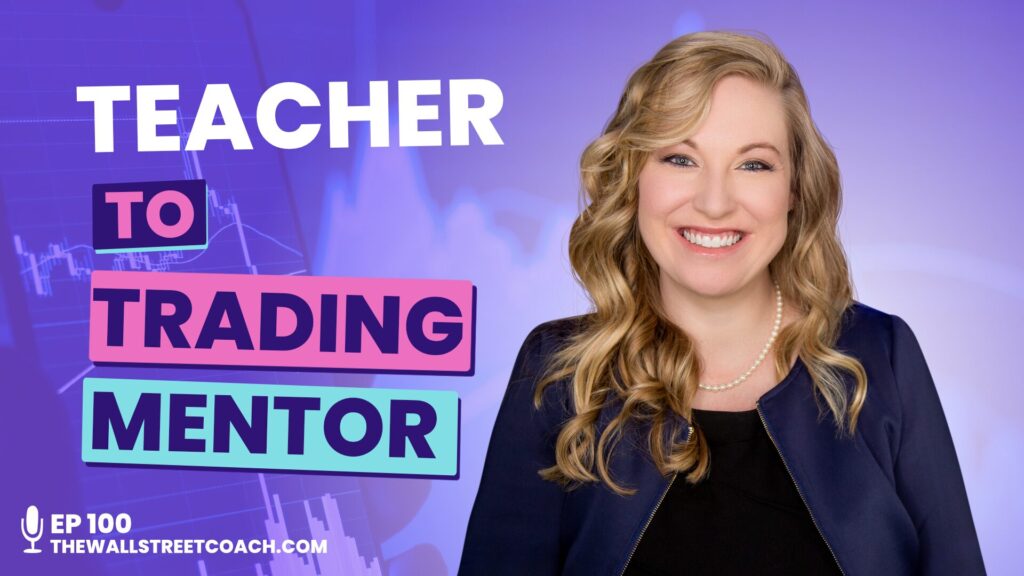
EP 100: Teacher to Trading Mentor – Breaking Stereotypes with Danielle Shay

In this episode of The Wall Street Coach Podcast, Kim Ann Curtin sits down with trader, investor, market analyst, and expert commentator, Danielle Shay. Danielle is VP of Options at Simpler Trading, where she runs trades and analysis in the trading room, teaches classes and webinars, and writes. You can also find Danielle regularly in the media, as she is an expert guest on CNBC, Fox News, TraderTV Live, Stockcharts, and more. 

Danielle shares her unique journey into the world of trading, which began unexpectedly when her father introduced her to options trading as a way to support her family after becoming a single mom. Initially planning on law school, Danielle’s path changed when she started teaching English in Costa Rica. However, the birth of her son and the need for financial stability led her to explore other avenues. Skeptical at first, she began learning options trading online while juggling the challenges of single motherhood.

Danielle admits the early years were tough, especially since she didn’t have a strong background in math or science. Instead, she focused on recognizing patterns and applying that skill to technical analysis, which became her breakthrough. Danielle shares the method that allowed her to remove emotions from her trading decisions, making her approach more systematic and disciplined.

Danielle’s story is one of perseverance and determination. For two years, Danielle struggled and even considered giving up, but thanks to the support of her father and mentors, she pushed through and eventually found success. 

Follow Danielle:

Danielle Shay on Five Star Trader: http://www.fivestartrader.com

Danielle on X: https://x.com/traderdanielle

More Good Stuff!

  • Get Kim’s FREE e-book at traderdiscipline.com.


  • Kim’s FREE 3-minute Trader Check-In resource at TraderCheckIn.com.


  • 📧 SIGN UP for Kim’s “Curtin Call” to receive weekly questions that will inspire you to take a closer look on how you live, work, trade &/or invest: https://thewallstreetcoach.com/curtin-call-social/
Disclaimer: All information provided is for educational purposes only and does not constitute investment, legal, or tax advice, or an offer to buy or sell any security. For full disclosures: www.thewallstreetcoach.com

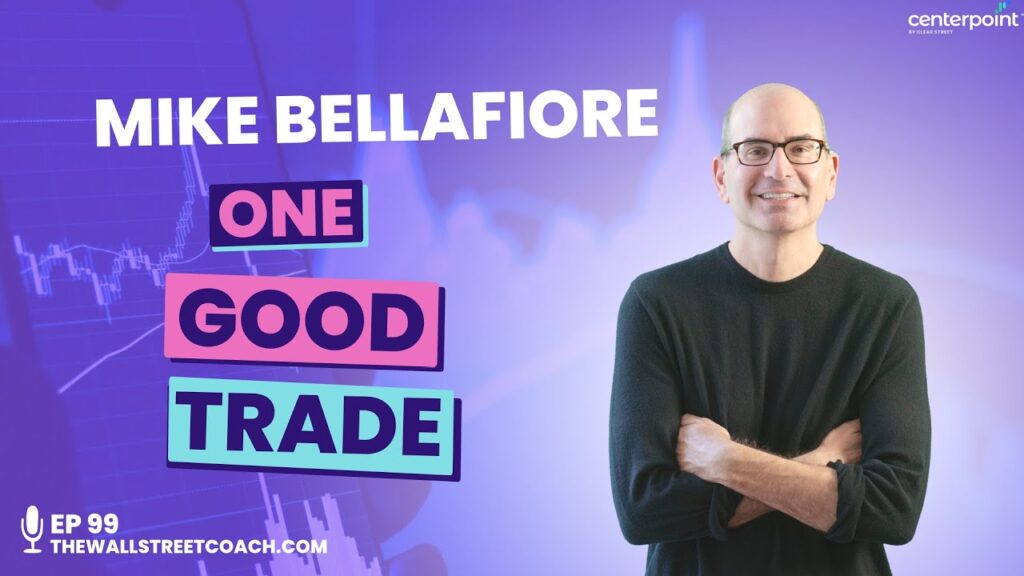
EP 99: One Good Trade with Mike Bellafiore

In this episode of The Wall Street Coach Podcast, we meet Mike Bellafiore, co-founder of SMB Capital, one of the leading proprietary trading firms in the world based in New York City. Mike is also the author of the trading classic books One Good Trade and The Playbook.

Listen as Mike discusses what it takes to become an elite level trader, how SMB Capital teaches its traders, and how you might be able to learn from Mike’s decades of turning aspiring traders into multi-millionaires.

Follow Mike:

SMB Capital: https://smbcap.com/

Mike Bellafiore on X: https://x.com/

Try CenterPoint, commission free for 60 days: https://bit.ly/43LtK9u

📧 SIGN UP for “Curtin Call” to receive Kim’s weekly questions that will inspire you to take a closer look on how you live, work, trade &/or invest: https://thewallstreetcoach.com/curtin-call-social/

More Good Stuff!

Disclaimer: All information provided is for educational purposes only and does not constitute investment, legal, or tax advice, or an offer to buy or sell any security. For full disclosures: www.thewallstreetcoach.comi
CenterPoint
Sponsored by CenterPoint. Get FREE commissions for 60 days!

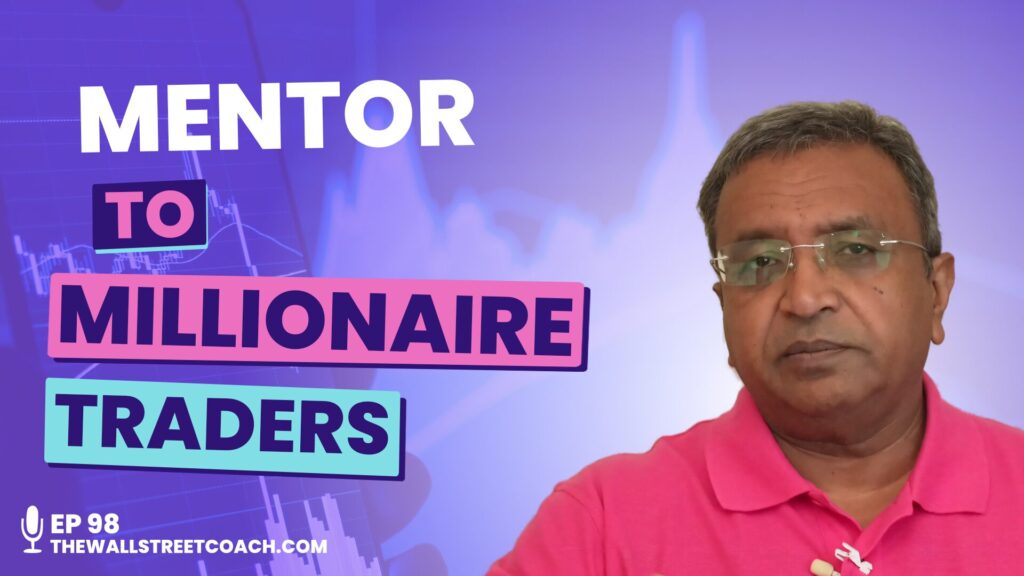
EP 98: Trading Mastery: Uncovering Success with Pradeep Bonde

In this episode, veteran trader and Stockbee founder, Pradeep Bonde, does a dive deep into the art of mastering the markets. Pradeep shares his journey from corporate marketing to full-time trading, the secrets behind his signature setups like Episodic Pivots, and the importance of discipline in trading.

Learn how mentorship, creativity, and a regimented process helped him and many others achieve success in the stock market. Whether you’re a novice or seasoned trader, this episode offers valuable lessons in leadership, perseverance, and the importance of building a strong trading community.


Follow Pradeep:

Pradeep Bonde (Stockbee): http://www.stockbee.biz/

Pradeep on X: @PradeepBonde

More Good Stuff!

Disclaimer: All information provided is for educational purposes only and does not constitute investment, legal, or tax advice, or an offer to buy or sell any security. For full disclosures: www.thewallstreetcoach.com.
CenterPoint
Sponsored by CenterPoint. Get FREE commissions for 60 days!

EP 97: Why Most Traders Fail at Risk Management

In this episode of The Wall Street Coach Podcast, host Kim Ann Curtin welcomes back trading expert Brian Lee to tackle “Common Misconceptions About Risk.” Brian, a seasoned trader, delves into the pervasive myth that to make a lot, one must risk a lot. He emphasizes that risk is an ever-present factor, regardless of a trader’s experience level. Brian explains how improper risk management, such as risking large percentages of one’s account on a single trade, can lead to significant losses that are hard to recover from due to the concept of geometric returns and losses. 

He advocates for consistent position sizing, highlighting that even risking a small percentage like 1% can reliably compound over time without exposing the trader to devastating losses. This episode sheds light on the importance of sticking to a well-thought-out risk management strategy, even during winning streaks, to avoid the pitfalls of overconfidence. Brian also reflects on his own journey, recognizing the critical importance of risk management early in his career, a lesson he shares to help both novice and experienced traders navigate the complexities of trading. This discussion is a must-listen for anyone looking to enhance their trading strategy and safeguard their investments.

Check out another interview with Brian here.

Follow Brian: 

Discord – www.brianleetrades.com/discord

X – @brianleetrades

More Good Stuff!

Disclaimer: All information provided is for educational purposes only and does not constitute investment, legal, or tax advice, or an offer to buy or sell any security. For full disclosures: www.thewallstreetcoach.com.
 
CenterPoint
Sponsored by CenterPoint. Get FREE commissions for 60 days!

Ep: 95 Trading Made Simple – Cutting Through the Noise with Chris Lanzilotti

Dive into the world of trading with guest Chris Lanzilotti! This episode is your gateway to mastering the complexities of trading through clear, actionable strategies suitable for traders at every level. Chris, a seasoned trader and dedicated teacher, breaks down the essence of trading simplicity, making it accessible for everyone.

Chris’ unique approach transforms complex concepts into easy-to-understand strategies. He delves into the art of simplifying investments, crucial for both novice and experienced traders, and takes a deep dive into market dynamics and trading psychology–essential elements for any trader’s toolkit!

Discussion on how to adapt trading styles for success explores the importance of emotional intelligence in trading, how personal growth influences trading performance, and how leveraging psychology can boost trading success.

Join us for an information-packed episode and transform your trading approach today!

Follow Chris:
X – @chris_j_lance  
More Good Stuff!

Disclaimer: All information provided is for educational purposes only and does not constitute investment, legal, or tax advice, or an offer to buy or sell any security. For full disclosures: www.thewallstreetcoach.com.


CenterPoint
Sponsored by CenterPoint. Get FREE commissions for 60 days!