Frank Casey on Bernie Madoff, Due Diligence, and the Danger of Easy Returns
Frank Casey on Bernie Madoff, Due Diligence, and the Danger of Easy Returns
Frank Casey joins Kim and Lucas to discuss how his background in options and financial analysis helped him recognize the fraud behind Bernie Madoff’s operation. What makes the conversation valuable for traders is not just the story itself, but the psychological pattern underneath it: the temptation to believe in smooth, easy, consistently profitable outcomes without asking enough hard questions.
Casey is candid that his motives were not purely noble at the start. He wanted to compete for clients who had been drawn into Madoff’s orbit, and he could see that no legitimate manager could match those suspiciously clean returns. But the more he studied the situation, the more obvious it became that this was bigger than one man’s book of business. For traders and investors, the lesson is timeless: if something looks impossible but emotionally appealing, that is exactly when skepticism matters most.
The Trader Positioning Index (TPI) is a 15-minute clinical-grade assessment that measures 70+ indicators of your decision-making under pressure – and delivers a 35+ page personalised report with a custom action roadmap. Learn more about the TPI ->
Frank Casey is an options expert and market professional whose analytical work helped expose Bernie Madoff’s fraud. In this episode, he explains how his experience in markets made the warning signs hard to ignore and why investor psychology often prevents people from seeing obvious risk when the returns feel too good to question.
Key insights from this episode
Consistent returns without believable drawdowns should trigger suspicion, not admiration. That kind of smoothness is often the exact thing investors want emotionally, which is why it becomes so dangerous.
People ignore red flags when greed and relief are involved. Casey’s Madoff story becomes a broader lesson in how smart people can become willfully blind if the payoff feels easy enough.
Due diligence is not optional. Traders and investors need verification habits that go beyond hope, storytelling, and trust in appearances.
Markets reward skepticism more than fantasy. If your process depends on believing impossible things, the real risk may be psychological before it is financial.
Protecting capital often starts with asking uncomfortable questions early instead of explaining them away later.
Episode chapters
The current source material for this page does not include a full original chapter list, so none are added here.
Professional big wave surfer Shane Dorian joins Kim and Lucas to discuss riding big waves on the ocean and chasing big returns in stocks. Shane describes similarities between trading stocks and surfing, including patience, timing, and prioritizing risk management.
Following the CANSLIM system, created by William O’Neil, Shane identifies as a swing/position trader and has seen massive upside in his trading for over a decade. Shane breaks down a few recent trades that he’s taken, including what he describes as a “life changing trade” on RIOT in late-2020.
Lisa Rangel, CEO and Founder of Chameleon Resumes, joins Kim and Lucas to discuss staying prepared for new professional opportunities.
Lisa’s unique view on getting and staying prepared includes keeping tabs on your social presence, updating your resume, and a refreshing take networking.
Eric Greschner joins Kim and Lucas to discuss the importance of long-term financial planning with simple, actionable steps to always be prepared for the future.
Eric worked on Wall Street as an institutional research analyst and market strategist where he provided analysis to clients including Oppenheimer, T. Rowe Price, Fidelity Investments, institutional pension funds, and hedge funds.
Eric is an Investment Advisor Representative, Wealth Manager, and Managing Partner at Regatta Research & Money Management. He was featured in Transforming Wall Street as one of The Wall Street 50.
Eric Greschner u2013 @EricAGreschner on Twitter
Learn more about Eric and Regatta Research at www.regattaresearch.com
For many traders growing and achieving a significant number in their account or of their risk size can feel impossible, as they get close to that number they find themselves backsliding over and over.
Kim and Lucas discuss the reasons people tend to unconsciously hold themselves back and offer practical techniques to overcome self-imposed inhibitors in order to realize your full potential.
Kim and Lucas discuss the similarities between coaching and the movie Fight Club. Together they break down the allure of Tyler Durden (played by Brad Pitt) because of the hard truths he is willing give to The Narrator/Jack (played by Edward Norton) and the other members that join Fight Club. More parallels arise between the coach/client relationship and Tyler/Narrator relationship including the ability to push past self-imposed limits, seeing oneself as the hero on their story, and not being paralyzed by failure.
Kim and Lucas also discuss the drastic differences between Tyler Durden’s Fight Club and working with a professional coach including a coach focusing on the client rather than themself and presenting options to the client and never forcing them into dangerous or harmful situations.
Prefer Video? Watch the Full Episode Here:
Jack Schwager on Market Wizards, Risk Management, and Trader Complacency
Jack Schwager on Market Wizards, Risk Management, and the Complacency Trap
Jack Schwager joins Kim and Lucas to discuss what decades of interviewing elite traders taught him about long-term success. Best known for the Market Wizards books, Schwager breaks down the patterns he has seen repeatedly in exceptional traders, including disciplined risk management, perseverance through setbacks, and the importance of building a methodology that genuinely fits the individual using it.
One of the sharpest warnings in this episode is aimed at newer traders who have only seen a favorable market environment. Schwager explains that the market always has the ability to surprise you, and that a strong run can create the dangerous illusion that you finally "have it down." In his experience, a trader’s worst period often comes right after their best performance, when confidence turns into complacency and caution slips.
The Trader Positioning Index (TPI) is a 15-minute clinical-grade assessment that measures 70+ indicators of your decision-making under pressure – and delivers a 35+ page personalised report with a custom action roadmap. Learn more about the TPI ->
Jack Schwager is one of the best-known interviewers and authors in trading, widely recognized for the Market Wizards series. His work focuses on how top traders think, manage risk, and survive long enough to build real edge. In this conversation, he brings that long-view perspective to the psychological traps that catch traders after periods of success.
Key insights from this episode
One of the biggest mistakes newer traders make is assuming a good market stretch means they have fully figured trading out. Schwager warns that markets eventually shift, and overconfidence makes that shift more painful.
The market will always surprise you. For Schwager, that is not an abstract idea but a practical reminder to stay alert, avoid complacency, and respect uncertainty even when things feel easy.
A trader’s worst drawdowns often come after their best performance. Strong results can lower your guard, distort your self-assessment, and quietly weaken discipline.
The best traders Schwager has studied tend to share a few durable traits: perseverance, disciplined risk management, and a methodology that fits their own temperament rather than borrowed conviction.
Long-term success is less about finding a magic setup and more about staying adaptive. A method has to be robust enough to survive surprise, not just perform well when conditions are favorable.
Episode chapters
The current WordPress post and live YouTube description do not include original timestamped chapter markers for this episode, so none are added here.
Latoya Smith, co-founder of The Profit Room, joins Kim and Lucas to discuss her journey as a trader, some of the rules she’s developed for herself, and how she helps develop new traders into pros.
Latoya has been trading and investing for over 14 years and encourages her students to always remember ‘WHY’ they’re trading. For her, it’s financial freedom and to spend time with her kids. Her strict rules allow her to keep trading as a means to an end instead of an addiction that she can’t look away from, allowing her to stay neutral, balanced, and profitable.
Latoya Smith & The Profit Room
@TheProftiRoom on Twitter
Prefer Video? Watch the Full Episode Here:
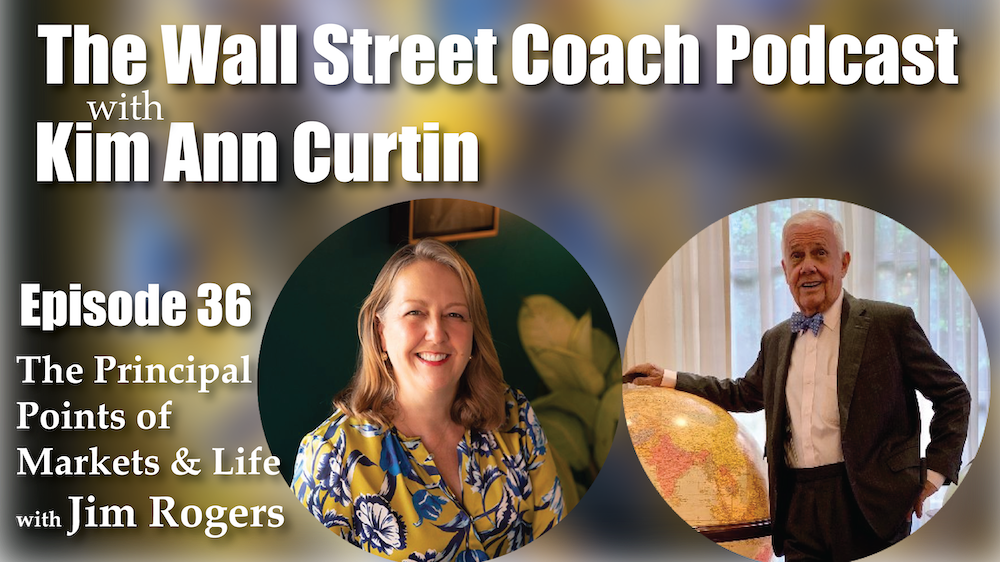
Episode 36: The Principal Points of Markets Life with Jim Rogers
Jim Rogers joins Kim and Lucas to discuss the current market, his time on Wall Street, and his first-hand experience of finance around the world, which he documented in his book ‘Investment Biker: Around the World with Jim Rogers’.
Jim Rogers is an author, investor, and financial commentator. Jim grew up in Demopolis, Alabama, getting his start in business at the age of five, selling peanuts. Jim started on Wall Street in 1964 and later was the co-founder of the Quantum Fund. He’s written numerous books, including the bestseller, Investment Biker, documenting his time traveling around the world on a motorcycle with his insight on local histories, economies, and cultures.
Jim Rogers
@iamjimrogers on Twitter
Prefer Video? Watch the Full Episode Here:
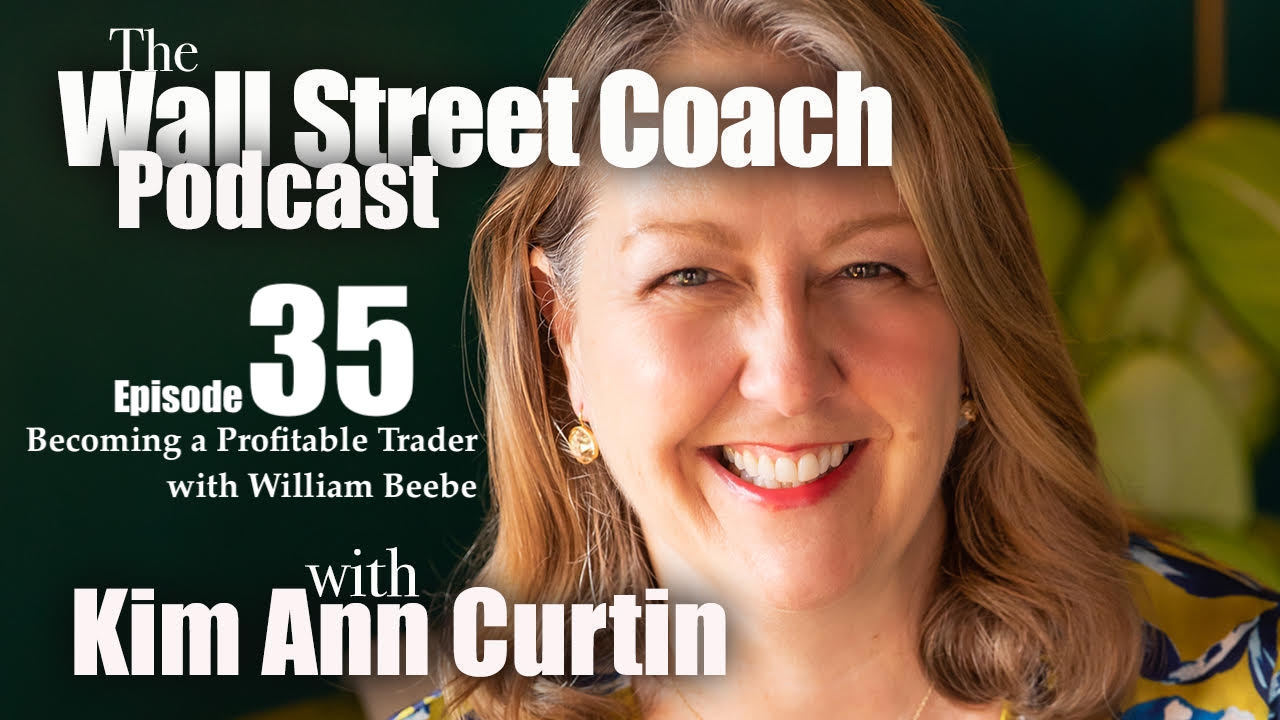
Episode 35: Becoming a Profitable Trader with William Beebe
William Beebe joins Kim and Lucas to discuss the emotional and psychological hurdles that he overcame on his journey to becoming a consistently profitable trader.